Artemis II astronaut Jeremy Hansen recounts the fiery ride home in a new book
An excerpt from 'Earthrise' follows Orion through plasma, a six-minute radio blackout and the parachute minutes Hansen calls the hardest part to watch.

· 5 min read
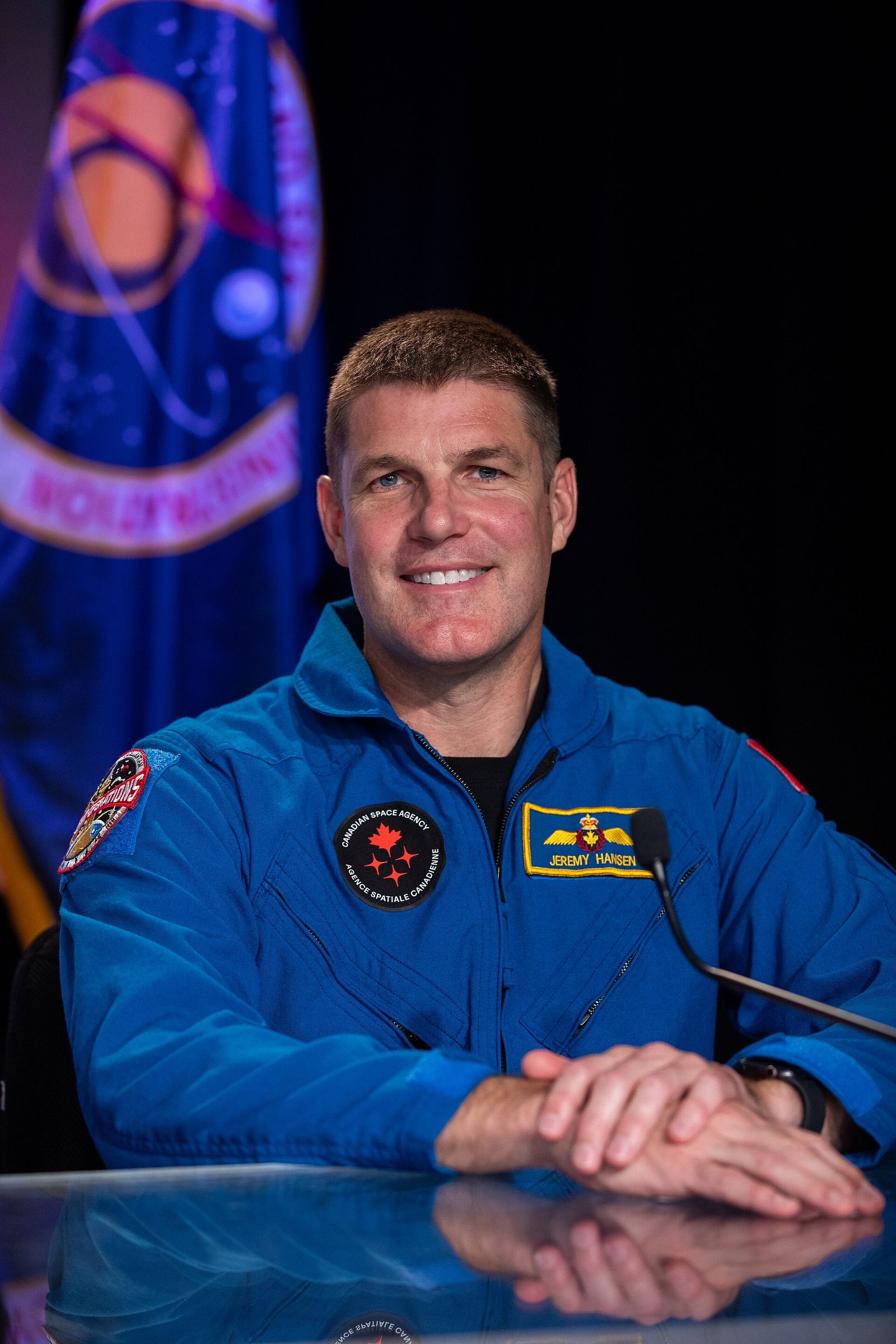
The most dangerous stretch of Artemis II came in its final half hour, and the Canadian astronaut on board has now described it in detail. In an excerpt from a new book, Jeremy Hansen recounts Orion's plunge back through the atmosphere: a capsule surrounded by flame, shaken by its own thrusters and pressed by nearly four times Earth's gravity while his wife and three children watched from the ground.
Live Science published the excerpt Nov. 14. It comes from "Earthrise: Inside Artemis II, the Groundbreaking Human Mission into Deep Space," released this year by Hanover Square Press. Author John Larsen, a former Royal Canadian Air Force public affairs officer, wrote the book from extensive interviews with Hansen and tells it in the astronaut's first-person voice. Readers should keep that arrangement in mind. The passage reads like a memoir, but a professional communicator shaped it.
Artemis II splashed down in the Pacific Ocean on April 10, 2026, after nine days in space. Its four-person crew, Reid Wiseman, Victor Glover, Christina Koch and Hansen, traveled more than 250,000 miles from Earth. No people had ever been that far from the planet. The flight was the first crewed lunar mission since Apollo 17 in 1972. It was also Hansen's first trip to space, and he was the only Canadian Space Agency astronaut aboard.
Six minutes inside the fireball
The excerpt opens just after the crew jettisoned the European Service Module, 30 minutes before splashdown. Mission Control then ran a 19-second firing of the small thrusters built into the crew capsule, the only time those thrusters were used for a burn on the mission. According to the book, the maneuver made the entry path slightly shallower and moved the capsule farther from the discarded module, which was hitting the atmosphere at nearly the same time.
Then came entry, at more than 10 kilometers (6.2 miles) per second, or roughly 24,600 mph. The capsule's thrusters fired almost nonstop to keep it steady, producing what Hansen describes as "loud thuds, as if Thor himself were hammering on our spacecraft." Plasma formed outside the windows within seconds. The glow started red and turned into a pulsing bluish-green light, and Hansen compares the cabin to a room full of exploding camera flashes. He lowered his helmet visor against it.
The account is strongest when it skips the heroics. Hansen notes that only centimeters of heat shield and aluminum separated the crew from temperatures above 2,500 degrees Celsius (about 4,500 degrees Fahrenheit). He admits that, science aside, "astronauts must have a screw loose to do this." He also writes that he felt at peace about his own safety but guilty about the strain the moment put on his family, after talking openly with them about the risks beforehand. Deceleration peaked near 4 g. That didn't worry him, he says, because he had spent more than five minutes at that level or higher in NASA's centrifuge.
The flames and the communications blackout lasted about six minutes, longer than Hansen had expected. The book places entry at 7:53 p.m. and the first post-blackout call at exactly 8 p.m.: "Integrity, Houston. Comms check, post-blackout." Wiseman, the commander, answered that the crew could hear them "loud and clear." NASA and Air Force aircraft filmed the descent in high resolution, so ground teams could already see it had gone well.
Hansen's wife, Catherine, later told him she had a very bad feeling about the heat shield and began crying as soon as the crew came out of blackout. Her worry had a basis. On the uncrewed Artemis I flight in 2022, Orion's heat shield shed material in ways engineers had not predicted, and NASA chose to fly Artemis II with the existing shield design and an adjusted entry approach rather than wait for a new one. That history made those six minutes the real test of the spacecraft. The book's account of a clean, steady passage through them carries more weight because of it.
The parachute wait
Hansen says he didn't feel safe until the main parachutes opened. Without them, he writes, the crew's survival odds would have been "somewhere between minimal and non-existent." He also notes that from the ground he has always found this part of a friend's return the hardest to watch: the gap between surviving the heat and seeing the canopies appear.
About three minutes after the blackout ended, at roughly 7,100 meters (about 23,300 feet), small pilot chutes pulled out two drogues meant to slow the capsule enough for the mains to open without tearing. The drogues worked, though they whipped the crew around like a fairground ride. A minute later, at about 1,500 meters (roughly 4,900 feet), the drogues released, and for a moment the crew felt as if they were falling backward. Then the three main parachutes, each 35 meters (about 115 feet) across, unfurled slowly in sequence.
"Integrity, we see three good-looking parachutes," the capsule communicator radioed. The descent soon slowed to 27 kilometers per hour (about 17 mph), and Hansen and Koch grabbed each other's hands. The crew was recovered to the USS John P. Murtha, and all four were in perfect health after splashdown.
The excerpt's most revealing detail may be the gap between two kinds of danger. For Hansen, trained to know where the risks sit, the parachutes were the last hurdle. For Catherine, the fear ended the instant the radio came back, and she never even watched for the chutes. A mission's risk profile can be charted by engineers, but this book shows that the people waiting at home live it on a different timeline.
Sources
Theo Anderson
Theo Anderson covers astronomy, space discoveries, and the observations expanding our picture of the universe. His work follows telescope findings, planetary research, and the questions behind new results. He explains the tools and concepts involved, placing striking images and announcements in context so readers can understand what scientists have learned.
View all stories