Nissan's China-market NX7 plug-in hybrid opens orders at about $19,400
Dongfeng Nissan's Model Y-size crossover claims up to 198 miles on battery power and a massage-seat, fridge-equipped cabin.

· 4 min read
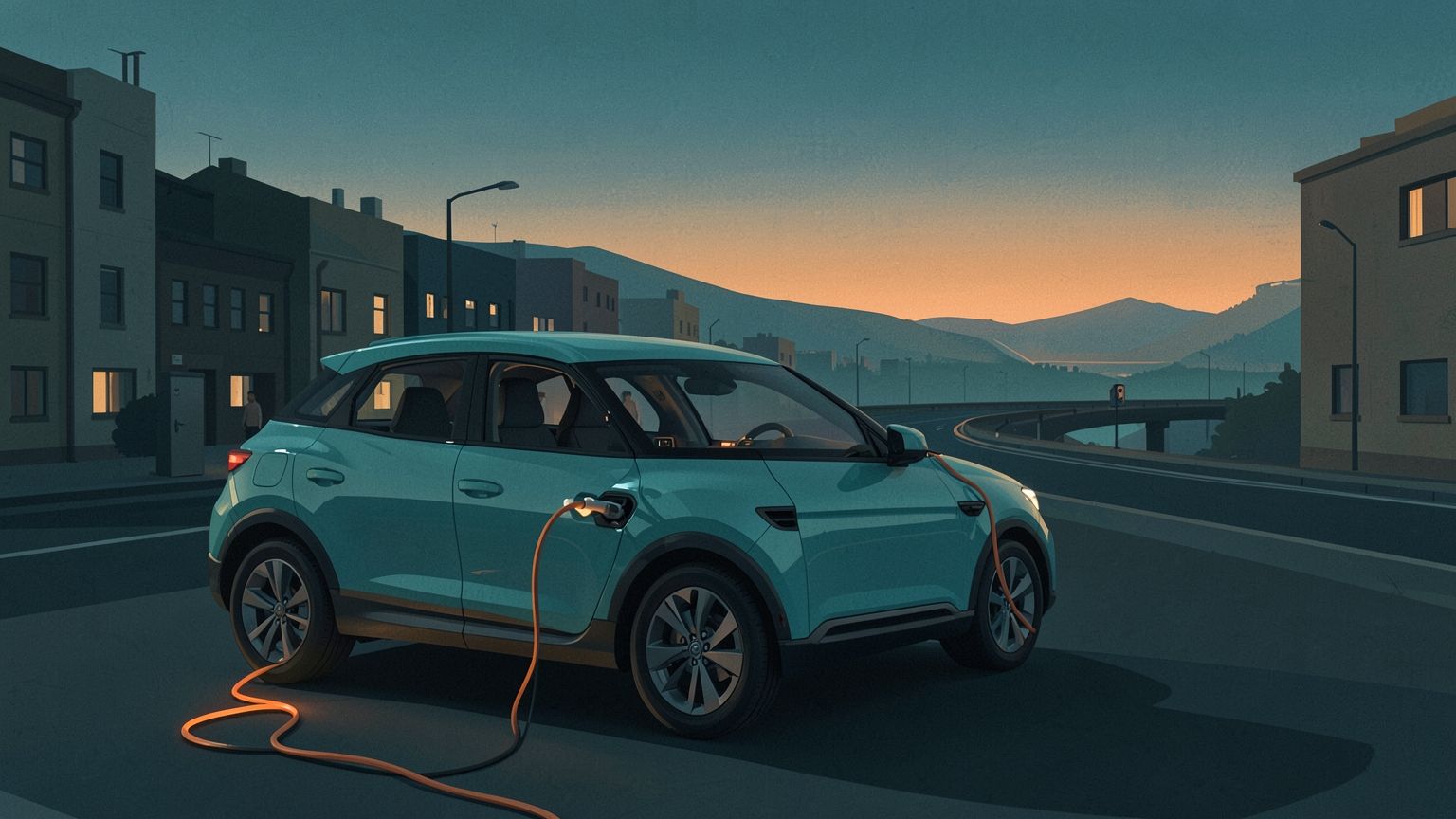
Dongfeng Nissan has started taking early orders for the NX7, a plug-in hybrid crossover priced at 129,900 yuan, roughly $19,400. The company claims it can travel up to 320 kilometers, or about 198 miles, on electricity alone.
Orders opened Nov. 13 for the China-market vehicle, which comes from Nissan's joint venture with Dongfeng. The finished production model will make its public debut at the Guangzhou Auto Show later in November. Buyers placing early orders are committing before the final version has been shown.
That electric range figure is the headline, and it is the reason the NX7 deserves attention outside China. Most plug-in hybrids treat their batteries as a short-hop supplement to the gas engine. The NX7 reverses that relationship. On paper, it is an electric car for almost every day of the year and a gas car only on long trips.
The NX7 pairs a lithium iron phosphate battery of about 40 kilowatt-hours with a 228-horsepower electric drive motor. A 1.5-liter naturally aspirated gas engine making 98 horsepower backs them up. With a full charge and a full tank, Dongfeng Nissan says the crossover can cover 1,666 kilometers, or roughly 1,035 miles, before stopping.
One caveat about that 198-mile figure: the reporting does not say which test cycle produced it. Chinese automakers usually quote range on the CLTC standard, which tends to give more generous numbers than the EPA ratings American shoppers know. Real-world U.S. driving would likely deliver less, though even a sizable discount would leave the NX7 well ahead of typical plug-in hybrids.
The choice of LFP chemistry fits the price. These cells are generally cheaper and longer-lived than nickel-rich batteries, at the cost of some energy density. That trade looks sensible in a vehicle built to be charged and drained daily.
How the gas engine and motor work together is still unclear. Patents for Dongfeng's hybrid technology describe four operating modes: series hybrid, parallel hybrid, direct engine drive and pure electricity generation. In principle, that would let the engine charge the battery, turn the wheels itself or help the motor, depending on conditions. Whether the production NX7 uses all four modes has not been confirmed.
That detail matters more than it might seem. A 98-horsepower engine is modest for a crossover this size. If it can only act as a generator once the battery runs low, sustained highway driving or steep grades could test it. A setup that lets the engine drive the wheels directly at cruising speed would handle long trips more efficiently. Guangzhou should help answer the question.
The NX7 is about as long as a Tesla Model Y, within a quarter-inch. Inside, every version gets a 17.3-inch central touchscreen and a fully digital instrument cluster. Higher trims add a 55-inch augmented-reality head-up display. The software is Nissan OS 3.0, running on Qualcomm's Snapdragon 8295P automotive chip.
An AI voice assistant built with Chinese speech-technology company iFlytek handles commands. Nissan says it understands natural language, remembers user preferences and can recognize who is in the car, then adjust settings to match.
Top trims go further. Their "AI Zero-Pressure Cloud Blanket" seats use sensors and air-cushion arrays to adjust support as occupants shift, and they add heating, ventilation and a 12-point massage function. The front seats recline flat into a bed-like layout. The options list also includes an onboard refrigerator and a motion-sickness prevention system that Nissan claims can reduce symptoms by as much as 83%. The reporting does not explain how the system works or how that figure was measured, so it is best read as a marketing claim for now.
Fridges, massage seats and giant displays have become standard bargaining chips in China's crowded crossover segment, where buyers expect a lot of technology for the money. Offering all of that near the equivalent of $20,000 shows how hard Nissan's joint venture has to compete against domestic brands at home.
The contrast with Nissan's U.S. lineup is striking. The 2027 Rogue Hybrid uses its gas engine to generate electricity for two electric drive motors, so it drives much like an EV. It has no plug, though, so every mile still depends on gasoline. The NX7 shows a version of that idea where the battery does most of the daily work.
Nissan has come a long way on range since the original Leaf arrived in 2010. That car used a 24 kWh battery good for roughly 70 miles, which limited its appeal, especially in a U.S. market that strongly prefers SUVs.
Electrek's writer argued that the NX7 could serve as a bridge vehicle for North American drivers who are wary of charging infrastructure. He also said he thinks it would sell well even at double its Chinese price. That view has merit. A crossover that covers most commutes without gas, and still drives across several states on a tank, removes the main objection many holdouts raise about EVs.
The orders and pricing announced so far apply to China. Whether the drivetrain holds up to its promises will become clearer once the production NX7 appears in Guangzhou and detailed specifications follow.
Sources
Dominic Price
Dominic Price writes about new cars, pickup trucks, and SUVs, following model announcements and changes across vehicle lineups. His coverage connects pricing, dimensions, powertrains, and equipment with the choices facing buyers. He puts published specifications in context and explains differences between models, making crowded launch calendars and trim descriptions easier to follow.
View all stories