SpaceX catches a Starship upper stage with its tower arms after an orbital flight
Ship 42 returned to its South Texas launch tower after a 22.5-hour, 14-orbit test, a day after the booster on the same flight was diverted from its own catch.

· 4 min read
Key Takeaways
- Ship 42 flew about 22.5 hours and 14 orbits, the longest Starship flight to date
- The tower arms had previously caught only Super Heavy boosters on suborbital tests
- The ship deployed 26 Starlink satellites, which SpaceX said were healthy
- The cause of the booster's fuel-system alarm on launch day is still under investigation
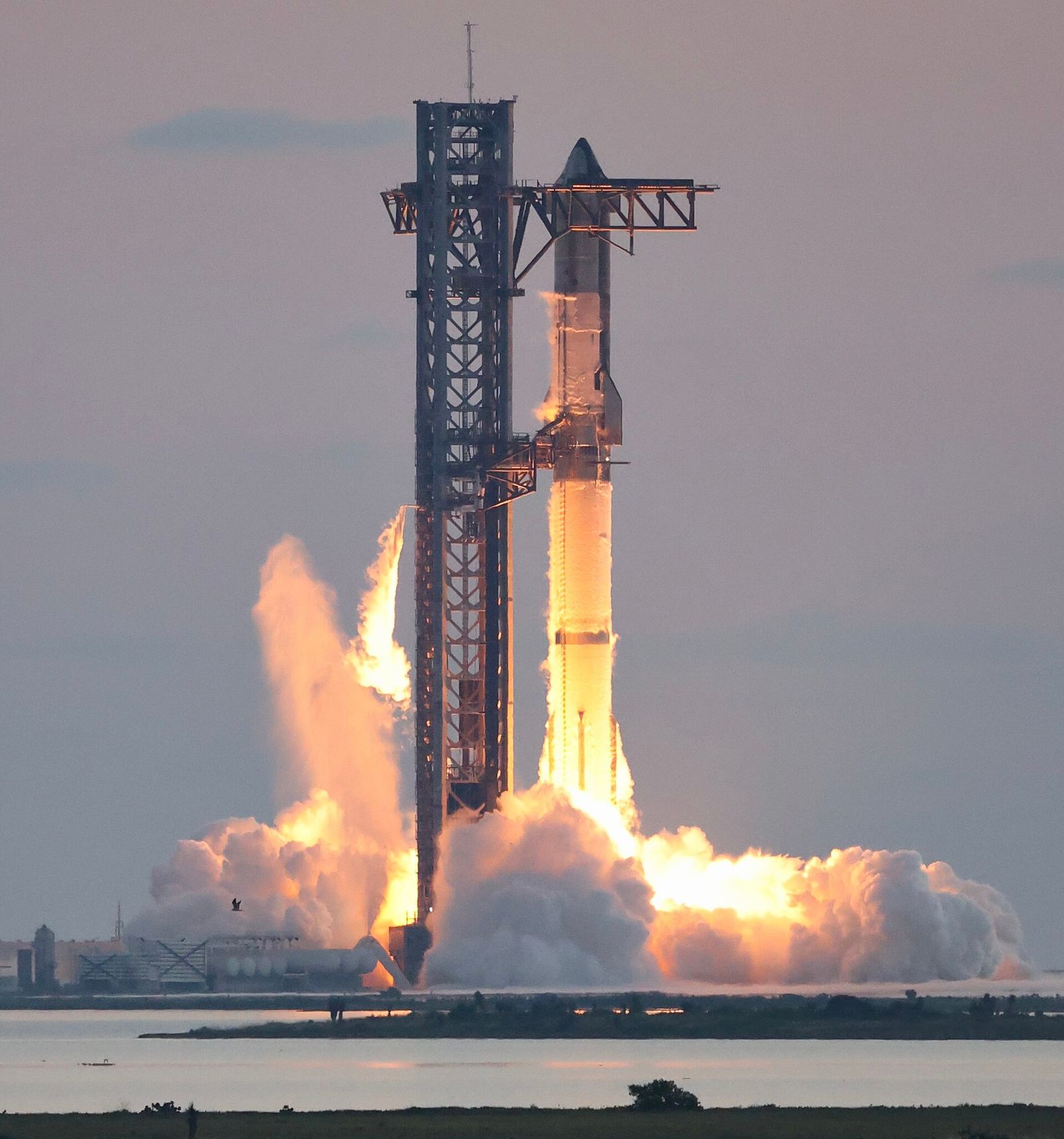
SpaceX caught the upper stage of its Starship rocket with the mechanical arms of its South Texas launch tower on Nov. 14, ending the 15th Starship flight test with a vehicle that had just come back from orbit. The 171-foot ship, designated Ship 42, settled into the arms of the same tower it had left 22.5 hours earlier.
The catch system, which SpaceX calls Mechazilla, had snagged Super Heavy boosters three times before, all on suborbital flight tests. This was the first time it caught a second stage, and the first time it caught anything returning from orbit, where reentry speeds and heating are far more punishing than anything a booster faces.
"Mechazilla has caught the Starship — we've been waiting to hear that for a long time," SpaceX launch commentator Dan Huot said on the company's webcast, which played "Baby, Come Back" as the ship descended. Huot called the maneuver "the Holy Grail of spaceflight."
That label is webcast enthusiasm, but the engineering point behind it holds up. Reusing spacecraft is not new; NASA's space shuttle orbiters glided back to runways and flew again for three decades. What SpaceX is chasing is different: a stage that lands back on its own launch mount, ready to be inspected, refueled and stacked without a long trip back to the pad or a lengthy overhaul. Catching the ship at the tower removes the transport step. Whether it removes the overhaul is the question this flight cannot answer yet.
The 14-orbit mission was the longest Starship flight so far, well beyond the roughly three-hour orbital flight SpaceX flew in September. Early in the flight, the ship released 26 next-generation Starlink broadband satellites. SpaceX said all of them were healthy and starting to climb toward their operating altitude.
The launch itself was less tidy. The Super Heavy booster was supposed to return to the tower minutes after liftoff on Nov. 13 but was sent instead to a splashdown offshore. SpaceX said the booster was diverted after its onboard system flagged a fuel-system alarm, and the company is still investigating the root cause.
That split result is worth keeping in view. A booster catch has now been done several times, so a waved-off attempt is a setback rather than a mystery, but it shows that an automated system will still choose the ocean over the tower when something looks wrong. For a company that wants catches to be routine, a conservative abort logic is a feature. Frequent aborts would not be.
The ship catch also arrives after a long runway: SpaceX has flown 15 full-scale Starship tests since 2023. That cadence, with hardware lost or expended on many of those flights, is how the company has always developed rockets, and Ship 42's return is the clearest payoff yet from that approach.
SpaceX intends to recover both boosters and ships with the tower arms on a regular basis, which is the core of Elon Musk's long-stated goal of a fully reusable orbital launch system. The most immediate beneficiary would be Starlink: a working Starship is expected to speed up deployment of the network's larger satellites, and this flight already delivered 26 of them.
The higher-stakes customer is NASA. A version of Starship is slated to land astronauts on the moon in crewed missions starting as early as 2028. Before that, Starship and Blue Origin's Blue Moon lander are scheduled for testing in low Earth orbit next year during the Artemis III mission.
NASA Administrator Jared Isaacman congratulated Musk and the SpaceX team in a post on X. "It was almost magic," he wrote, adding that the achievement brought the United States "one step closer" to planting an American flag on the moon again.
It's fair to be more measured than that. A lunar lander has to do things this flight did not attempt, including refueling in orbit, and the ship that lands on the moon is not meant to come back to a Texas tower at all. The catch matters to NASA indirectly: the more cheaply and often SpaceX can fly Starships, the more realistic the many tanker launches behind a lunar landing start to look.
SpaceX will now go through the flight data, including how well Ship 42's heat shield held up during reentry. That review is where this milestone will either prove its value or reveal its cost. A ship that comes home intact but needs extensive tile repairs is a successful catch and an unfinished reusability story.
Meanwhile, the company is preparing to expand Starship operations to NASA's Kennedy Space Center in Florida and is developing another launch site in Louisiana. More pads mean more chances to catch vehicles, and more opportunities to learn whether the September flight, this week's ship landing and the booster abort describe a system that is maturing or one that is still having good days and bad ones.
Musk's longer-term vision includes point-to-point rocket trips on Earth and regular traffic to Mars. Those remain plans. The near-term measure is simpler: the next time a caught ship flies again, and how long it sat in the hangar first.
Sources
Felix Rodriguez
Felix Rodriguez covers Earth science, climate research, and the processes that shape the planet. His work follows findings about rocks, oceans, atmospheric systems, and environmental change. He focuses on explaining timescales, measurement methods, and the relationship between individual studies and the wider evidence, helping readers interpret developments across interconnected fields.
View all stories