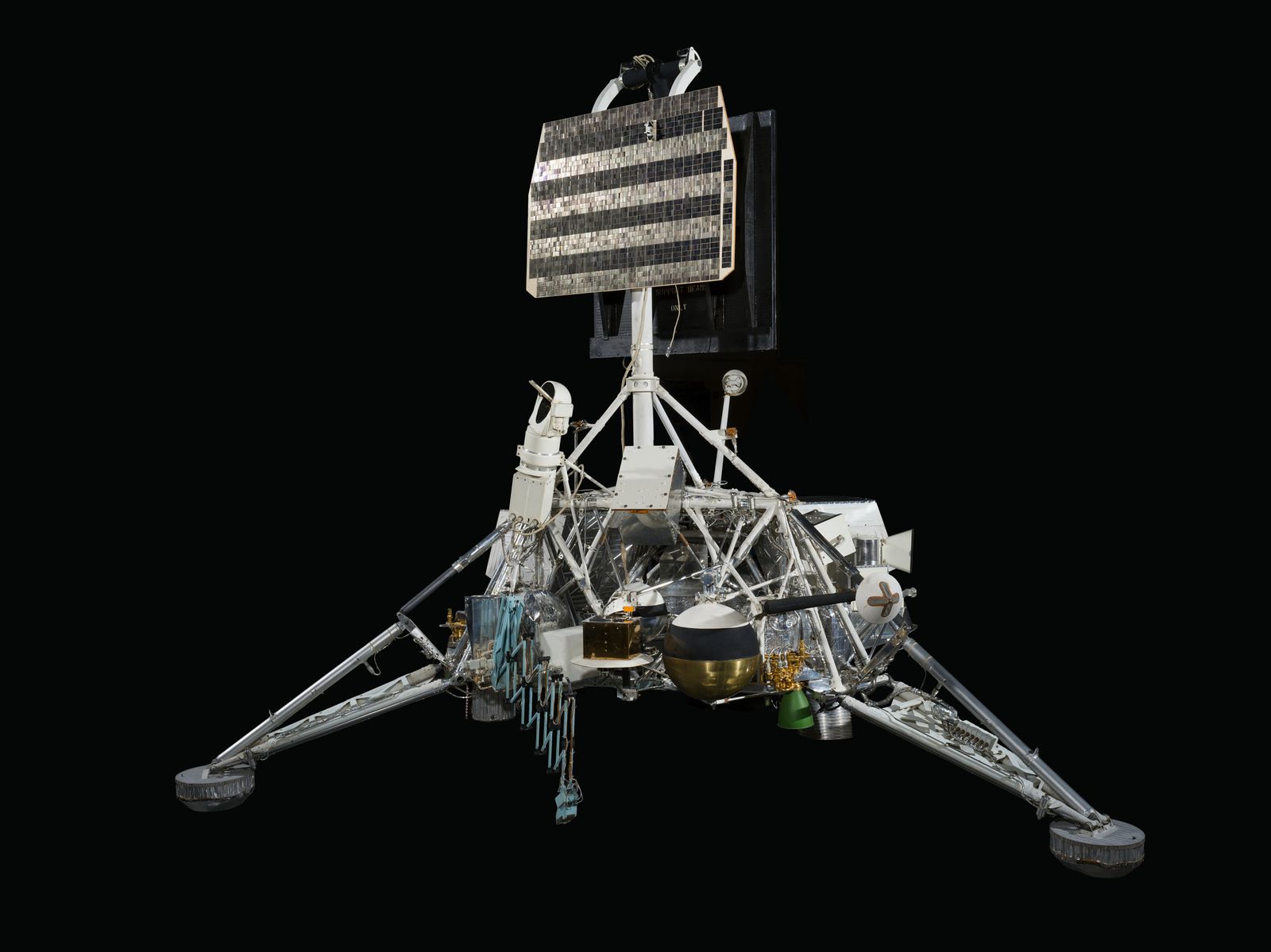
NASA lines up $10 billion lunar delivery framework as it builds toward a 2032 moon base
The agency also picked Blue Origin to land PROMISE, a nuclear-powered rover built from a Mars rover's Earth-bound twin, at the lunar south pole starting in late 2028.
 By Isaac Tan
· 5 min read
Key Takeaways
- Eight companies will compete for missions under CLPS 2, a 10-year framework with a $10 billion maximum value.
- NASA raised the ceiling on its current CLPS contract from $2.6 billion to $4.2 billion.
- Blue Origin won a $94 million base contract, plus a $140 million option, to deliver the PROMISE rover.
- About $1.3 billion in VADR task orders went to Arrow Science and Technology, Blue Origin and Impulse Space.
NASA has set up a new lunar delivery program worth up to $10 billion over 10 years. Eight companies will compete for its missions as the agency works toward a crewed moon base by 2032.
The program, called Commercial Lunar Payload Services 2, or CLPS 2, was one of several moon announcements NASA made Saturday, Nov. 7, at its "Max Power" air show event at Kennedy Space Center in Florida. The agency also outlined roughly $1.3 billion in launch and orbital transportation work, a lunar communications deal with SpaceX and a nuclear-powered rover named PROMISE that is meant to begin exploring the moon's south pole in late 2028.
The $10 billion figure needs a caveat. It is the combined maximum value of the CLPS 2 contracts, not money already committed to specific missions. The eight companies qualified to bid are Blue Origin, Firefly Aerospace, Intuitive Machines, ispace-U.S., Lockheed Martin, Northrop Grumman, SpaceX and Voyager Technologies. How much is actually spent will depend on the task orders NASA issues over the next decade.
Why NASA is restructuring robotic deliveries
The original CLPS program, which dates to 2018, made NASA a paying customer on commercial landers instead of the owner of its own spacecraft. It has produced real results. Intuitive Machines put the first commercial lander on the moon in 2024, and Firefly's Blue Ghost touched down in 2025. It has also had setbacks, including Astrobotic's Peregrine, which never reached the surface, and landers that ended up on their sides.
NASA Administrator Jared Isaacman said the current contract structure is too rigid for the pace the agency now has in mind. Each mission under it is effectively all or nothing, which he said works when only one or two fly in a year. At a Saturday press conference, he told Space.com that at a larger scale, "you want to have the flexibility to move pieces around."
That reasoning holds up. A single lunar lander can carry instruments from several teams. When one payload slips or a lander runs late, a contract that lets NASA move work between missions protects the overall schedule better than one that rides on each flight succeeding or failing as a unit. The risk is the reverse: more flexibility can make it harder for the public to see what a given mission was supposed to deliver and whether it did.
The current program is also getting more money in the meantime. NASA raised the ceiling on the existing CLPS contract from $2.6 billion to $4.2 billion to support the first phase of its moon base plan.
A Mars rover's twin heads for the south pole
The most unusual piece of the package is PROMISE, short for Polar Rover for Observation, Mapping, and In-Situ Exploration. Isaacman first proposed the idea in June: take an engineering model of NASA's Curiosity and Perseverance Mars rovers, essentially the Earth-based twin engineers use for testing, and turn it into a flight rover for the moon.
The autonomous, nuclear-powered rover will carry a drill and science instruments to look for water ice and other volatiles near the lunar south pole. Those deposits could someday supply drinking water, oxygen or rocket propellant for crews, and they are a main reason the south pole is the target for Artemis.
Reusing existing hardware looks like a sensible way to field a capable rover without designing one from scratch. Curiosity, which landed on Mars in 2012, and Perseverance, which followed in 2021, run on radioisotope power, and that heat and electricity source matters at the lunar poles, where long shadows and bitter cold are hard on solar-powered machines. The tight part is the calendar. Converting a test unit into flight hardware, qualifying it for the lunar environment and launching it by late 2028 leaves little room for delays.
Blue Origin will carry PROMISE to the surface on its Blue Moon Mark 1 lander under a $94 million base contract. A $140 million option tied to performance could bring the total to $234 million. The rover's schedule therefore depends on Blue Origin's lander as much as on the rover itself.
Launches, drones and a communications network
Under its Venture-Class Acquisition of Dedicated and Rideshare program, known as VADR, NASA issued six launch and orbital transportation task orders worth about $1.3 billion combined. Arrow Science and Technology, Blue Origin and Impulse Space received them. The missions are meant to show that commercial providers can handle jobs such as moving cargo between Earth orbit and lunar orbit, running navigation tests with a CAPSTONE 2 spacecraft and scouting the surface with drones called MoonFall. Rockets for those flights will come from Blue Origin's New Glenn, SpaceX's Falcon 9 and Relativity Space's Terran R.
In a separate lunar logistics deal, SpaceX will launch communications satellites on its Starship megarocket in 2028. The spacecraft are described as similar to its Starlink satellites and are intended as the start of a lunar communications network. NASA also awarded contracts to Honeybee Robotics, Redwire and Yank Technologies to develop parts for miniCAST, a tower that would provide power and communications on the lunar surface.
Taken together, the awards show NASA building the moon base the way it now handles low Earth orbit: as a buyer of services from a group of commercial suppliers. Spreading the work across many companies gives the agency backups if one provider stumbles. The list is also heavy with familiar names. Blue Origin appears in nearly every category, from the PROMISE delivery to the VADR orders to launch support, and SpaceX is involved in both launch and communications. That puts a large share of NASA's lunar timeline in the hands of two companies whose biggest vehicles are central to the plan.
Where the awards fit in the moon base plan
Everything announced Saturday falls under Phase One of NASA's moon base strategy, which runs through 2029 and focuses on robotic exploration, infrastructure demonstrations and commercial deliveries. Phase Two, from 2029 to 2032, is meant to keep building out the base's infrastructure, and the base itself is supposed to start operating in Phase Three.
The order of the work makes sense: scout for resources, test power and communications, and set up delivery routes before astronauts depend on any of it. The 2028 dates for PROMISE and the Starship communications launch are the first clear checkpoints. If those slip, the 2032 base goal will look much harder to meet.
Sources
Isaac Tan
Isaac Tan covers biology, biodiversity, and research into the variety of life on Earth. His work follows discoveries about species, evolution, and the connections between organisms and their environments. He explains the evidence behind new findings and the questions they raise, bringing context to developments from genetic studies to ecosystem research.
View all stories