VW's ID. Polo GTI Clubsport concept borrows a bigger EV's motor for 362 hp
The stripped-out, two-seat electric hot hatch hits 62 mph in 4.7 seconds. VW hasn't committed to building it, and the Polo isn't sold in the US.
 By Serena Wu
· 5 min read
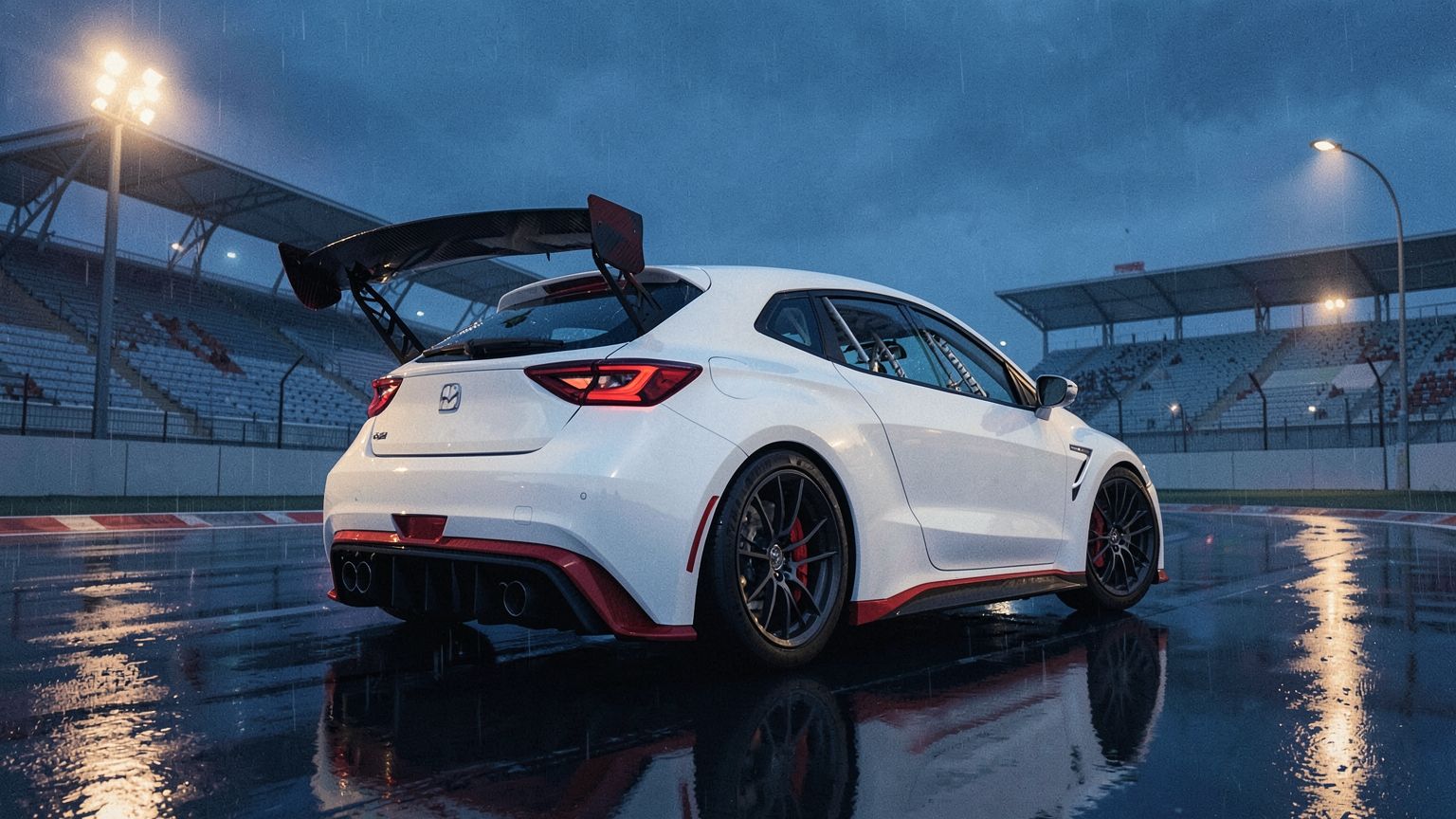
Volkswagen has taken the motor out of its larger electric cars and fitted it to the front of its smallest one. The result is the ID. Polo GTI Clubsport Concept, a two-door, two-seat track special rated at 362 horsepower (270 kilowatts).
The company says the concept reaches 62 mph (100 km/h) in 4.7 seconds, 2.1 seconds quicker than the 6.8 seconds it quotes for the production ID. Polo GTI. Top speed is 240 km/h, or about 149 mph. Volkswagen has not said it will build the car, and it will go on public display at the Essen Motor Show in Germany, which opens Nov. 27.
For American buyers, the news comes with the usual caveat. Neither the ID. Polo nor the ID. Polo GTI is sold in the United States, so a hotter version arriving there looks unlikely even if Volkswagen approves production.
The concept rides on the same MEB+ platform as the production ID. Polo GTI, which also underpins the new Cupra Raval. The key change is the drive unit. Volkswagen swapped in its APP550 motor, which normally sits at the rear axle of bigger models such as the ID.7 and the ID. Tiguan, and mounted it up front.
That is a sizable jump from the standard ID. Polo GTI, which Volkswagen rates at 166 kilowatts. Thomas Schmall, who heads Volkswagen Group Components, called the APP550 "one of the most efficient electric drives in its class."
Sending that much power through the front wheels alone is the hard part of any front-drive hot hatch, and Volkswagen's answer is an electronically controlled front differential lock. The company also retuned its adaptive chassis control for track driving and added ceramic brakes.
The battery is unchanged: the same 52-kilowatt-hour nickel-manganese-cobalt pack used in the ID. Polo GTI, which Volkswagen says can supply up to 290 kilowatts. Volkswagen did not publish a range estimate or a curb weight for the concept, and those are the two numbers that would show whether this is a usable car or a short-burst show piece. A small pack feeding a motor designed for much heavier vehicles suggests hard track laps will drain it quickly.
The production ID. Polo is a four-door. The Clubsport drops to two doors, grows 100 millimeters in length and gets fenders flared an extra 50 millimeters on each side. Up front sits a deep motorsport-style splitter. At the back are a wider rear end, a new diffuser and a very large carbon-fiber wing, joined by a central carbon fin that houses the brake lights. Volkswagen racing colors and graphics finish the look.
The cabin goes further than most concepts that pretend to be road cars. The rear seats are gone, replaced by a roll cage. The driver and passenger sit in Recaro seats with red five-point harnesses. There is no infotainment system, only a center screen for selecting drive modes, and the dashboard and trim are covered in a dark, glare-reducing microfiber with red stitching.
The roll cage and harnesses are the clearest sign that Volkswagen built this as a statement rather than a preview of a showroom model. If a production version follows, expect the cage to disappear and a rear bench and touchscreen to come back. The hardware that matters, including the motor, the locking differential and the chassis tuning, could carry over more easily.
Kai Grünitz, Volkswagen's head of technical development, said the concept shows "how much more potential there is in the electric GTI world." He called the GTI badge "one of Volkswagen's great success stories for 50 years."
The timing is deliberate. The Golf GTI arrived in 1976 and did more than any other car to define the hot hatch, so the nameplate turns 50 in 2026. The Clubsport is the fourth GTI-badged debut this year, after the ID. Polo GTI, the ID.3 GTI and the Golf GTI Edition 50.
Volkswagen opened pre-orders for the ID. Polo GTI, its first electric GTI, in October, with prices starting at 39,995 euros, or roughly $45,000. Orders for the ID.3 GTI are scheduled to open in early 2027. That car will be the second electric GTI and the first with rear-wheel drive.
The Polo also carries some motorsport credibility of its own. Rally versions of the car won the FIA World Rally Championship four times in the 2010s, and the concept's flared bodywork draws on that history.
The competitive picture explains why Volkswagen is floating a hotter Polo now. Renault and Peugeot both brought small, aggressive electric performance cars to this year's Paris Motor Show: the Renault 5 Turbo 3E and the Peugeot E-T16 Concept. French automakers have long dominated the small hot hatch segment in Europe, and an electric Polo that stops at 166 kilowatts could look tame beside them.
That makes the Clubsport a reasonable hedge. It costs Volkswagen little to show it, it tests how buyers react to a track-focused electric Polo, and it proves that MEB+ can take a far stronger motor without a new platform. The open question is price. A base ID. Polo GTI already starts near 40,000 euros, so a Clubsport with ceramic brakes, carbon aero and a bigger motor would probably cost much more. Few small hatchbacks have sold well at that kind of price.
Volkswagen has not announced a production decision. The next confirmed step is the concept's appearance in Essen starting Nov. 27, where the company will put it in front of the public for the first time.
Sources
Serena Wu
Serena Wu covers vehicle safety, recalls, and the systems designed to help drivers avoid collisions. Her work follows official notices, safety ratings, and updates to driver assistance features. She explains which vehicles are affected, what published findings establish, and where limitations remain, giving readers clear context for automotive safety news.
View all stories