Toyota's next Corolla will add the nameplate's first fully electric version
The 13th-generation car moves to one platform built for gas, hybrid, plug-in and battery power, with a debut expected in 2027 as a 2028 model.

· 4 min read
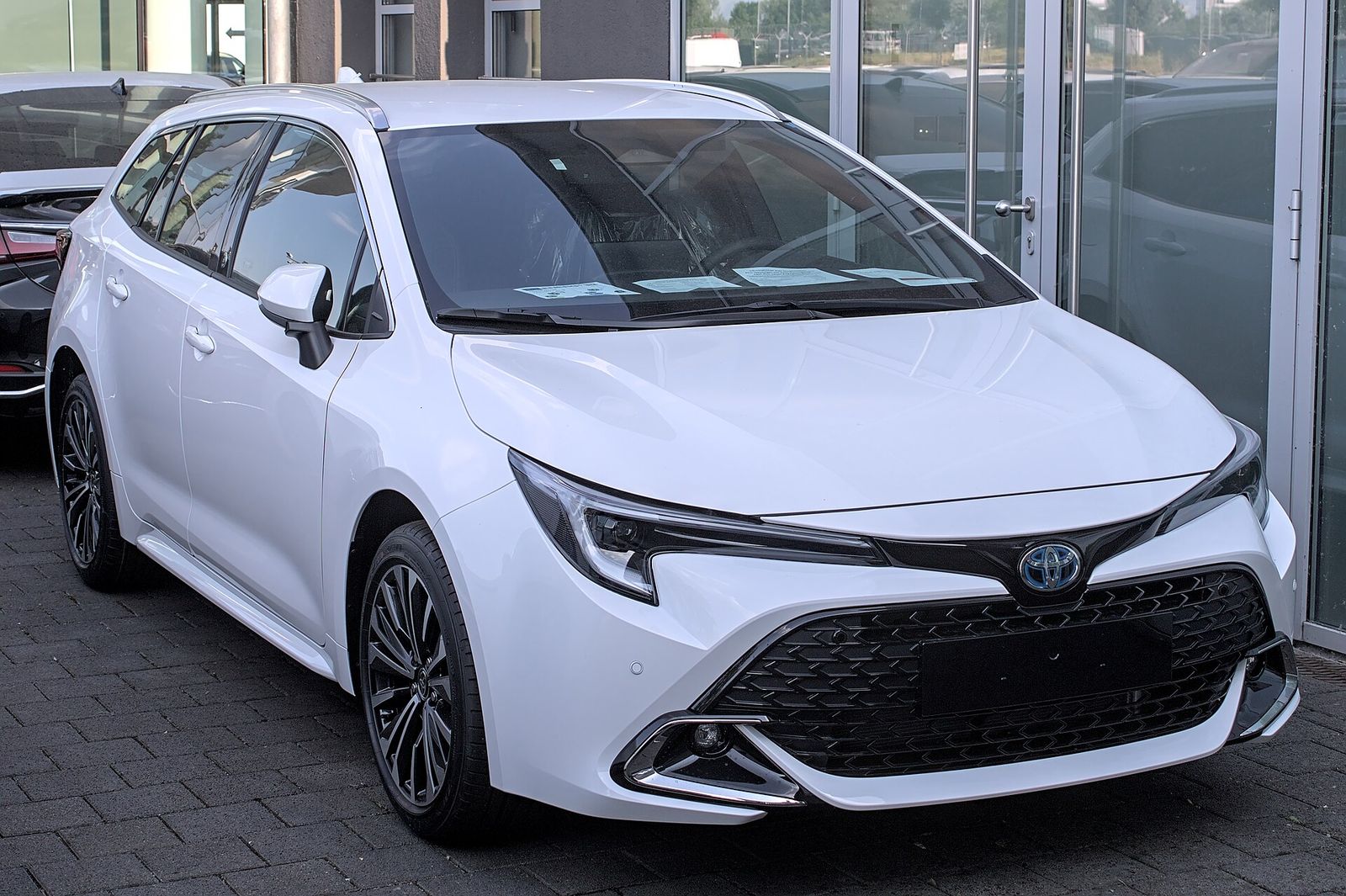
Toyota is building the first fully electric Corolla. It comes as part of a ground-up redesign of the 13th-generation car that will put gas, hybrid, plug-in hybrid and battery-electric versions on one new platform.
Toyota calls the new architecture "multipathway." The next Corolla is expected to debut in 2027 as a 2028 model, but the company has released few details so far. Battery and powertrain specifications are still under wraps. The production car is expected to look much like the Corolla Concept that Toyota unveiled at the Japan Mobility Show in Tokyo.
The stakes are large. The Corolla went on sale in 1966, has found more than 57 million buyers and is sold in more than 150 countries. Over the decades the name has stretched from sedans and hatchbacks to coupes, wagons, the high-performance GR Corolla and the Corolla Cross compact SUV. The new generation will again come in several body styles, including a sedan, a hatchback, a crossover and a GR version.
Changing a car with that kind of reach is a bigger bet than launching another stand-alone EV. Most Corolla buyers did not shop for an electric car. Some of them will now find one on the same lot, under the same badge, next to the hybrid they came in to see.
What the electric and hybrid Corollas are expected to offer
None of the figures for the EV are confirmed. According to Electrek, the electric Corolla is expected in single- and dual-motor versions with at least 250 miles of range. That number is an expectation, not an EPA estimate or an official Toyota claim.
The hybrid has more detail behind it. It will reportedly pair a new 1.5-liter four-cylinder engine with an electric motor. Toyota engineers told Car and Driver the system would make about 134 horsepower. It is also estimated to be 10% to 20% more efficient than the current Corolla, though the reporting does not say whose estimate that is or how it was measured.
Car and Driver has also put rough numbers on pricing. Its estimates are about $25,000 for the gas model and about $27,000 for the hybrid, with the plug-in hybrid and EV in the $30,000 range. These are estimates, not Toyota prices. There is no word yet on trims, destination fees or which versions will be sold in the United States.
The EV's price is the number to watch. The Corolla has built its reputation on low running costs, dependability and an affordable sticker. An electric version that wore the badge but cost far more than the gas car would cut against what the name means to buyers. A gap of roughly $5,000 over the gas model, if it holds, would make the EV a plausible step up rather than a premium side project.
A shared platform and a sharper look
The multipathway platform fits Toyota's long-standing reluctance to bet everything on batteries. The company popularized hybrids with the Prius in the late 1990s and has argued for years that buyers should be able to choose among powertrains. One platform that can carry any of them lets Toyota shift production toward whatever sells, which looks like a sensible hedge when EV demand is hard to predict.
The trade-off is engineering compromise. Platforms that must also hold an engine and fuel tank usually give up some cabin space and battery room compared with designs built only for EVs, like Toyota's own bZ models. A range of 250 miles would cover most commuting but would be respectable rather than remarkable. The hybrid's 134 horsepower is similarly modest. That is fine for an economy car, but it doesn't suggest Toyota is chasing performance with the mainstream models.
Toyota executive Koji Sato described the goal when the concept was shown. Whatever powers the car, he said, "let's make good-looking cars that everyone will want to drive!"
Design is where the next Corolla appears to depart most from the past. Norihiko Kobayashi, who has run the Corolla program since 2011, said in an interview with Motor.es that the team wanted to give the name "a new twist." He added: "It wasn't simply about following in the footsteps of the past."
That ambition is welcome on a car that has often been bought despite its looks rather than because of them. It also carries some risk. Corolla buyers are famously loyal and practical, and a dramatic shape has to keep the visibility, easy entry and usable trunk that keep them coming back. The concept made a strong styling statement. How much of it survives the move to a $25,000 production car will show how seriously Toyota means it.
The first sign of the new family is already on the road. The next-generation Corolla Cross was spotted testing for the first time in November. With the full lineup expected in 2027, Toyota has about a year to turn estimates into official prices, specifications and EPA ratings. Those numbers, more than the concept's styling, will decide whether an electric Corolla can sell like a Corolla.
Sources
Dominic Price
Dominic Price writes about new cars, pickup trucks, and SUVs, following model announcements and changes across vehicle lineups. His coverage connects pricing, dimensions, powertrains, and equipment with the choices facing buyers. He puts published specifications in context and explains differences between models, making crowded launch calendars and trim descriptions easier to follow.
View all stories