Ineos will move Grenadier production to the US as BYD negotiates for its French plant
BYD is in exclusive talks to buy Hambach, the former Smart factory. Ineos is aiming for US-built SUVs and pickups by 2028 at a site it hasn't named yet.

· 5 min read
Key Takeaways
- BYD has entered exclusive negotiations to buy Ineos' Hambach plant in France. No price or closing date has been disclosed.
- Ineos plans to move all Grenadier and Quartermaster production to the US, starting in 2028.
- The US accounts for about 70% of Ineos sales. Its trucks now face 15% and 25% import duties.
- BYD has made no commitment on models for Hambach or on its roughly 1,000 workers.
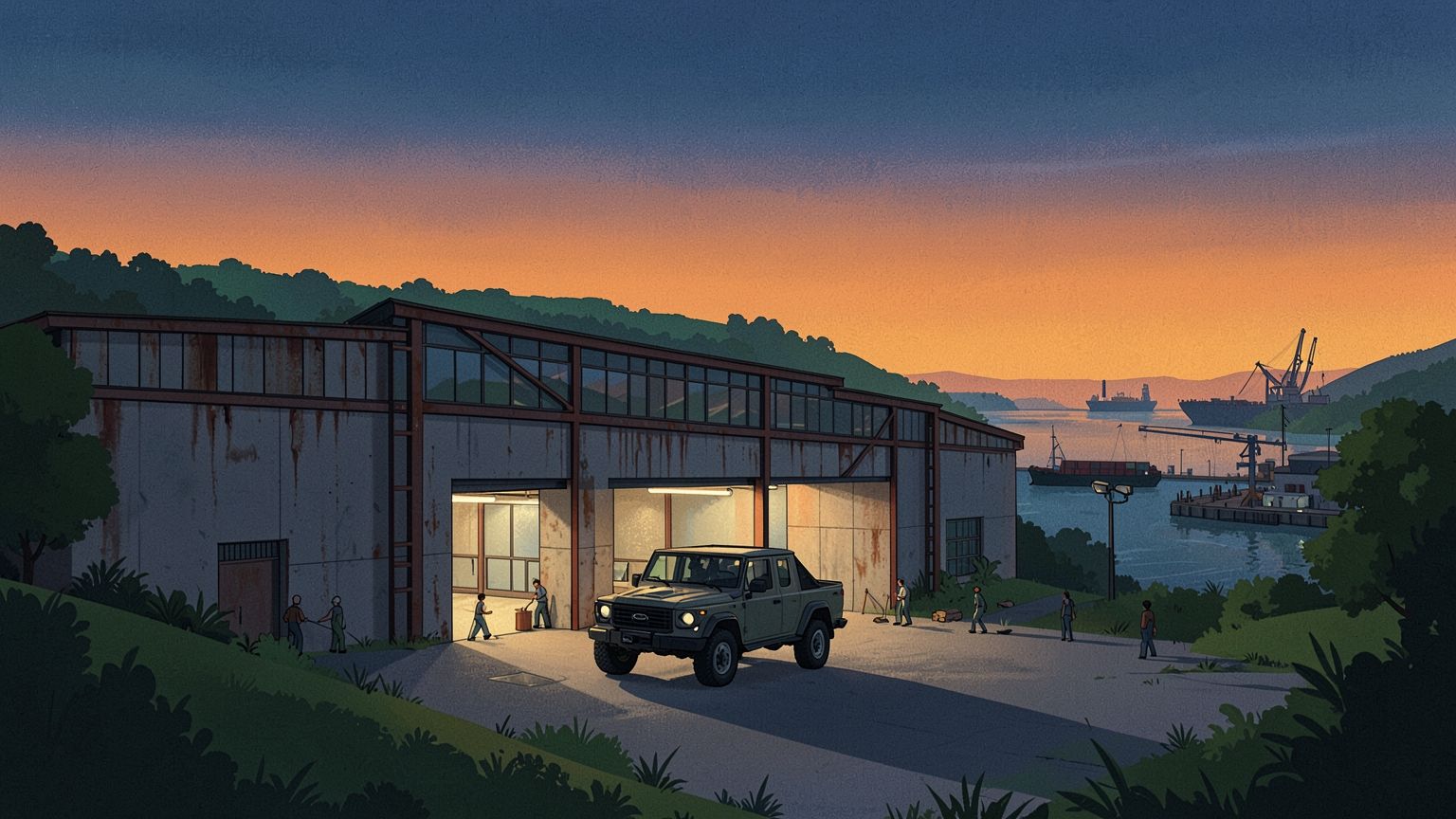
BYD said Tuesday that it has entered exclusive negotiations to buy Ineos Automotive's factory in Hambach, France, the only plant that builds the boxy Grenadier SUV and Quartermaster pickup.
Ineos announced the other half of the arrangement the same day. It plans to move its entire global production of both models to the U.S. and expects the first American-built vehicles in 2028. The company has a shortlist of possible sites but hasn't named any. It also hasn't said whether it will buy an existing factory, build a new one or use spare capacity at another automaker. Ineos expects to settle on a site in the coming months so the 2028 start stays on track.
Neither company has put a price or a closing date on the sale. It also needs to clear a consultation with worker representatives, a formal step in France. If the deal closes, Ineos says Grenadier and Quartermaster production will continue at Hambach "for the medium term," meaning the two automakers would be neighbors on the site for some time. BYD hasn't said which of its models would be built there or when. It also hasn't committed to keeping any particular share of the plant's roughly 1,000 employees.
Stella Li, BYD's executive vice president, said the company wants European buyers to have "vehicles built in France" running on BYD technology. That phrase explains the purchase better than the plant's output does.
Why Ineos is heading to America
For Ineos, the logic is about where its customers live. The U.S. accounts for about 70% of the brand's global sales. A 15% import duty applies to every Grenadier sent across the Atlantic, and the Quartermaster falls under the 25% U.S. levy on imported pickups. When most of the people buying the trucks are American, building them in eastern France and shipping them over is an expensive way to do business.
The move itself looks sound. The deadline looks much harder. Ineos is a young, small automaker with one factory, and it plans to relocate all of its production in roughly two years without having picked a location. Building a plant from scratch on that schedule would be ambitious for any company. Buying an existing facility or borrowing another automaker's unused lines seems like the more realistic path to 2028. The promise to keep Hambach running during the handover gives Ineos some protection against a gap in supply, and Grenadier buyers shouldn't see changes for now.
There is some irony in who is buying. Ineos showed its first electric model, the Fusilier, in early 2024, then shelved it indefinitely a few months later, citing "reluctant consumer uptake" of EVs. Its factory is now headed to the world's largest EV maker. Ineos founder Jim Ratcliffe created the Grenadier out of affection for the original Land Rover Defender. The deal also arrives just days after BYD lost a case in The Hague: a court there barred its Ti7 SUV from the EU for infringing the Defender's design.
What BYD gets in Hambach
The plant has a long history in small cars. It opened in 1997 as "Smartville," the Mercedes factory for the Smart Fortwo, and it later built the battery-electric Smart EQ Fortwo. Ineos took it over from Mercedes in late 2020, after abandoning a plan for a new factory in Wales, and Grenadier production began in 2022. Ineos says it has invested nearly 540 million euros in the site since 2019.
Capacity is about 30,000 Grenadiers a year, which is small for BYD. The Chinese company sold 3,561,615 passenger vehicles worldwide in the first 10 months of this year. At that pace, Hambach's annual output equals less than three days of BYD production.
Hambach would be BYD's second passenger-car factory in the EU. Its first, in Szeged, Hungary, began trial production this year, with mass production expected in early 2027. The Dolphin Surf and Atto 2 are first in line there, and the long-term goal for Szeged is more than 150,000 vehicles a year. A separate factory project in Turkey is on hold. Electrek reported that the Hambach deal would be the first time a Chinese automaker has bought an existing car plant in Europe.
The talks were not a surprise. In May, Li said BYD was negotiating with Stellantis and "other companies too" about taking over underused European plants. She also said BYD would rather own and run a factory than form a joint venture. Hambach fits that plan. The site already has trained workers, a paint shop, a supplier network close to Germany and an owner eager to go. That is a far easier start than Szeged, where construction took years and included land disputes with private owners.
Trade barriers are moving factories in both directions
BYD's reasons mirror Ineos'. Electric cars BYD builds in China carry a 17% countervailing duty in the EU, stacked on the usual 10% import duty for cars. Imported Chinese hybrids now fall under quotas. Proposed EU "Made in Europe" rules would also make EV subsidies and public contracts depend on the share of a vehicle produced locally. A French factory would help BYD with all three problems at once.
Other Chinese brands are making the same bet on local assembly. Leapmotor's B10 has been coming off the line at Stellantis' plant in Zaragoza, Spain, since October. Dongfeng intends to produce cars at one of Stellantis' French factories, Geely is reportedly in line for a Ford site in Spain, and Chery already does assembly work in Barcelona.
Chery is the most direct competitor. BYD's European registrations through October reached 320,445, a 133% jump, according to Automotive News figures. Chery Group registered 320,631, up 235%, which put it ahead by 186 vehicles. Europe matters more to BYD because sales at home are falling. In China, BYD-brand sales fell 40% over the first 10 months, to 1,544,699 vehicles, and its worldwide passenger-vehicle sales are off 2.7%.
Seen that way, the purchase looks like a cheap, well-timed move. BYD isn't paying for 30,000 cars a year. It is paying for a French address ahead of local-content rules that could shape which cars qualify for incentives. The most important open question is what BYD builds there. A battery-electric model would continue the plant's Smart history. A plug-in hybrid would mainly be a way around import quotas on Chinese hybrids. Until BYD names a product and says how many of Hambach's roughly 1,000 workers it plans to keep, the employee consultation is the next real test of the deal.
Sources
Julian Morales
Julian Morales follows automakers, vehicle manufacturing, and the supply chains behind the cars reaching dealerships. His coverage connects factory plans, production figures, supplier developments, and company announcements with broader industry changes. He explains how manufacturing decisions and parts availability can influence vehicle output, delivery schedules, and the direction of the automotive business.
View all stories