Voyager 1 is now one light-day from Earth, and it won't come back inside that line
The probe's radio signals now need a full day to get home. Its slower twin isn't expected to reach the same mark until 2035, if its power holds.
 By Hannah Bell
· 6 min read
Key Takeaways
- Voyager 1 reached one light-day from Earth on Nov. 18, about 16.1 billion miles away, and will stay beyond that distance.
- Voyager 2 is moving slower and is expected to reach the same mark in November 2035.
- NASA's Jet Propulsion Laboratory hosts a public discussion with the Voyager team at noon EST on Thursday, Nov. 19.
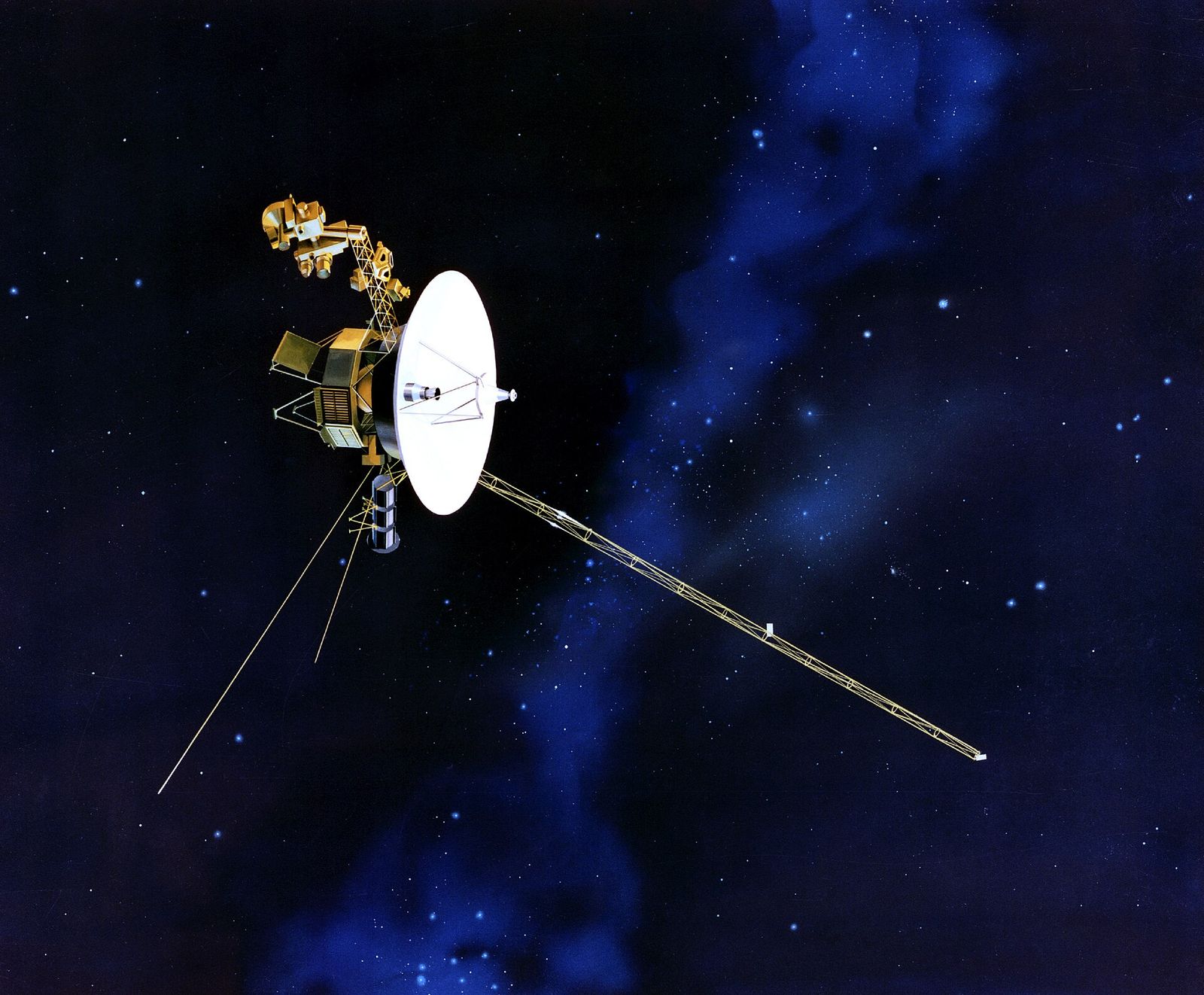
Voyager 1 crossed one light-day from Earth on Wednesday, Nov. 18, becoming the first spacecraft so far away that its radio signals take a full 24 hours to reach home. The mark sits at 16,094,799,096 miles (25,902,068,356 kilometers), a distance the probe has spent nearly 50 years covering since its launch in September 1977.
The crossing is permanent. Earth's distance from the probe rises and falls over the year as the planet circles the sun, sometimes carrying Earth back toward the spacecraft. Voyager 1 is moving outward fast enough that even those swings won't pull it back inside a light-day.
The number is round and symbolic, but it has a practical side. A command sent from NASA's Deep Space Network now needs a day to arrive, and any confirmation needs another day to return. Every adjustment to a half-century-old spacecraft has become, at minimum, a two-day exchange.
For the scientists who built it, the milestone was never part of the plan. "When I was first working on Voyager back in 1977, I never expected Voyager 1 to reach one light-day," Linda Spilker, a planetary scientist at NASA's Jet Propulsion Laboratory, told ScienceAlert. Bill Kurth, a University of Iowa physicist who helped test instruments for the mission, said in the same report that he had once marked an instrument crate with a "Uranus or Bust!" sticker, hoping only that the mission would outlive its original Jupiter-Saturn goals.
Why the second launch got there first
Voyager 2 actually left Earth first, on Aug. 20, 1977. Voyager 1 followed on Sept. 5 but flew a quicker trajectory, passing its twin on the way to Jupiter. It arrived on March 5, 1979, about four months before Voyager 2 reached the planet on July 9.
Both probes used Jupiter's gravity as a slingshot. The Planetary Society has estimated that each gained about 10 kilometers per second (6.2 miles per second) from the encounter while Jupiter itself slowed by an unmeasurably tiny amount. At Saturn the paths split. Voyager 1 swung close to the moon Titan and studied the planet's rings, and that maneuver bent its course up and out of the plane where the planets orbit, pointing it toward open space.
Voyager 2 took the long way, flying past Uranus in 1986 and Neptune in 1989. According to the Planetary Society, it picked up about 5 kilometers per second at Saturn and roughly 2 at Uranus, then gave back about 2 at Neptune, where a pass over the planet's north pole to reach the moon Triton sent it diving below the plane of the solar system and cost it speed.
The outcome, by NASA's figures, is that Voyager 1 now travels about 3.5 astronomical units a year (one AU is the average Earth-sun distance), while Voyager 2 manages about 3.1. That gap adds up over the decades: Voyager 2 is expected to reach one light-day in November 2035.
The lost speed was a good bargain. Voyager 2 is still the only spacecraft to have visited Uranus and Neptune, and its slower exit is the price of that grand tour. Voyager 1's own Saturn detour also paid off, since a close look at Titan was worth giving up any chance of visiting the outer two giants.
What the probes are still learning in interstellar space
The light-day mark is the latest in a string of firsts. Voyager 1 passed Pioneer 10 to become the most distant human-made object on Feb. 17, 1998. It crossed the termination shock, where the solar wind abruptly slows, in 2004, and on Aug. 25, 2012, it passed the heliopause, the outer edge of the sun's bubble of solar wind, to enter interstellar space. Confirming that took about another year. A solar disturbance had to set the surrounding plasma vibrating before scientists could measure its density and be sure. Voyager 2 followed it across in 2018.
Out there, the data keep producing surprises. Kurth told ScienceAlert that the magnetic field beyond the heliopause still lines up mostly with the field inside the sun's bubble, not with the direction expected for the interstellar field, and that researchers have not settled on why. He also said the two probes have found that shocks from solar eruptions such as coronal mass ejections keep traveling at least 20 AU past the boundary, and that plasma density climbs for 10 AU or more beyond it.
Those findings matter more than the distance record. They suggest the sun's reach does not end cleanly at the heliopause, and that the region just outside it is still changing with distance. The two Voyagers are the only spacecraft in a position to keep measuring that gradient, and Voyager 1 is the one farthest out.
"Voyager has taught me to be patient," Kurth said.
Patience is running into hard limits. The probe's nuclear power source, which turns heat from decaying plutonium into electricity, loses about 4 watts a year. Only two of Voyager 1's 10 science instruments are still operating, and JPL engineers recently ran a power-redistribution procedure, nicknamed "Big Bang," on both spacecraft to stretch what remains. NASA has forecast that Voyager 1 could keep one instrument running into the 2030s.
That timeline creates an awkward overlap. Voyager 2's light-day crossing in late 2035 falls at the far edge of the window in which either probe is expected to keep working, so it is quite possible that the twin reaches its milestone with no one able to hear it. The inner edge of the Oort Cloud, the distant shell of icy bodies still held by the sun's gravity, is about 300 years away at Voyager 1's pace. No instrument aboard will be working when it gets there.
How NASA is marking the milestone
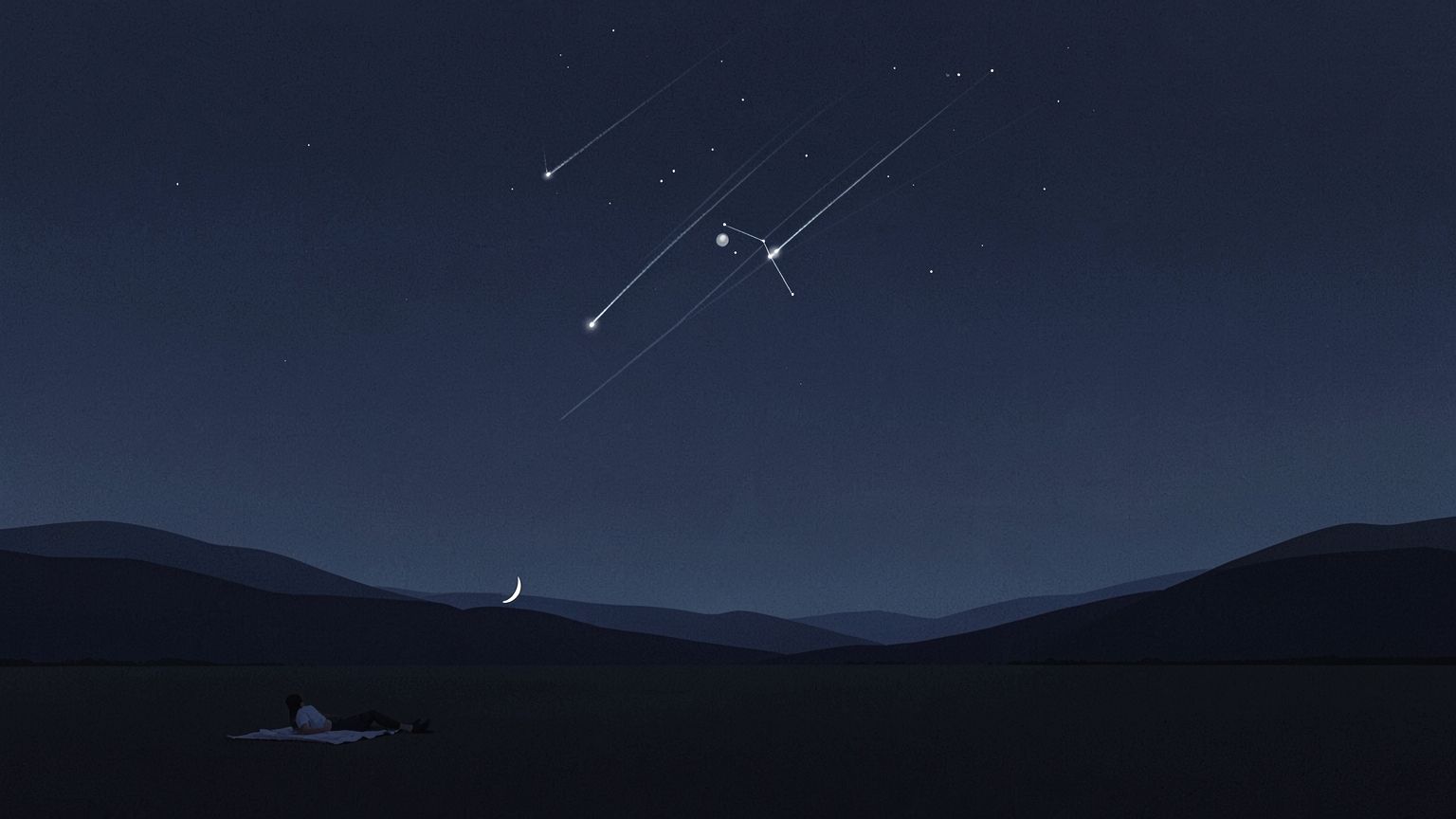
NASA treated the crossing as a public event. After sunset on Tuesday, Nov. 17, it invited people to flash Voyager's call sign, VGR, in Morse code at the sky using flashlights, phones or bike lights, and it offered a browser-based flasher for those who don't know the code. The agency described the gesture as a tribute and not an attempt at contact; only the Deep Space Network's large radio dishes can reach the probe.
The more substantive event comes Thursday, Nov. 19, at 12 p.m. EST, when JPL hosts a moderated discussion with Voyager team members and NASA leadership. It will cover the status of both spacecraft, their ongoing interstellar measurements and the engineering needed to keep them alive, followed by questions from media and audience members. NASA also plans to preview a Voyager documentary due in 2027, timed to the mission's 50th anniversary.
Spilker framed the open problem as a question about the boundary between the sun's domain and the galaxy's. "Where does the solar influence end and pristine interstellar space begin?" she said. Voyager 1 now has one more light-day of distance, and a shrinking supply of watts, to work on the answer.
Sources
- ScienceAlert — Space: It's Official! Voyager 1 Is The First Spacecraft To Reach One Light-Day From Earth
- Space.com — Space: NASA's Voyager 1 launched second, so how did it beat Voyager 2 to a light-day by nearly a decade?
- Space.com — Space: NASA wants you to 'shine bright' today for Voyager 1's light-day milestone. Here's how
Hannah Bell
Hannah Bell writes about physics, experimental discoveries, and the ideas used to describe the physical world. Her coverage explores how researchers test theories, interpret measurements, and investigate unresolved questions. She makes unfamiliar concepts approachable while distinguishing what an experiment demonstrates from the possibilities it may open for future research.
View all stories