Blue Origin's New Glenn will carry Google's AI server satellites into orbit in 2029
The deal gives Project Suncatcher its own heavy-lift launch for the first time, with roughly a data center rack's worth of Google chips headed to orbit.
 By Samir Shah
· 4 min read
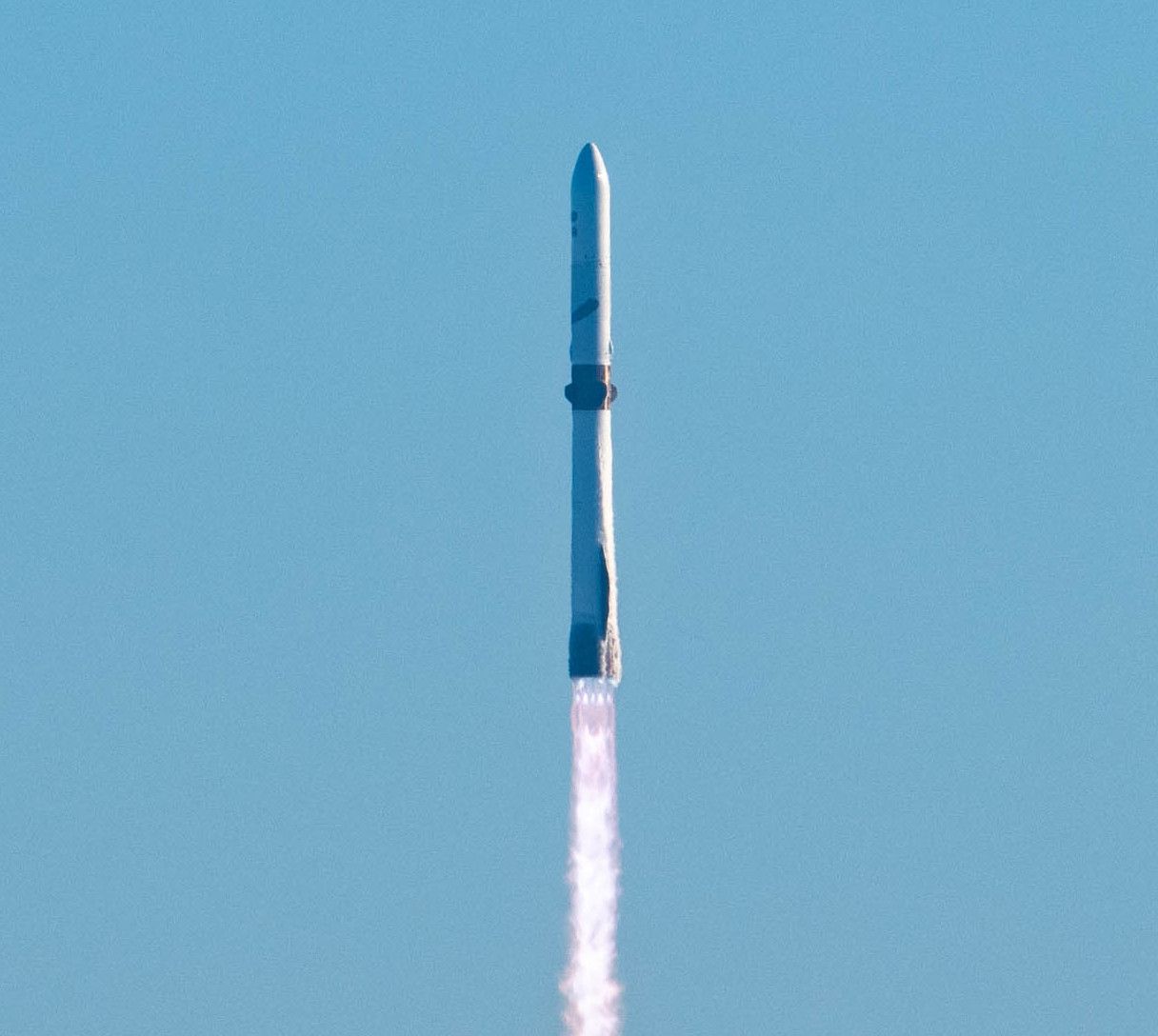
Google has booked Blue Origin's New Glenn rocket to carry a batch of its AI server satellites into orbit in the first quarter of 2029. The deal turns Google's experiment with computing in space into a mission with its own heavy-lift rocket.
The two companies announced the partnership Thursday. It covers satellites fitted with Google's Tensor Processing Units, the custom chips the company designed to train and run AI models. The launch belongs to Project Suncatcher, Google's long-shot plan that could eventually put AI data centers in space.
The companies called it the "first dedicated heavy-lift launch" for the project. The satellites will go into sun-synchronous orbit and together carry "computing capacity at roughly the scale of a data center rack," they said.
The announcement comes about a month after Google's first test in orbit. In October, the company deployed its first AI server satellite, powered up its TPUs and used Gemma 4, the onboard AI model, to send an AI-generated haiku back to Earth. That satellite rode on a SpaceX Falcon 9 as part of a rideshare mission with several other payloads.
The jump from a shared ride to a dedicated heavy-lift rocket is the real news. A rideshare is a cheap way to prove hardware works. A dedicated launch means Google is now building around a mission profile it chooses: the orbit, the timing and the payload size. That looks like a company moving Suncatcher out of the stunt phase and into engineering, even if the haiku made a better headline.
The orbit choice fits the idea behind the project. A sun-synchronous orbit keeps a satellite's position relative to the sun nearly constant, and certain versions can keep spacecraft in almost continuous sunlight. For hardware that runs on solar power, steady light is the main appeal. The case for computing in orbit rests on tapping abundant solar energy instead of competing for power and land on the ground.
It helps to be clear about scale. A single data center rack is a small slice of the computing that Google and its rivals are building on Earth, where large AI facilities hold thousands of racks. The 2029 mission will test whether Google can run meaningful AI hardware in orbit. It will not show that space data centers can compete with ground facilities on cost.
The harder problems are well known in the industry. Chips in orbit face radiation that can corrupt data and wear out electronics. Heat has to be shed into a vacuum, where there is no air to carry it away. And hardware that fails cannot be swapped by a technician. A rack-scale mission is a sensible next step for testing all three, and the announcement doesn't say how Google plans to handle them.
The timeline also deserves some skepticism. The first quarter of 2029 is more than two years away, and launch dates for new rockets and new spacecraft often slip. Google's satellites have to be built and qualified, and New Glenn has to keep up a reliable flight rate. Either side could push the date.
For Blue Origin, the deal matters as much as it does for Google. New Glenn, the reusable heavy-lift rocket from the company Jeff Bezos founded, made its first flight in January 2025. Since then Blue Origin has been working to win customers in a market where SpaceX launches most commercial payloads. Signing one of the biggest names in AI for a project with this much attention gives the rocket a customer that other satellite operators will notice.
Google's choice is telling too. Its first satellite flew on a SpaceX rocket, and the company has now picked a different provider for its first major flight. The companies didn't explain the decision. Still, spreading launches across providers is a reasonable hedge for any operator planning more than one mission, and Suncatcher's stated ambition only makes sense if it involves many launches.
That ambition remains far from proven. Even so, Google has moved from a haiku sent from orbit to a confirmed heavy-lift launch date, and the 2029 flight will be the first test of whether the project works at a size that matters.
Sources
Samir Shah
Samir Shah writes about artificial intelligence products, emerging applications, and the claims surrounding new systems. His coverage examines announced capabilities, availability, and practical limitations across consumer and business tools. He places individual launches in the wider technology landscape, with attention to what the published information establishes and what remains uncertain.
View all stories