A giant exoplanet slipped out of view, and a hidden sibling is the likely reason
Astronomers watched TOI-2535b's transits fade and stop over seven years. Their explanation is a strong gravitational tug that tilts its orbit away from Earth's line of sight.
 By Isaac Tan
· 5 min read
Key Takeaways
- TOI-2535b, a hot Jupiter first spotted by NASA's TESS in 2019, stopped crossing its star from Earth's view by March 2026.
- Researchers attribute the vanishing to an unseen companion, possibly Saturn-sized, that tilts the planet's orbit.
- The planet's next visible transit is not expected for 30 to 50 years, though the hidden sibling could appear sooner.
- Simulations covering 1 million years suggest the pair stays stable rather than tearing the system apart.
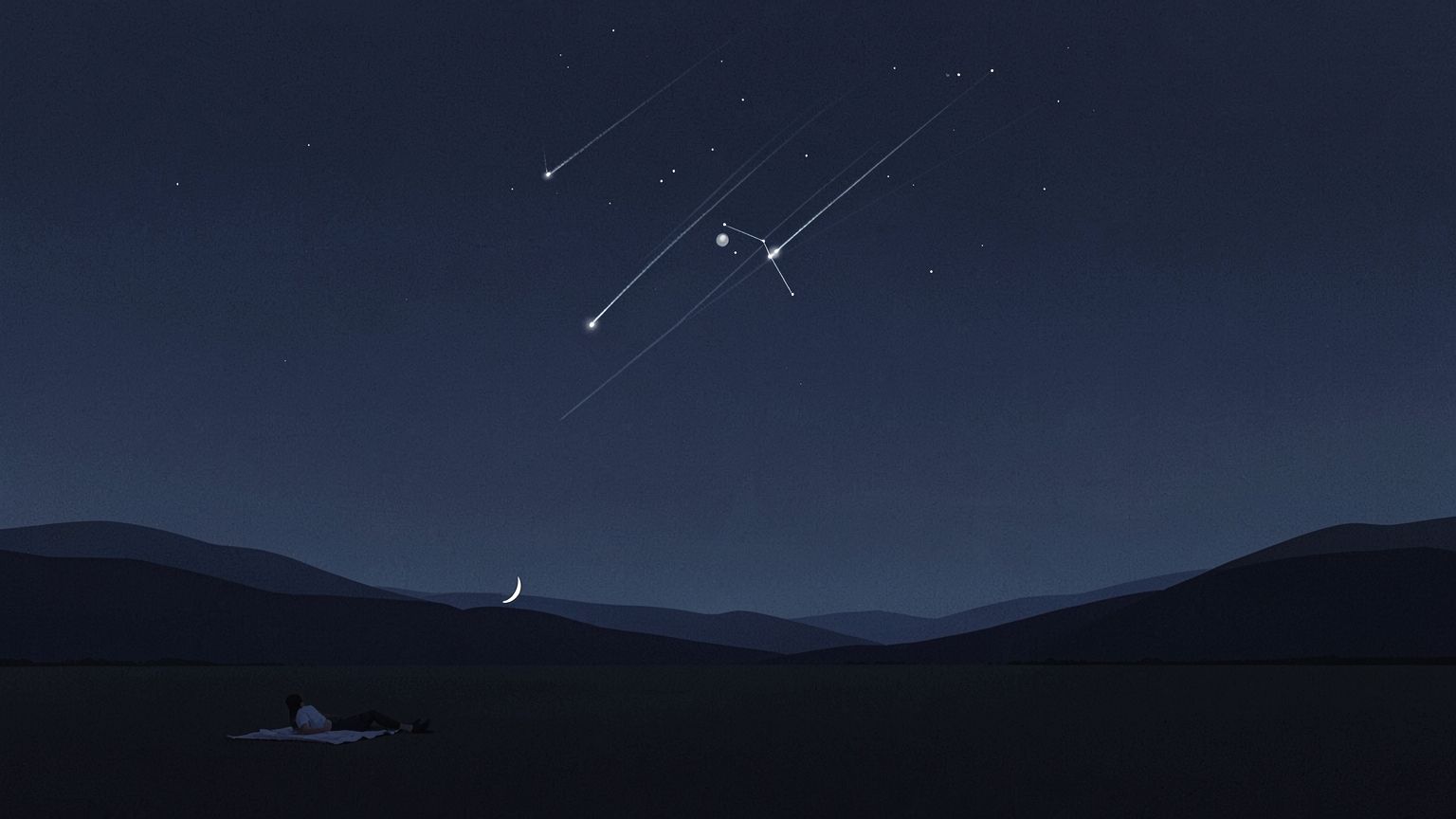
For seven years, astronomers tracked a giant planet as it crossed the face of its star. Then the crossings stopped. By March 2026, the planet known as TOI-2535b had slid out of view from Earth entirely, the first time researchers have watched an exoplanet vanish this way.
A team led by Samuel Yee, an astrophysicist and 51 Pegasi b Fellow at UCLA, says the planet is still there. Their explanation is an unseen second planet whose gravity is tilting TOI-2535b's orbit so fast that its path no longer lines up with our vantage point. The findings appear in a peer-reviewed paper describing what the authors call the vanishing transits of TOI-2535b.
"The planet's orbit is tilting so quickly that its transit disappeared while we were watching," Yee said.
That sentence carries the real news. Astronomers have long known that planets in the same system pull on one another and shift each other's orbits over time. The usual problem is that these changes play out over spans far longer than a research career. Here, the change was visible within a single observing campaign.
How a planet goes missing
TOI-2535b was first detected in 2019 by NASA's Transiting Exoplanet Survey Satellite, or TESS. The spacecraft finds planets by watching for the small, regular dip in brightness that occurs when a planet passes in front of its star. The approach is the most productive tool in the field. It accounts for about 4,800 of the nearly 6,500 confirmed exoplanets, or roughly three out of every four.
The method has a built-in weakness, and this system exposes it. A transit only happens if a planet's orbit is aligned edge-on from Earth's perspective. If the orbit tips even slightly, the planet can pass above or below the star as seen from here and never block its light.
That is what researchers saw unfold. Over seven years of follow-up with many space and ground-based telescopes, the planet's path drifted from across the middle of the star toward its upper edge. Its transits grew shorter and shallower, arrived up to six hours earlier or later than predicted, and eventually only grazed the edge of the stellar disk before stopping altogether.
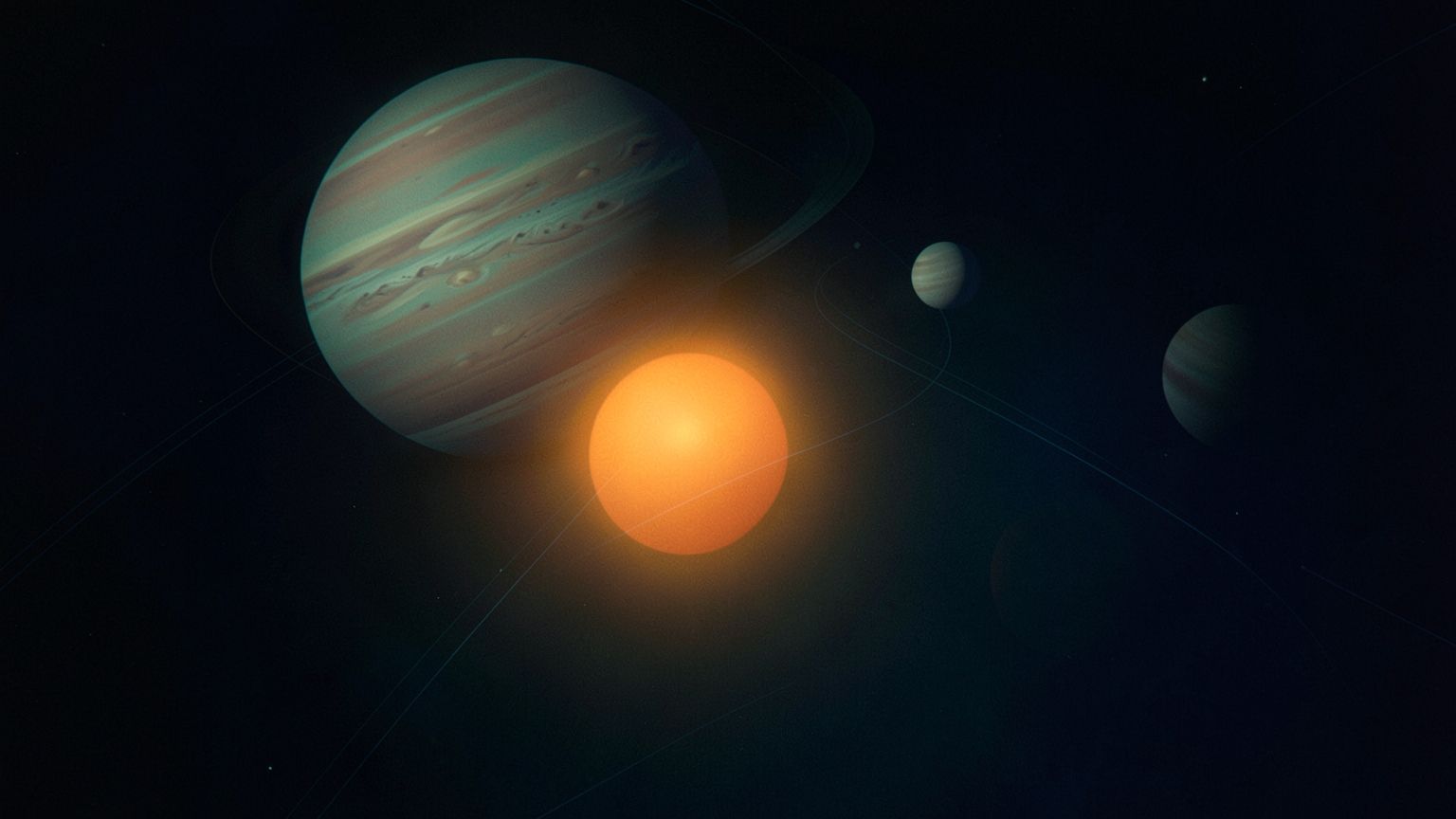
The planet itself is a hot Jupiter, a gas giant on a very tight orbit. It may be roughly as massive as Jupiter but circles its star in about 8.25 days, compared with 88 days for Mercury around the sun. The host star, TOI-2535, is a K dwarf slightly smaller than the sun and an estimated 9.7 billion years old.
The timing irregularities pointed the team to a companion. By analyzing how TOI-2535b's transits shifted, the researchers inferred at least one more planet, possibly around the size of Saturn, that has never been observed directly. The two worlds pull on each other strongly enough that each orbit wobbles like a spinning top. A full wobble cycle may take 30 to 50 years.
"This is the most extreme example we've seen because the two planets are interacting so strongly," Yee said.
The amount of tilt is the unusual part. In the solar system, the planets orbit in nearly the same plane, within about a degree of one another, with Mercury as the exception. Yee told ScienceAlert the two planets around TOI-2535 are inclined at least 5 degrees relative to each other. That is larger than in most known multi-planet systems.
"A 'flat' system is what we expect, since planets form out of a similarly flat protoplanetary disk," he said.
Co-author Erik Petigura, also of UCLA, compared the effect to eclipses. If the moon orbited in exactly the same plane as Earth circles the sun, he noted, eclipses would happen every month. They are rare because the moon's orbit is tilted, a leftover of the collision with the early Earth that formed it.
A long wait and an open formation question
Anyone hoping to see TOI-2535b transit again will need patience. The researchers don't expect its next visible crossing for another 30 to 50 years as the wobble brings its orbit back into alignment. The hidden companion could swing into view sooner. If it begins transiting, astronomers would get direct measurements of a planet they now know only by its gravitational effects, along with tighter limits on the properties of both worlds.
The team also tested whether this unruly arrangement can last. They simulated 1 million years of the system, about 50 million orbits of TOI-2535b, and found that an orbital resonance between the planets appears to keep them stable. In other words, the planets are unlikely to collide or fling each other out of the system. That matters because it suggests the configuration is a long-lived state rather than a brief accident caught at a lucky moment.
How such a system formed is less settled. Hot Jupiters have been a puzzle since the first one, 51 Pegasi b, was found around a sunlike star in 1995. Most researchers think these planets formed farther out and moved inward. The debate is whether they were flung inward by violent encounters with other planets or drifted gradually through the gas disk around a young star.
The accounts of this study don't line up neatly on that question. EarthSky's summary of the work said the tilted orbits make a scattering scenario, involving a near-collision with another planet, the more likely origin. Yee, in his email to ScienceAlert, said a violent origin was probably not how this particular pair formed. "Instead, they likely migrated in through the protoplanetary disk," he said, adding that "how their inclinations got excited remains an open question."
That tension looks like the most interesting thread left to pull. Gentle disk migration should produce a flat system, yet this one is clearly tilted. Some later process must have tipped the orbits after the planets settled close to their star, and the paper does not yet identify it. Most hot Jupiters have no nearby planetary neighbors at all, which makes TOI-2535 a rare test case for whatever that process turns out to be.
The broader lesson concerns how planet surveys work. Transit catalogs are snapshots of orbits that happen to line up with Earth right now. A system like this one suggests some planets drop off those lists simply because their geometry changes, while others may appear without warning. Yee told ScienceAlert that astronomers have already seen a couple of cases where transits appeared, "so there are planets coming into and out of view from our perspective all the time."
With TESS and other observatories now watching some stars for years at a stretch, TOI-2535b seems unlikely to stay the only planet caught in the act of vanishing.
Sources
Isaac Tan
Isaac Tan covers biology, biodiversity, and research into the variety of life on Earth. His work follows discoveries about species, evolution, and the connections between organisms and their environments. He explains the evidence behind new findings and the questions they raise, bringing context to developments from genetic studies to ecosystem research.
View all stories