Tesla asks NHTSA to keep its sworn Cybercab safety answers fully confidential
The only public part of the filing is a first-responder guide. Regulators must now decide whether Tesla's explanation of how a car without pedals meets federal rules stays sealed.
 By Serena Wu
· 5 min read
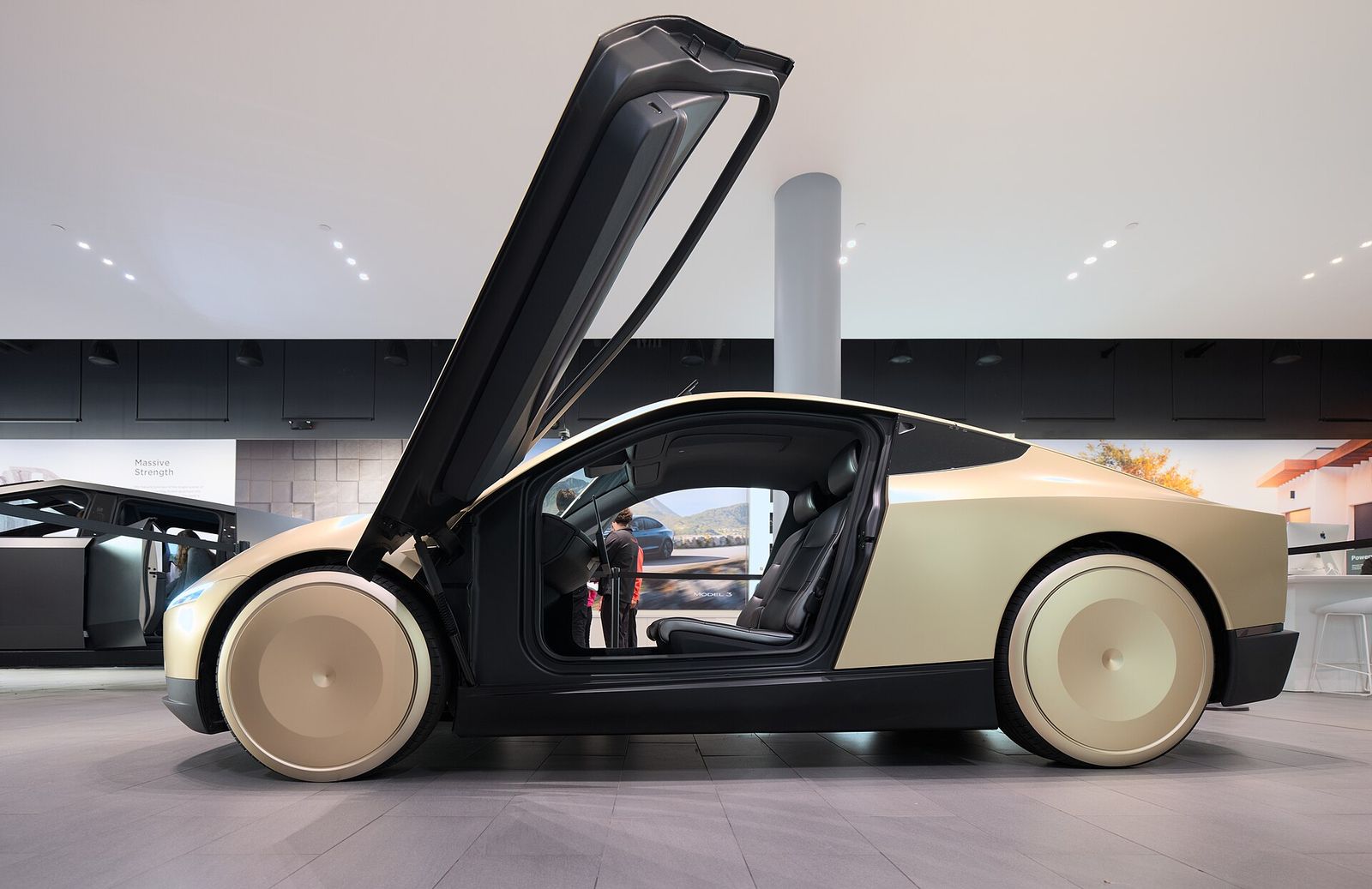
Tesla has answered federal regulators' demand that it explain, under oath, how its Cybercab robotaxi complies with U.S. vehicle safety standards. It has also asked the National Highway Traffic Safety Administration to keep every part of that answer from public view.
The company filed its response by the Oct. 30 deadline. Its one-page cover letter, dated that day and sent from Tesla's Austin, Texas, address, contains a single sentence: "The entirety of this file is confidential business information."
The confidentiality claim covers the central question regulators raised: how a vehicle built without a steering wheel, brake and accelerator pedals, or mirrors was certified as meeting federal rules written around those controls. NHTSA has not found the Cybercab out of compliance with any standard.
Automakers in the U.S. certify on their own that their vehicles meet Federal Motor Vehicle Safety Standards. NHTSA issued a Special Order to Tesla on Sept. 10, a week after the company began charging for Cybercab rides in Austin on Sept. 3. The order posed 21 requests about the certification. An incomplete answer could bring civil penalties of up to $139 million, and a false one could expose the company to criminal liability.
The order singled out rules the Cybercab does not obviously satisfy. Federal brake standard FMVSS 135 states that "the service brakes shall be activated by means of a foot control." NHTSA has said publicly that a maker of a vehicle without a foot brake cannot certify to that standard, and it asked Tesla to explain how it did.
Other questions involved FMVSS 108, which requires a turn-signal control that shuts off automatically as the steering wheel turns, and FMVSS 111, which requires mirrors. The agency also asked whether Tesla certified the car with temporary driver controls attached and then removed them. That approach could conflict with the federal Safety Act's ban on making required safety equipment inoperative.
NHTSA also wanted to know why the Cybercab can operate without an exemption under Part 555 of federal regulations. Amazon's Zoox took that route for its own robotaxi, which also lacks a steering wheel, and received an exemption in July that limits it to 2,500 vehicles a year. Tesla instead self-certified the Cybercab and began selling rides.
In September, Tesla's position was that the Cybercab complies with every applicable federal standard, including the brake rule.
Tesla's original deadline was Sept. 30. On Sept. 18, the company asked for eight more weeks, to Nov. 20, pointing to "the voluminous nature of the request" and the effort needed to search its records and draft detailed answers. NHTSA instead granted 30 days, which moved the deadline to Oct. 30.
Three Tesla documents now appear in the agency's investigation docket, AQ26002, and two of them contain no substantive information. Besides the cover letter, there is a placeholder for Tesla's answer to Request 8. That request asked the company to explain, standard by standard, how it determined the Cybercab complies, including which subpart it certified to and whether it relied on physical tests, simulations or engineering analyses. An NHTSA note says Tesla asked for each of those documents to be kept confidential in full.
The third document, and the only one with real content, is version 1.2 of Tesla's Cybercab First Responder Interaction Plan, a guide of about 30 pages dated Sept. 3. It is written for police and fire crews, and Electrek reported that Tesla has posted it on its website since July.
Electrek also reported that this has happened before. In June 2025, Tesla asked NHTSA to withhold its answers to questions about the launch of its original Robotaxi service in Austin, which ran on supervised Full Self-Driving software while that software was under investigation. Those answers were never made public, according to Electrek.
The guide was not written for regulators, but it touches on several of NHTSA's questions. It describes the Cybercab as "not typically equipped with a steering wheel or acceleration and brake pedals."
The same guide says a Cybercab that does have a steering wheel and pedals "is typically an engineering or test vehicle, and operates at SAE Level 2 autonomy," and it includes instructions for driving such a car. That bears on NHTSA's Requests 5 through 7, which asked whether the vehicles can be driven using temporarily attached controls.
The document also lays out the conditions in which the Cybercab is designed to operate. They include "all public roadways, such as freeways, highways, city streets, and rural roads," at any hour and in light to moderate rain, fog and snow. That reaches well beyond the geofenced area of Austin where the cars run now. The guide also refers to an "Arizona Areas of Operation Appendix." NHTSA's first two requests asked for the vehicle's operating domain and Tesla's plans to scale up.
The guide also explains how emergency crews can move a Cybercab. A first responder shows a badge to a camera in the car's B-pillar, a Tesla representative verifies the credentials, and driving controls then appear on the touchscreen. NHTSA's Request 20 asked whether the touchscreen can be used to move the vehicle and under what limits.
The guide does not address brakes, mirrors, dashboard warning lights or the certification itself.
Requests for confidential treatment go to NHTSA's chief counsel under Part 512 of federal regulations. The agency decides whether Tesla's claim is valid and can order a public version of the material released if it is not. Electrek reported that NHTSA has not commented on Tesla's request.
NHTSA's opening resume for the investigation put the number of affected vehicles at about 1,000. Those Cybercabs continue to carry paying passengers in Austin while the agency reviews the sealed filing.
Sources
Serena Wu
Serena Wu covers vehicle safety, recalls, and the systems designed to help drivers avoid collisions. Her work follows official notices, safety ratings, and updates to driver assistance features. She explains which vehicles are affected, what published findings establish, and where limitations remain, giving readers clear context for automotive safety news.
View all stories