BYD's Yangwang U9 Xtreme tops 500 km/h in a one-way record run in Abu Dhabi
The electric hypercar hit 312 mph on a closed highway and beat its own mark. The record counts a single pass, not the traditional two-way average.

· 4 min read
Key Takeaways
- The FIA and Guinness World Records recognized a 503.17 km/h (312.66 mph) run from Nov. 1.
- Both Guinness titles are for a single direction, not the two-way average traditionally used for top-speed records.
- Yangwang plans only 30 cars, at about $3 million each. BYD does not sell passenger cars in the U.S.
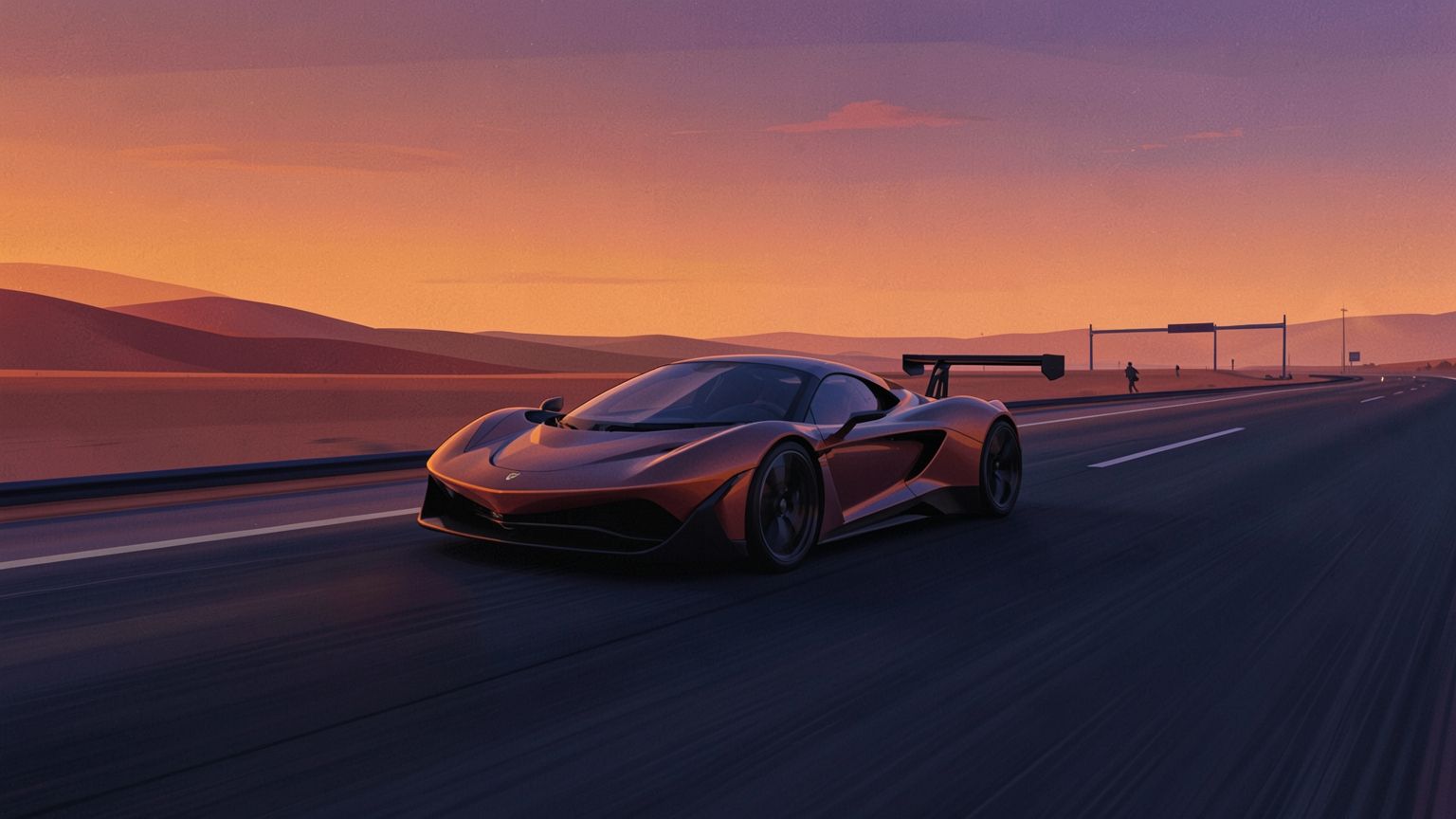
An electric hypercar from BYD's luxury brand Yangwang has become the first production car to exceed 500 km/h. The U9 Xtreme reached 503.17 km/h, or 312.66 mph, on a closed highway in Abu Dhabi. Both the FIA and Guinness World Records recognized the run.
The run earned two Guinness titles: highest speed for a production car and highest speed for an electric production car. Both are listed as single-direction records. That qualifier separates this mark from how production-car top speeds have traditionally been measured.
BYD announced the result on X. The company said the car "has done the impossible" and called it "the fastest production car on the planet." BYD's post claimed four Guinness records. The FIA's announcement lists only the two for this run.
Abu Dhabi shut down a 10-kilometer section of the Sheikh Khalifa Bin Zayed International Road, known as the E11, in the emirate's Al Dhafra Region. That gave the team a straight of about 7 kilometers, or 4.35 miles. Crews cleaned the road of debris before the attempt. They went back over the surface to look for wires that street sweepers might have left behind.
German racing driver Marc Basseng drove the car. He had also set its previous record. The FIA said his top speed on the first day was 490 km/h. The team then changed the rear wing, the damping and the tire pressures overnight. On his second attempt on Nov. 1, Basseng reached 503.17 km/h.
The U9 Xtreme mainly beat its own record. In September 2025, it ran 496.22 km/h (308 mph) at the ATP Papenburg proving ground in Germany. That run had already topped the 490.48 km/h set in 2019 by the Bugatti Chiron Super Sport 300+.
The latest record came days after BYD released video of a U9 Xtreme hitting a guardrail at about 280 mph during an earlier high-speed test. The driver was not hurt. On its next run, the car reached 457.89 km/h.
Top-speed records for production cars have usually been the average of two runs in opposite directions, completed within an hour. The two-way format cancels out the effects of wind and road grade. Koenigsegg used that method for the 447.19 km/h record it set with the Agera RS in 2017.
Bugatti drew criticism in 2019 when its Chiron reached 490 km/h in one direction. That car was also a pre-production model, and Bugatti itself said the run was not an official record. Electrek argued that BYD should be held to the same standard. It called the Abu Dhabi run an impressive demonstration but not a definitive record.
The tires are another open question. The record car ran on custom semi-slick tires developed with Indonesia's Giti Tire. Electrek reported that it is unclear whether the 30 customer cars will get them.
Koenigsegg says its Jesko Absolut could in theory exceed 500 km/h. The company has never tried a run.
The U9 Xtreme is a track-focused version of the Yangwang U9, the brand's flagship supercar. It has four electric motors, one at each wheel. Each motor is rated at 555 kilowatts and spins up to 30,000 rpm, for a combined 2,220 kilowatts.
Unlike the standard U9, the Xtreme uses a 1,200-volt electrical architecture. Its battery is a track-grade version of BYD's Blade Battery. The Blade Battery uses lithium iron phosphate (LFP) cells, the same chemistry BYD uses in its least expensive city cars.
Even at a 20% charge, the battery can still deliver 1,800 kilowatts, according to Car and Driver. It can also take in 700 kilowatts through regenerative braking.
Having a motor at each corner gives engineers fine control over how torque is split between the wheels. This keeps wheelspin low. Electric dampers limit how much the body squats and dives during hard acceleration and braking. Active aerodynamic parts help keep the car stable at high speed.
The car also holds the production EV lap record at the Nürburgring Nordschleife, with a time of 6:59.157. For comparison, the Rimac Nevera R, which set several EV records last year, has a top speed of 431.45 km/h.
Yangwang plans to build only 30 U9 Xtremes, and BYD is charging about $3 million each. The car will not be offered in the U.S., where BYD does not sell passenger cars.
Electrek described the record as mainly a marketing exercise. In its view, the run serves as a halo for Yangwang ahead of a new ultra-luxury sedan and for BYD's expansion into Europe.
Sources
Julian Morales
Julian Morales follows automakers, vehicle manufacturing, and the supply chains behind the cars reaching dealerships. His coverage connects factory plans, production figures, supplier developments, and company announcements with broader industry changes. He explains how manufacturing decisions and parts availability can influence vehicle output, delivery schedules, and the direction of the automotive business.
View all stories