Kia's EV1 targets gas-car prices in Europe, but it likely won't come to the US
A small hatchback co-developed with Hyundai could start near €20,000, about $22,000, and debut Kia's software-defined vehicle platform before the end of 2027.

· 5 min read

Key Takeaways
- A Kia executive told Auto Express the EV1 is expected to start at about €20,000 to €22,000 before incentives.
- Kia says the car will be its first software-defined vehicle, with Level 2+ highway driver assistance.
- Kia has said the small hatchback is designed for Europe, which makes a US launch unlikely.
Kia is developing an electric hatchback meant to cost about as much as a small gasoline car. Its expected European starting price of roughly €20,000 to €22,000, about $22,000 to $24,000 before government incentives, would make it the cheapest EV the automaker has offered.
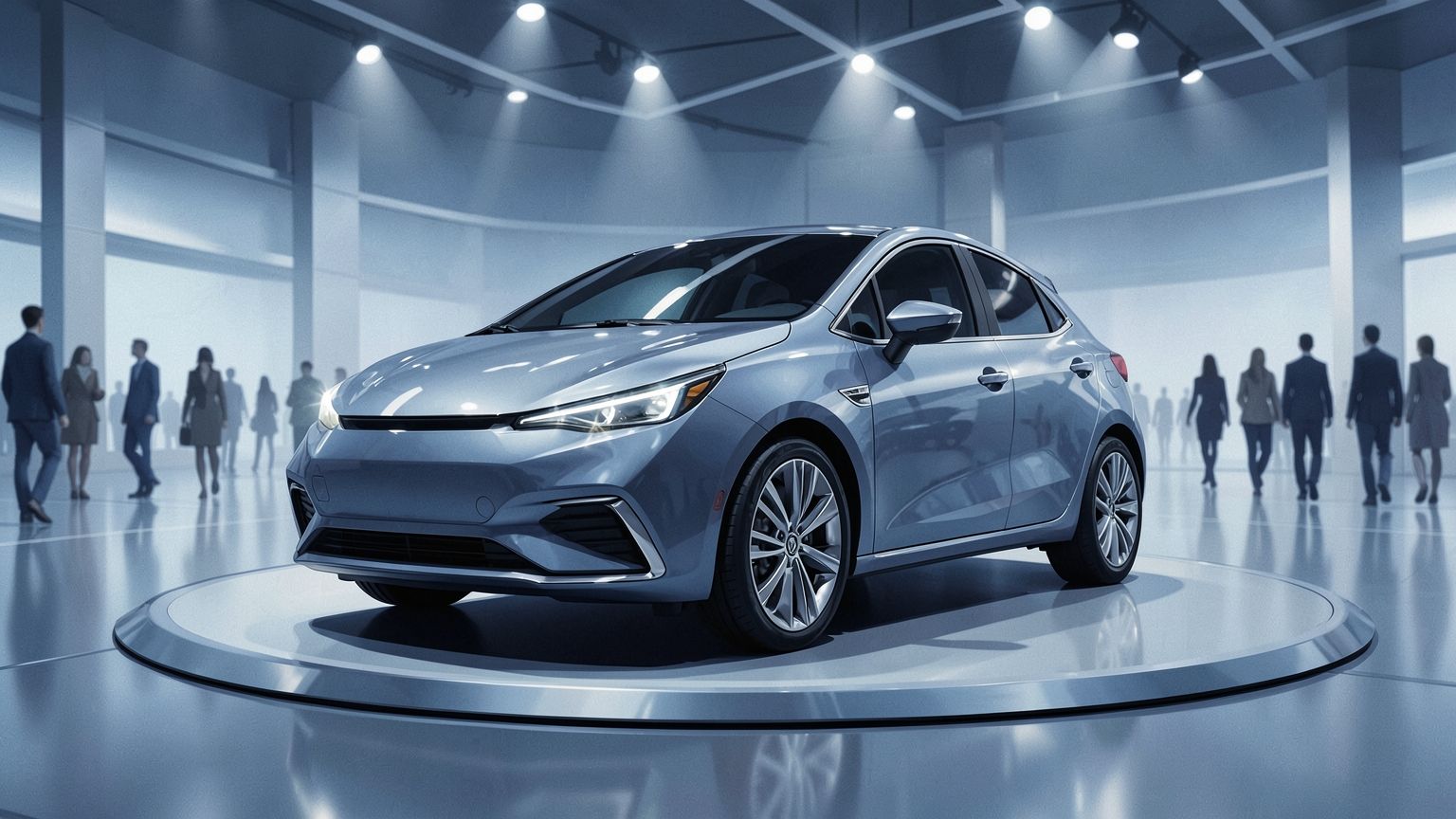
The car is expected to be called the EV1. The company said it plans to finish development of an all-new B-segment electric hatchback, the European term for a small car, by the end of 2027. Kia also described it as its first software-defined vehicle, a design in which much of the car's behavior is controlled by centrally managed software that can be updated over time.
Kia's announcement included few other details. Most of what is known came from Ted Lee, Kia's executive vice president and head of global operations, in an interview with Auto Express. Lee said Kia and Hyundai are building a new dedicated EV architecture together for two entry-level electric cars. They are expected to arrive as the Kia EV1 and the Hyundai Ioniq 1.
Lee told Auto Express the EV1 would be priced to compete with small gasoline cars as well as with other low-cost EVs. That benchmark matters more than the euro figure. Buyers of small cars in Europe tend to compare a basic hatchback's sticker price with the cheapest combustion model on the lot. An EV that needs a subsidy to match that price has a harder sale than one that matches it without help.
The expected price range fits within Kia's current lineup. The EV2, Kia's least expensive EV today, starts at €26,600, about $29,500, in Germany and other European markets. Cutting roughly €5,000 to €6,000 from that base price would put the EV1 near the Renault Twingo, an entry-level electric car that starts at about €20,000. The Twingo is the obvious rival for the EV1 and the Ioniq 1.
Kia already sells a broad electric lineup in Europe and the U.K.: the EV2, EV3, EV4, EV5, EV6 and EV9, plus the PV5 van. Adding a cheaper model below the EV2 is a reasonable step. A full range of price points lets Kia catch buyers moving up from a first car as well as those moving down from a larger one. Splitting the development cost of the new platform with Hyundai also looks like the most realistic way to make the low price work. At this level, the profit on each car is thin, so spreading engineering costs across two brands and higher combined volume is close to necessary.
Lee said the low price would not mean cutting corners on quality, design or features. Kia's stated technology plans support that claim on paper:
- The EV1 will run on Hyundai's software-defined vehicle architecture, known as CODA.
- It will use the Pleos Connect infotainment system.
- It will include Gleo AI, an in-car AI assistant that Kia describes as agentic, meaning it is designed to carry out tasks rather than only answer questions.
- Kia said the car will offer Level 2+ assisted driving on highways. The company plans to move to Level 2++ in 2029, which would extend the system to city streets.
Under the industry's standard definitions, Level 2 systems still require the driver to supervise at all times. Kia's description of these features as autonomous driving goes further than that.
The biggest risk in the plan is the mix of goals. Kia is promising a car priced against basic gasoline hatchbacks that also introduces its newest software platform and a city-capable driver-assistance roadmap. New software architectures often arrive late or with problems. Launching one in the model with the least room in its budget leaves little margin for either. On the other hand, a cheap car sold in large numbers can spread software costs widely. If the platform works, the EV1 could reach far more drivers than Kia's pricier models would.
Some cost savings may show up inside the car. Kia's current EVs use the ccNC infotainment setup, which has two 12.3-inch screens and a separate 5-inch climate control panel. Electrek suggested the EV1 could get a simpler arrangement. Electrek also expects a sporty GT version, as Kia's other EVs have received. As an entry-level model, though, that version may not get the dual-motor all-wheel drive used on its larger siblings.
Auto Express reported that the EV1 will look sportier and less boxy than the EV2. It also reported that the design may borrow from Kia's Vision Meta Turismo concept and apparently will not be based on the Picanto, Kia's smallest gasoline model. Building a new design instead of electrifying the Picanto suggests Kia wants the EV1 to look like a car people choose on purpose, not a budget fallback.
For American shoppers, the news is mostly about what they won't get. Kia has previously said the B-segment hatchback is designed for Europe. Electrek raised the possibility that the EV1 could be built alongside the EV2 at Kia's plant in Slovakia. That would make sense for the European market but not for exports to the US.
In the US, Kia's EV3, a compact electric SUV, is now on sale starting at $29,890. That gap is the real takeaway for American readers. Kia is building a car around a price point of about $22,000 to $24,000, and the EV3 costs roughly $6,000 to $8,000 more. Kia's limited details on the EV1 so far point to a 2027 debut in Europe.
Sources
Dominic Price
Dominic Price writes about new cars, pickup trucks, and SUVs, following model announcements and changes across vehicle lineups. His coverage connects pricing, dimensions, powertrains, and equipment with the choices facing buyers. He puts published specifications in context and explains differences between models, making crowded launch calendars and trim descriptions easier to follow.
View all stories