Ford begins making CATL-licensed LFP battery cells in Michigan for its Fathom EV pickup
The first cells from Ford's $3 billion Marshall plant are headed to Fathom prototypes in Kentucky, and the plant is being built at half its original planned capacity.
 By Serena Wu
· 5 min read
Key Takeaways
- Cell production in Marshall, Michigan, began in October, and the first cells are going to Fathom prototypes at Ford's Louisville plant.
- The plant is designed for 20 gigawatt-hours a year, half the up to 40 gigawatt-hours Ford first planned.
- Fathom preorders open in early 2027 at a starting price of $28,350 for the standard-range model, with launch targeted for the fourth quarter of 2027.
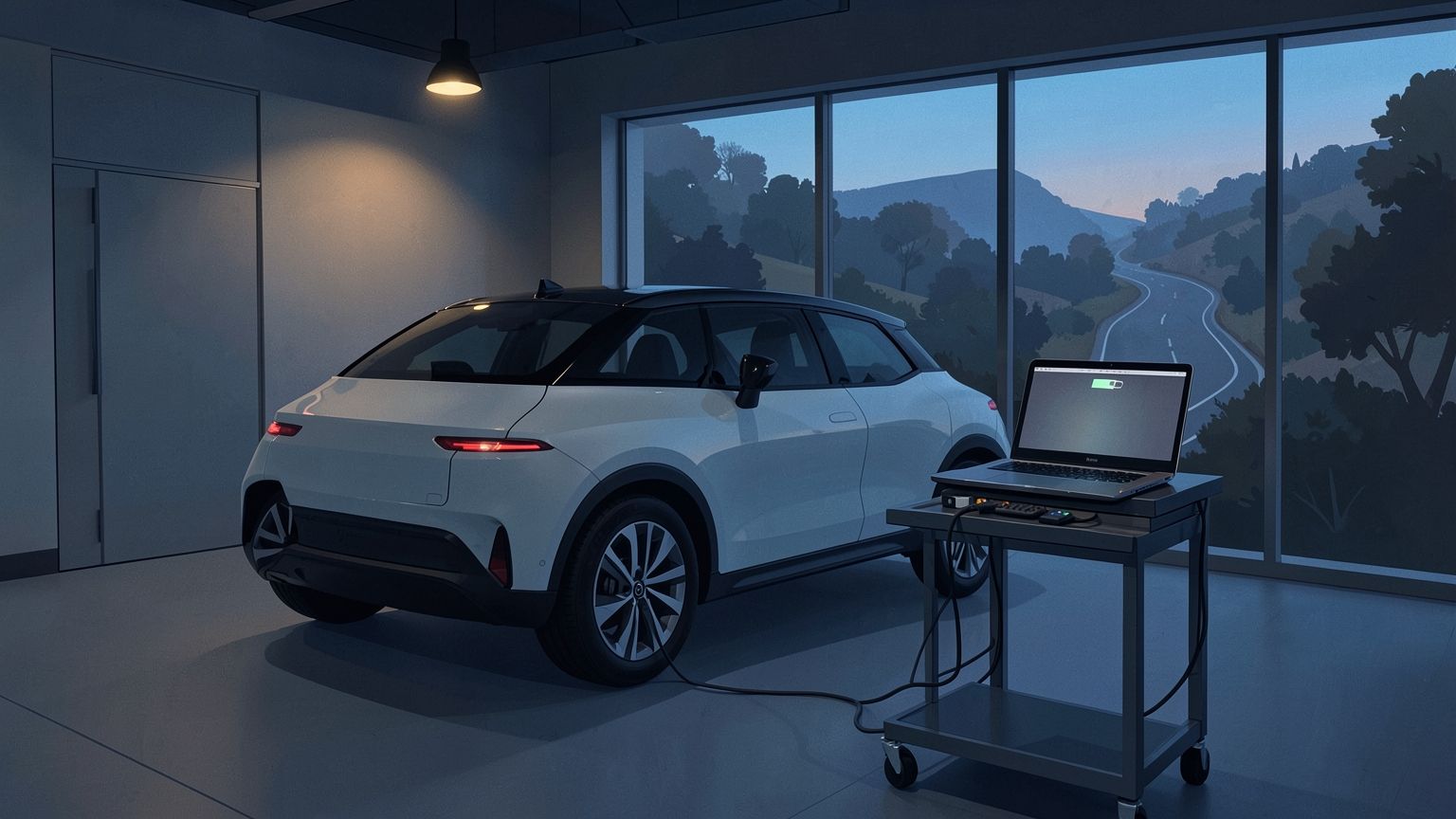
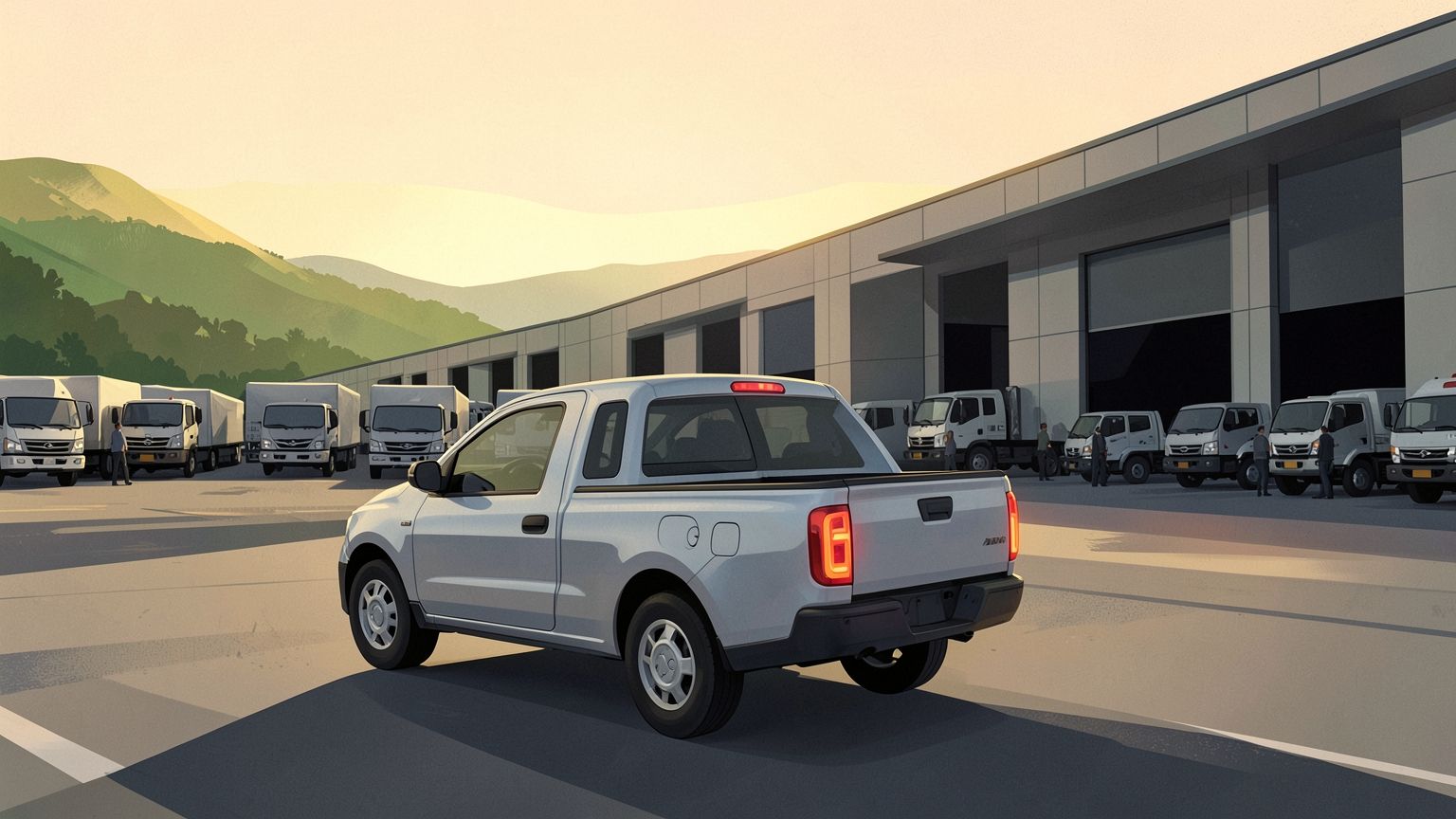
Ford is now building its own lithium iron phosphate battery cells in the United States, using technology licensed from Chinese battery maker CATL. The first cells are going into prototypes of the Fathom, the small electric pickup Ford is counting on to make EVs affordable again.
The automaker said Wednesday that cell production at its roughly $3 billion plant in Marshall, Michigan, about 100 miles west of Detroit, began in October and that finished cells are now shipping. Ford calls the site BlueOval Battery Park Michigan. The first cells are bound for Ford's Louisville Assembly Plant in Kentucky, where they will power Fathom test vehicles. The Fathom is the first model on the company's new Universal Electric Vehicle platform.
Ford says it will be the first company in the U.S. to deliver LFP cells for mainstream automotive use. That is a claim about domestic production, not about the chemistry itself. LFP was invented in the United States, but Chinese manufacturers turned it into a commercial product, and CATL is the largest of them.
Why Ford licensed the battery from CATL
LFP cells contain no nickel or cobalt, which makes them cheaper to produce than the nickel-based lithium-ion cells used in many American EVs. They also tend to last well through years of charging. The trade-off is lower energy density, so carmakers usually accept less range per pound of battery to get the lower cost.
Ford needed manufacturing know-how it didn't have, and it decided that licensing CATL's process was faster than developing its own. Alan Clarke, Ford's vice president of advanced development projects, who also leads the UEV platform, made that case during a tour of the plant Tuesday. He said speed matters if Ford wants to sell affordable EVs built in the U.S. "CATL being the biggest in the world means that they're the best supplier to get us that technology," he said. He added that the arrangement helps Ford learn to make LFP cells itself.
The engineering logic holds up. Building an LFP supply chain from scratch would cost years, and the Fathom's price depends on cheap cells. Ford owns and operates the Marshall plant, so the expertise it gains on the factory floor belongs to Ford, even though the underlying technology came from CATL.
The arrangement has also drawn criticism, including from Transportation Secretary Sean Duffy. In September, Duffy wrote to CEO Jim Farley expressing "profound concern" about Ford's ties to Chinese companies, saying they could hurt the automaker and the broader U.S. auto industry. Ford, the largest producer of vehicles in the U.S., has routinely promoted its American jobs and factories, and it can now point to a Michigan plant turning out the cells. It still has to keep defending where the technology came from.
A smaller plant, built for speed
The Marshall plant covers about 2 million square feet. Its lines are designed to produce 40 cells a minute, or 20 gigawatt-hours of capacity a year, split between EVs and Ford's energy storage business. Ford originally planned for as much as 40 gigawatt-hours. It cut that target as Ford and much of the industry scaled back EV plans. Ford says the building has room to expand if demand warrants.
Halving capacity before the first vehicle reaches customers looks like a cautious decision, not a failed one. Battery plants are expensive to run below capacity, and Ford is better off filling a 20-gigawatt-hour plant than paying to keep a 40-gigawatt-hour one half idle. The space it left open means a hit Fathom wouldn't require a new building.
Ford says the cells will also supply Ford Energy, its new battery storage business in Kentucky. That gives the plant a second customer if EV demand stays soft, which makes the investment less risky than a plant that could only serve cars.
Quality control is the challenge that comes with fast output. Ford says workers use AI-driven image recognition to catch defects as cells come off the line, and it described an ambitious target: making bad cells "so rare that we track their frequency per billion cells rather than per million." The company is still early in certifying its processes, though. It plans to increase cell output next year, and Electrek reports that Ford expects the Michigan battery pack plant to open in 2027, ahead of schedule.
What the Fathom promises, and what Ford hasn't said
The Fathom is the reason the plant exists. Preorders open in early 2027, with the standard-range model starting at $28,350, and Ford is targeting a launch in the fourth quarter of 2027. Farley confirmed that timing on Ford's third-quarter earnings call last month. He called the truck a "breakthrough product" and stressed that its starting price is under $30,000. CNBC reports that Farley has positioned the truck as a rival to Tesla and Chinese automakers.
Ford has listed a long set of features:
- Prismatic cells built into the chassis to reduce structural costs.
- More interior space than a Toyota RAV4, according to Ford.
- Lower five-year ownership costs than a three-year-old used Tesla Model Y, according to the company.
- Apple Maps built directly into the navigation system, which Ford says is a first.
- Standard Apple CarPlay and Android Auto, plus a large touchscreen.
- BlueCruise hands-free driving capability on every version.
- Bidirectional charging.
Ford has not disclosed battery capacity or range. For an LFP vehicle, that is the most important missing number. A price in the high $20,000s only looks like a bargain if the range is good enough for daily driving and the occasional road trip. Electrek reports that prototypes seen at a Tesla Supercharger over the summer had an NACS charging port. That would give owners direct access to Tesla's network, which matters more for a truck with a smaller battery.
The ownership-cost comparison with a used Model Y is Ford's own claim, and it depends on assumptions the company has not published, such as depreciation, energy prices and insurance. It shows how Ford wants buyers to think about the truck: as a cheaper alternative to a used Tesla rather than as an expensive new EV.
Getting Michigan-made cells into prototypes is a necessary step, but Ford still has to raise output through 2027, certify its processes and announce range figures that justify the Fathom's price. Its decision to license CATL's technology instead of developing its own has bought Ford time. Whether that pays off depends on how the truck performs once range and real-world costs are known.
Sources
Serena Wu
Serena Wu covers vehicle safety, recalls, and the systems designed to help drivers avoid collisions. Her work follows official notices, safety ratings, and updates to driver assistance features. She explains which vehicles are affected, what published findings establish, and where limitations remain, giving readers clear context for automotive safety news.
View all stories