Toyota's C-HR EV recall grows to 19,000 vehicles worldwide over a battery software flaw
The 2026 electric SUV can overcharge its battery during regenerative braking and lose drive power. North American owners get a free dealer fix.

· 4 min read
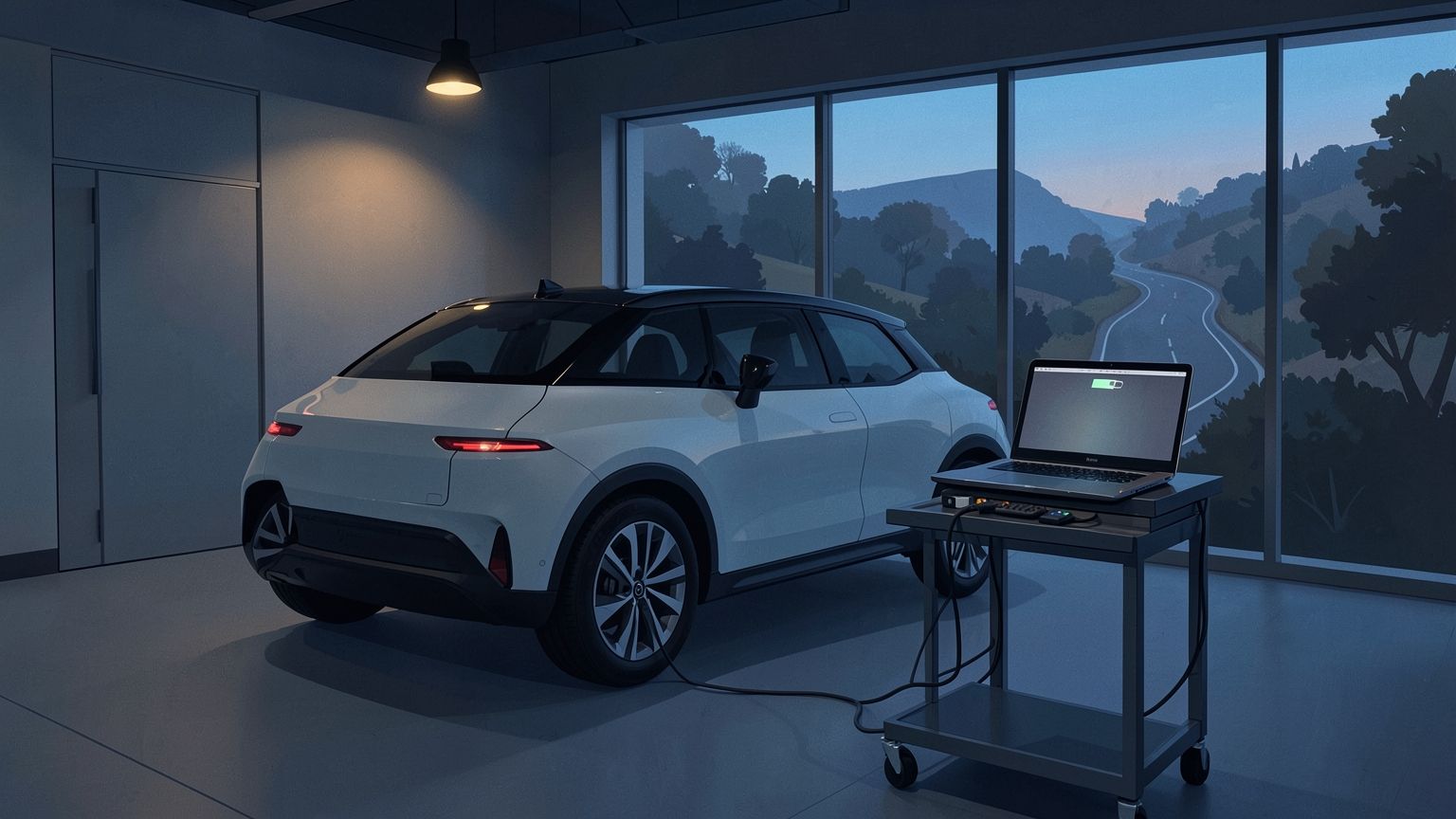
Toyota's recall of the 2026 C-HR electric SUV now covers about 19,000 vehicles worldwide, according to Germany's federal motor transport authority, the Kraftfahrt-Bundesamt (KBA). The cause is faulty battery software that can let the pack overcharge and, in some cases, shut down the electric drive system while the vehicle is moving.
The global figure is more than twice the North American count. Toyota first announced the recall in September for certain 2026 C-HR EVs in North America. The company initially estimated about 10,000 affected vehicles, then put the number at 8,521 in a letter to the National Highway Traffic Safety Administration. That leaves roughly 10,000 affected vehicles outside the region. Germany accounts for 1,096 of them, and the KBA says its investigation there is still open.
What goes wrong, and when
The fault is in the programming of the EV-ECU, the computer that manages the high-voltage battery. One of its jobs is to cap the battery's charge level. After an internal investigation, Toyota told NHTSA that incorrect software interfered with that limit, so the battery could overcharge while the vehicle was being driven.
Toyota described a specific trigger. The battery has to be close to full already, and the driver then keeps using regenerative braking, which turns the motor into a generator and sends energy back into the pack. When the battery overcharges, warning lights come on and a chime sounds. The electric drive system can then shut down, and the SUV loses motive power on the road.
The conditions are specific, but they are easy to picture: a driver who charges to a high level and then heads down a long hill would lean on regenerative braking with a nearly full pack. Battery software is supposed to reduce or block regeneration when the pack has no room left. This is basic battery management, and it is the kind of protection buyers assume works, which is why the failure is troubling even with a narrow trigger.
The recall covers C-HR EVs built between June 17, 2025, and July 9, 2026. It applies only to the 2026 model year. The 2027 C-HR is already on sale. In Europe and other overseas markets, the electric version is sold as the C-HR+ to set it apart from the gas and hybrid C-HR. Owners outside North America should look for that name on recall notices.
The fix, and the gap outside North America
In North America, owners can take affected vehicles to a Toyota dealer, which will update the battery ECU software at no charge. Owner notification letters went out on Oct. 18, 2026. The Toyota recall number is 26TA17, and owners can reach Toyota customer service at 1-800-331-4331.
For the roughly 10,000 affected vehicles in other markets, the picture is less complete. Toyota has said the EV-ECU will be reprogrammed but has not announced further steps for those owners. The KBA has logged the action under reference number 17116R. Until Toyota publishes market-by-market instructions, overseas owners know the cause and the general nature of the fix but not when or how it will reach them.
This comes at an awkward time for the C-HR EV. The C-HR nameplate left the U.S. lineup after the 2022 model year, and the electric version marks its return. Toyota's first mass-market EV in the U.S., the bZ4X, was recalled in 2022 over wheel hub bolts that could loosen. That was a mechanical problem rather than a software one, but it shaped early impressions of Toyota's EV effort.
The latest problem is more fixable than that one: the hardware is not at fault, and the remedy is reprogramming. Still, the C-HR EV is aimed at buyers who trust Toyota's reputation for reliability more than they trust EVs. For those buyers, a car that can lose drive power because the battery was too full is a poor first experience. A free fix, mailed notices and a clear recall number are the right response in North America. The more telling test is how quickly Toyota gets the same fix to the other half of the affected cars.
Sources
Dominic Price
Dominic Price writes about new cars, pickup trucks, and SUVs, following model announcements and changes across vehicle lineups. His coverage connects pricing, dimensions, powertrains, and equipment with the choices facing buyers. He puts published specifications in context and explains differences between models, making crowded launch calendars and trim descriptions easier to follow.
View all stories