Gravity data points to four hidden lava tunnels beneath the moon's surface
Two University of Illinois Chicago geoscientists say the tubes would be narrower than earlier candidates, a size that makes them more likely to have survived intact.
 By Isaac Tan
· 4 min read
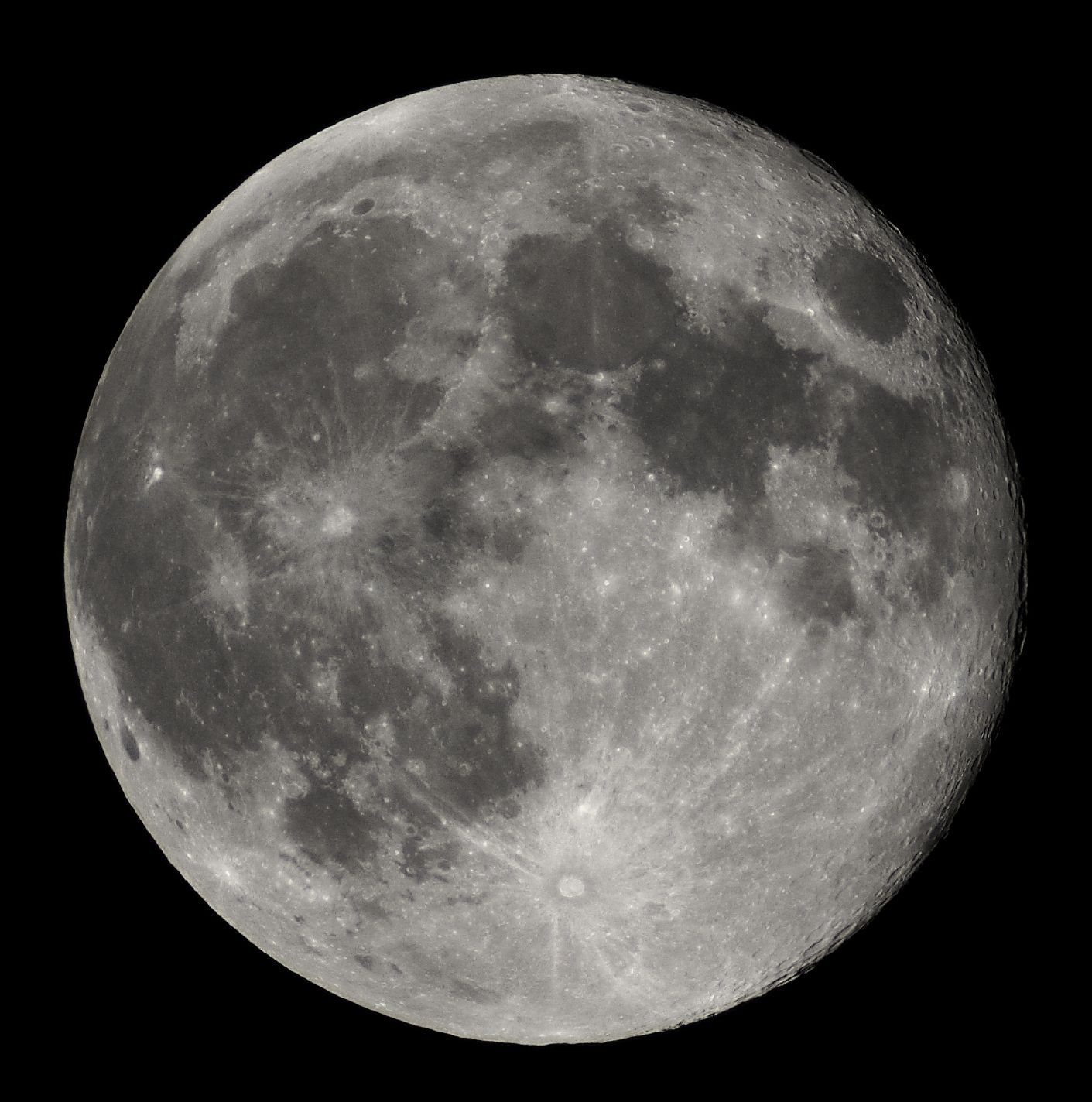
Four tunnels, each possibly more than a kilometer wide, may run beneath the moon under roughly 100 meters (about 330 feet) of rock. Two geoscientists found them by searching for places where the moon's gravity is slightly weaker than the surface above would predict.
Juan Losarcos and Andrew Dombard of the University of Illinois Chicago reported the four candidates in the journal Icarus. The tunnels are thought to be lava tubes, hollow channels left behind by ancient volcanic eruptions. The researchers call them candidates, not confirmed discoveries, and they spell out why that distinction matters.
The candidates sit in three places. One is near Vallis Schröteri, the largest sinuous rille on the moon. Another is at Rima Mairan, and two are near Wollaston crater. In each case the gravity signature fits a tunnel less than 2 kilometers (about 1.2 miles) wide.
Lava tubes form on Earth too. The surface of a lava flow cools into a hard crust while molten rock keeps moving underneath, and when the eruption ends and the lava drains, a hollow tube can remain. Lower gravity on the moon, larger eruptions and more fluid lava could in principle produce much bigger tubes. Scientists have long pointed to the moon's winding rilles and deep pits as signs of tubes whose roofs have partly fallen in.
Earlier gravity studies, published in 2017 and 2024, flagged possible tubes as wide as 9 kilometers (about 5.6 miles). Later work found that many tunnels that size probably could not have held up their own roofs. That is the context that makes the new paper interesting. Its candidates are modest enough in width to be structurally plausible, which makes this a more cautious search than the earlier ones rather than a bigger claim.
The geology around all four sites also suggests the tubes may have formed differently from the classic Earth model. Instead of a crust forming over an open river of lava, they may have started as small underground channels that the flowing molten rock slowly melted and wore wider. If that holds up, it would give planetary scientists a second route by which these structures form on the moon.
The method depends on a simple principle. An empty tunnel holds less mass than the same volume of solid rock, so gravity directly above it should be a tiny bit weaker. NASA's twin GRAIL spacecraft mapped the moon's gravity field in 2011 and 2012 by tracking minute changes in the distance between them as they flew over regions of stronger and weaker pull. In May 2025, NASA released a higher-resolution model of that field.
Losarcos and Dombard used the new model to find small gravity lows after subtracting the effect of surface topography. They compared those lows with simulated signatures of hollow tunnels of various sizes, then checked the surface above each one for geological features that would support an underground cavity. Requiring both a gravity signal and a surface clue is a sensible filter, and it is one reason these four stood out.
The same filter has a cost. Because the search leaned on visible surface features, it is weakest at finding the tubes scientists would most like to locate: fully intact ones whose roofs never collapsed. The authors acknowledge that such pristine tubes would be especially hard to detect this way. They add that these tubes "could preserve important evidence of lunar volcanic and thermal evolution," though they may be harder to reach for exploration.
The likely takeaway is that the moon is hiding more hollow space than its surface reveals, and that this study may have found only the easiest examples.
Gravity data alone cannot settle the question. Other differences in rock density could produce similar dips, and the measurements cannot directly pin down a cavity's dimensions. The researchers say future radar observations and more detailed geological mapping could show whether the tunnels are really there.
Radar has done this before. In 2024, a separate team analyzed radar data from NASA's Lunar Reconnaissance Orbiter and reported a cave passage extending from a pit in the Sea of Tranquility. That kind of evidence would turn these four gravity anomalies into features that mission planners could actually map.
The interest goes beyond geology. A tube capped by about 100 meters of rock would shield anyone inside from the radiation and wild temperature swings on the lunar surface, which is why lava tubes come up often in discussions of long-term human outposts. That prospect is still distant. A habitat cannot be planned around a tunnel whose existence, width and roof stability are all inferred from faint gravity readings. For now, the paper's main value is a short, physically plausible list of places to point the next radar instrument.
Sources
Isaac Tan
Isaac Tan covers biology, biodiversity, and research into the variety of life on Earth. His work follows discoveries about species, evolution, and the connections between organisms and their environments. He explains the evidence behind new findings and the questions they raise, bringing context to developments from genetic studies to ecosystem research.
View all stories