BepiColombo enters Mercury orbit, the first spacecraft there since MESSENGER
The European-Japanese probe arrived Nov. 21 after an eight-year trip and nine planetary flybys. Its two orbiters are due to split apart in early December.
 By Isaac Tan
· 4 min read
Key Takeaways
- Orbit insertion came Nov. 21 at 18:27 UTC, eight years after launch
- ESA's MPO and JAXA's Mio orbiters are slated to separate in early December
- Science operations are expected to begin in April 2027
BepiColombo, the joint Mercury mission of the European Space Agency and the Japan Aerospace Exploration Agency, has entered orbit around the solar system's innermost planet. It is only the second spacecraft ever to do so.
Mission leaders said the orbit insertion was completed Nov. 21 at 18:27 UTC, or 1:27 p.m. EST. That was eight years, one month and one day after the spacecraft launched on Oct. 20, 2018. To get there, it flew past Earth once, Venus twice and Mercury itself six times.
Reaching orbit is not the same as being ready to work. The orbit BepiColombo captured into is not the one it will use for science. Over the next several months, controllers plan a series of thruster firings to move the spacecraft into its long-term path around the planet. Science operations are expected to begin in April 2027.
Geraint Jones, ESA's lead project scientist for BepiColombo, said the mission's science team, numbering close to 600 people, would welcome the milestone. He said the spacecraft would now "begin revealing more about Mercury, from its interior and surface to the space around it."
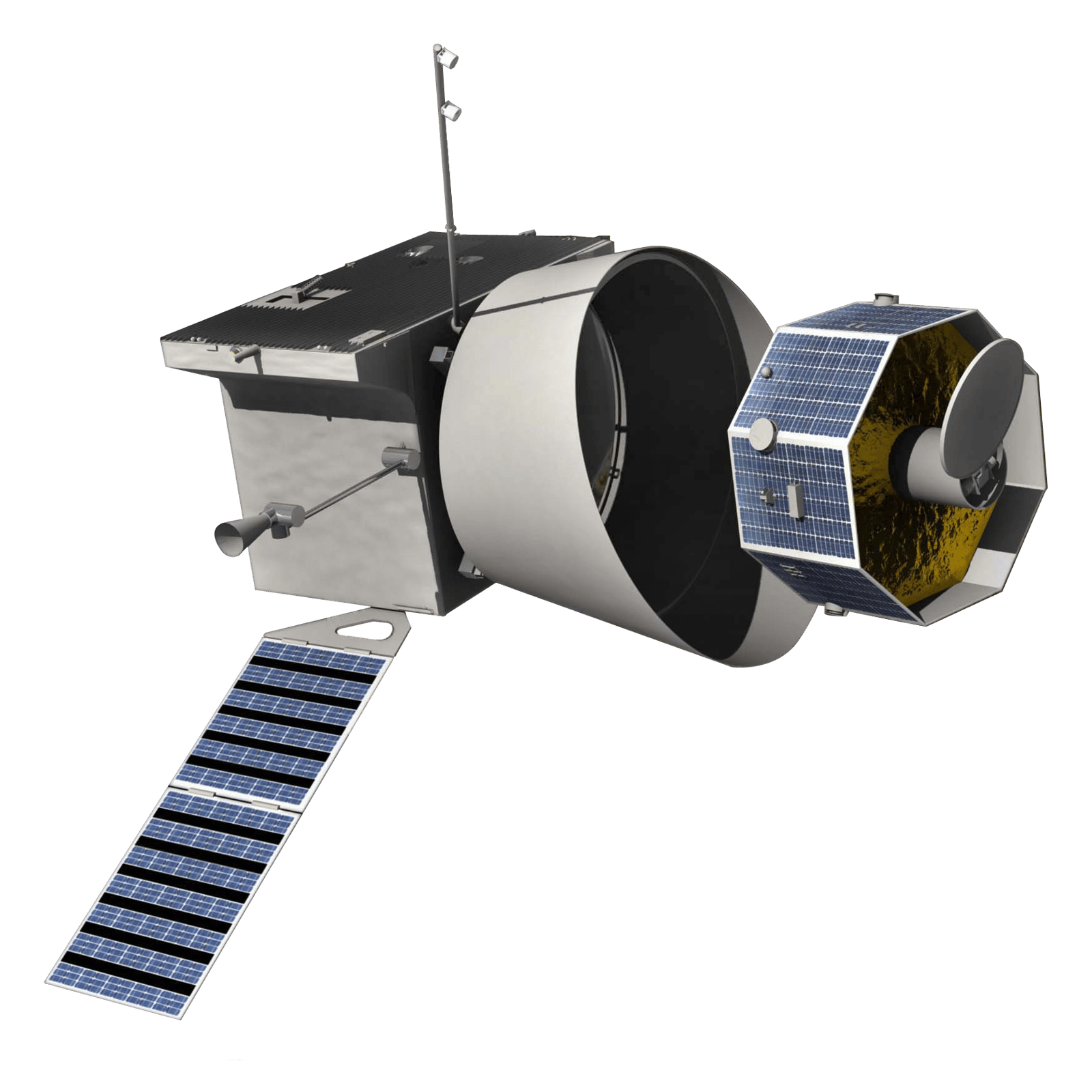
Unlike NASA's MESSENGER, the only earlier Mercury orbiter, BepiColombo is really two spacecraft traveling as one. ESA's Mercury Planetary Orbiter, or MPO, and JAXA's Mercury Magnetospheric Orbiter, known as Mio, are still attached. They are scheduled to separate in early December 2026.
After the split, MPO will focus on the planet itself, studying its surface features and what it is made of. Mio will study Mercury's magnetic field and how it interacts with the solar wind, the stream of charged particles flowing out from the sun.
That division of labor looks like the mission's strongest advantage. Mercury is a small, slowly rotating world that still generates a global magnetic field, which Mariner 10 discovered during its flybys in the 1970s. A single spacecraft can measure that field from only one place at a time. With two orbiters taking readings at different points, scientists should be able to tell changes in the solar wind apart from changes in the planet's own magnetic environment, which one spacecraft working alone could not do.
The separation is also the next real test. Arriving in orbit proved that the combined spacecraft can be navigated. Separating it into two independent orbiters, each moving into its own orbit, is a new set of maneuvers. Nothing has been reported to suggest trouble, but the mission's main goals depend on December going to plan.
Eight years can seem extreme for a planet that is, on average, closer to Earth than Mars. The difficulty is speed. Anything falling inward toward the sun is pulled harder the closer it gets and keeps accelerating. A spacecraft arriving at Mercury is moving far too fast to be captured, and braking directly with rockets would take an enormous amount of propellant. That extra mass would make the mission heavier, more expensive and harder to launch.
Mission planners solve the problem with gravity. Each close pass by a planet can drain off some of a spacecraft's speed, so missions bound for Mercury bounce around the inner solar system for years before they slow down enough. MESSENGER flew past Mercury three times before entering orbit. BepiColombo needed six.
The mission's name reflects that technique. It honors Giuseppe "Bepi" Colombo, the Italian scientist whose work on orbital mechanics helped Mariner 10 make repeated passes of Mercury.
MESSENGER orbited Mercury from March 2011 to April 2015, well beyond the roughly one year of science it was first expected to deliver. It completed more than 4,100 orbits and returned nearly 300,000 images covering the entire planet. When its fuel ran out, the team deliberately crashed it into Mercury's far side, then confirmed the loss of signal when the spacecraft failed to reappear at its scheduled time.
That leaves BepiColombo a high bar and a useful map to work from. MESSENGER already answered the basic question of what Mercury looks like everywhere. BepiColombo's value will come from going deeper: pairing surface composition from MPO with detailed measurements of the space environment from Mio, and comparing the planet with the version MESSENGER recorded a decade earlier.
The mission's lifespan is also set by fuel. The first science phase is scheduled to run from April 2027 to April 2028, with a possible extension to December 2029. If the extension is approved, the team will then check how much propellant remains and decide whether to continue operations or let the spacecraft impact Mercury.
For now, the important dates are close together. The split in early December will show whether ESA and JAXA each have a working orbiter, and the next few months of thruster burns will decide how well positioned both are when science starts in April.
Sources
Isaac Tan
Isaac Tan covers biology, biodiversity, and research into the variety of life on Earth. His work follows discoveries about species, evolution, and the connections between organisms and their environments. He explains the evidence behind new findings and the questions they raise, bringing context to developments from genetic studies to ecosystem research.
View all stories