BepiColombo's British X-ray telescope proves itself on the Crab Nebula before Mercury work
A test image taken in September shows the 11-kilogram MIXS instrument works. Its real job, mapping what Mercury's surface is made of, starts next spring.

· 5 min read
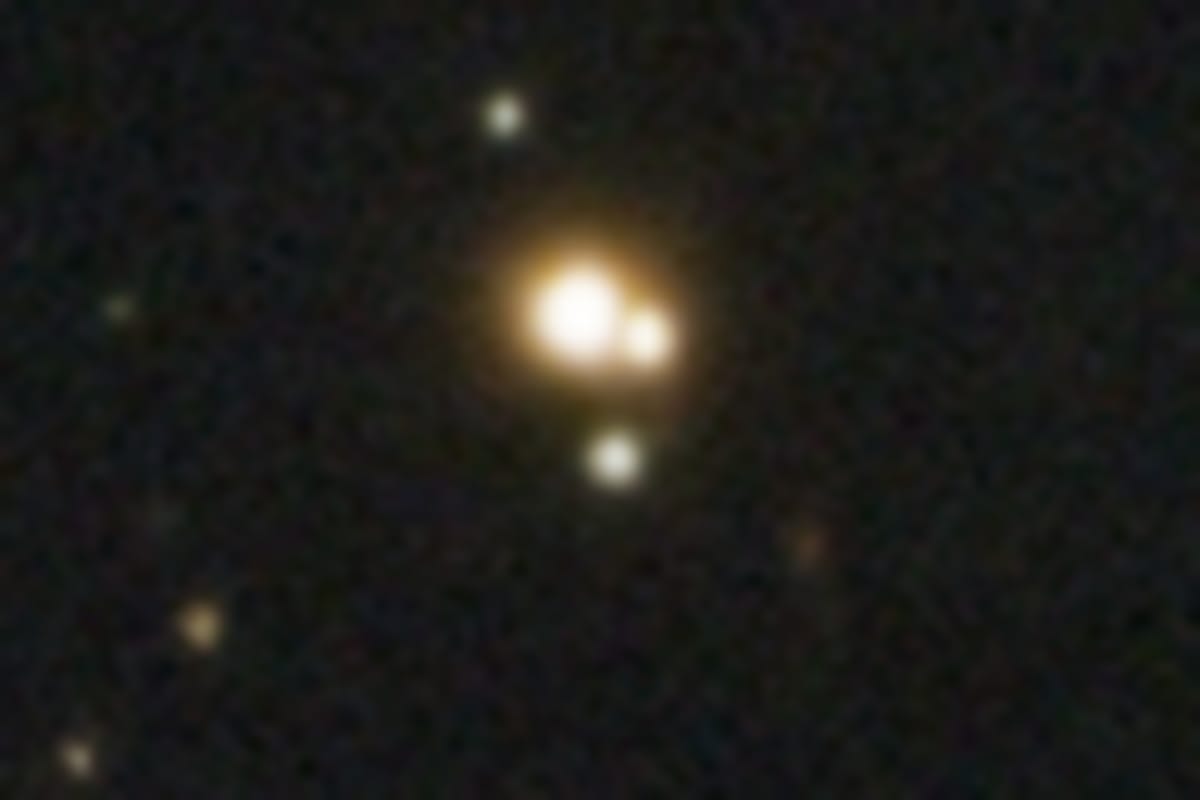
Before it maps a single rock on Mercury, the X-ray telescope riding on BepiColombo has shown it can see. A University of Leicester team has released an X-ray image of the Crab Nebula taken by the Mercury Imaging X-ray Spectrometer, or MIXS. The image is a proof-of-concept test for an instrument that spent eight years staring at the back of another spacecraft module.
The joint European Space Agency and Japan Aerospace Exploration Agency mission entered orbit around Mercury on Nov. 21, and the orbit insertion did not go cleanly. The spacecraft briefly entered safe mode and its planned thruster burn ended early. It still delivered 77% of the intended velocity change, which was enough to be captured, but it left the probes in a 75-hour orbit instead of the planned 58-hour one.
That makes the MIXS result a welcome piece of good news. The mission's science payload is what justifies the long trip, and here is direct evidence that one of its more unusual instruments survived it intact.
A telescope small enough to send to Mercury
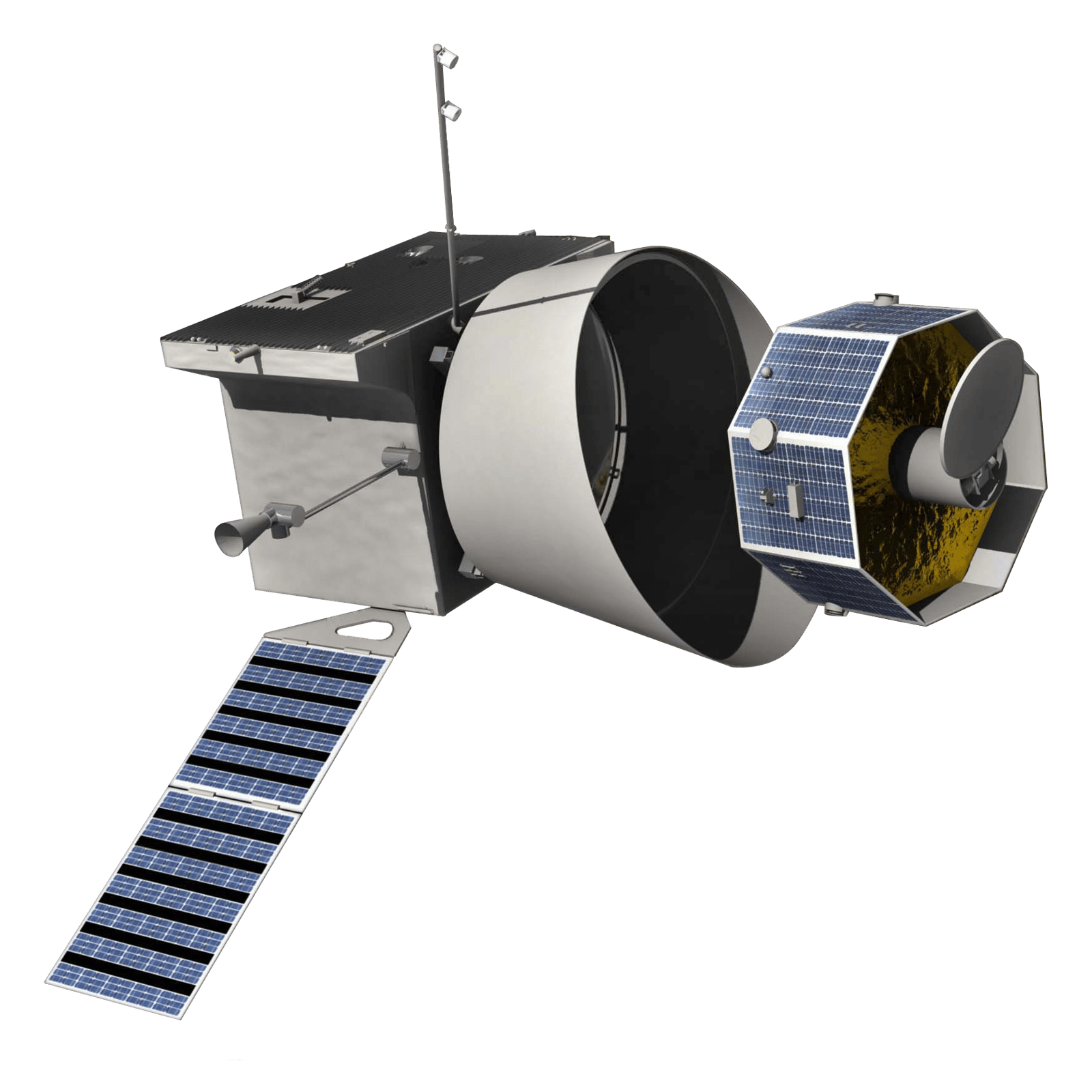
MIXS sits on the Mercury Planetary Orbiter, the European half of the spacecraft stack, and is the UK Space Agency's instrument contribution to the mission. Its design addresses a basic problem in X-ray astronomy. X-rays only reflect toward a focus when they strike a mirror at a very shallow angle, so conventional X-ray telescopes need focal lengths of about 10 meters and nested mirror shells that weigh hundreds of kilograms.
"X-rays cannot penetrate Earth's atmosphere to the ground so all X-ray telescopes must be in space," Adam Fox, the MIXS operations scientist, told Universe Today. Instead of the conventional heavy mirror shells, MIXS relies on what Fox called "novel X-ray optics called micro-pore optics." These are plates riddled with millions of channels, each 20 microns wide. The result is a telescope about 1 meter long that weighs 11 kilograms, light enough to fly to the innermost planet.
Mercury has had X-ray scrutiny before. NASA's Messenger orbiter carried an X-ray spectrometer during its years in orbit. The difference with MIXS is focusing optics. Alec McCrea of the University of Leicester told Universe Today that an imaging X-ray telescope with a narrower field of view can achieve much higher resolution than earlier missions managed.
Why the Crab, and why now
MIXS could not see the sky until September. For the whole cruise, the orbiter was bolted to the Mercury Transfer Module, which supplied power and propulsion and physically blocked the instrument's view. During that time the team could switch MIXS on only for health checks, monitoring its detectors without pointing at anything. The transfer module was jettisoned on Sept. 3, giving MIXS its first look at open space.
The team moved quickly. On Sept. 11 and 12, the spacecraft performed 55 slews over 39 hours to build up the image of the Crab Nebula, also known as Messier 1. The Crab lies about 6,500 light-years away in Taurus and is the expanding debris of a supernova that observers on Earth recorded in 1054. It is one of the brightest steady X-ray sources in the sky and a standard calibration target, so it was a sensible choice. Planetary missions rarely aim at deep-sky objects on purpose, which gives the picture some novelty as well as its engineering value.
The Crab image itself is not a scientific result. What it shows is that the optics focus, the detectors respond and the pointing works well enough to assemble an image from dozens of maneuvers. Those are the questions that matter most for an instrument that will depend on precise pointing at a planet.
Reading Mercury's surface in X-ray light
The plan at Mercury is to map the planet's surface composition element by element. Solar X-rays striking the ground cause surface material to fluoresce, emitting X-rays of its own. MIXS will record that glow, while a companion instrument, the Solar Intensity X-ray and particle Spectrometer, or SIXS, measures the incoming solar radiation so the two signals can be compared.
"These X-rays have characteristic energies corresponding to certain elements which can tell you what the surface is made of," McCrea said. Particles from Mercury's magnetosphere can also trigger X-ray emission, and MIXS is designed to observe the planet's X-ray environment and magnetospheric activity on the night side as well.
This is a strong scientific bet. Messenger left behind major open questions about Mercury's chemistry, including a surface richer in volatile elements than many models predicted for a planet so close to the sun. A sharper elemental map is the kind of data that could test competing ideas about how Mercury formed. Whether MIXS delivers depends on solar activity and on how much observing time the reshaped orbit allows, and neither can be judged yet.
Fox also sees the design traveling further. He said "a MIXS-like instrument is applicable to many airless bodies in the solar system" and added that micro-pore X-ray optics have since flown on astrophysics missions including SMILE, Einstein Probe and SVOM. A technology that had to prove itself on a slow trip to Mercury has, in effect, already spread elsewhere while the spacecraft was in transit.
The road to science operations
Reaching orbit took one flyby of Earth, two of Venus and six of Mercury, and the arrival slipped from December 2025 to this month because of a thruster problem on the transfer module. BepiColombo is the first Mercury mission for both ESA and JAXA. It is only the second spacecraft to orbit the planet, after Messenger, which ended its mission by crashing into the surface on April 30, 2015.
Several steps remain before MIXS does its real work. JAXA's Mio orbiter is scheduled to separate on Dec. 9 and 10, and a sunshield is due to be ejected on Dec. 16. The European orbiter will then work down to a 480-by-1,500-kilometer orbit around March 10, with science operations scheduled to begin April 6. The nominal mission runs until April 2028, with a possible extension to December 2029.
Skywatchers can find the target in the predawn sky this week. Mercury recently passed its greatest western elongation and sits below bright Venus at dawn.
Sources
Theo Anderson
Theo Anderson covers astronomy, space discoveries, and the observations expanding our picture of the universe. His work follows telescope findings, planetary research, and the questions behind new results. He explains the tools and concepts involved, placing striking images and announcements in context so readers can understand what scientists have learned.
View all stories