SpaceX will put its first caught Starship upper stage on display instead of flying it
Elon Musk says Ship 42 could likely fly again after a few weeks of work, but its historic tower catch has earned it retirement.
 By Meera Joshi
· 4 min read
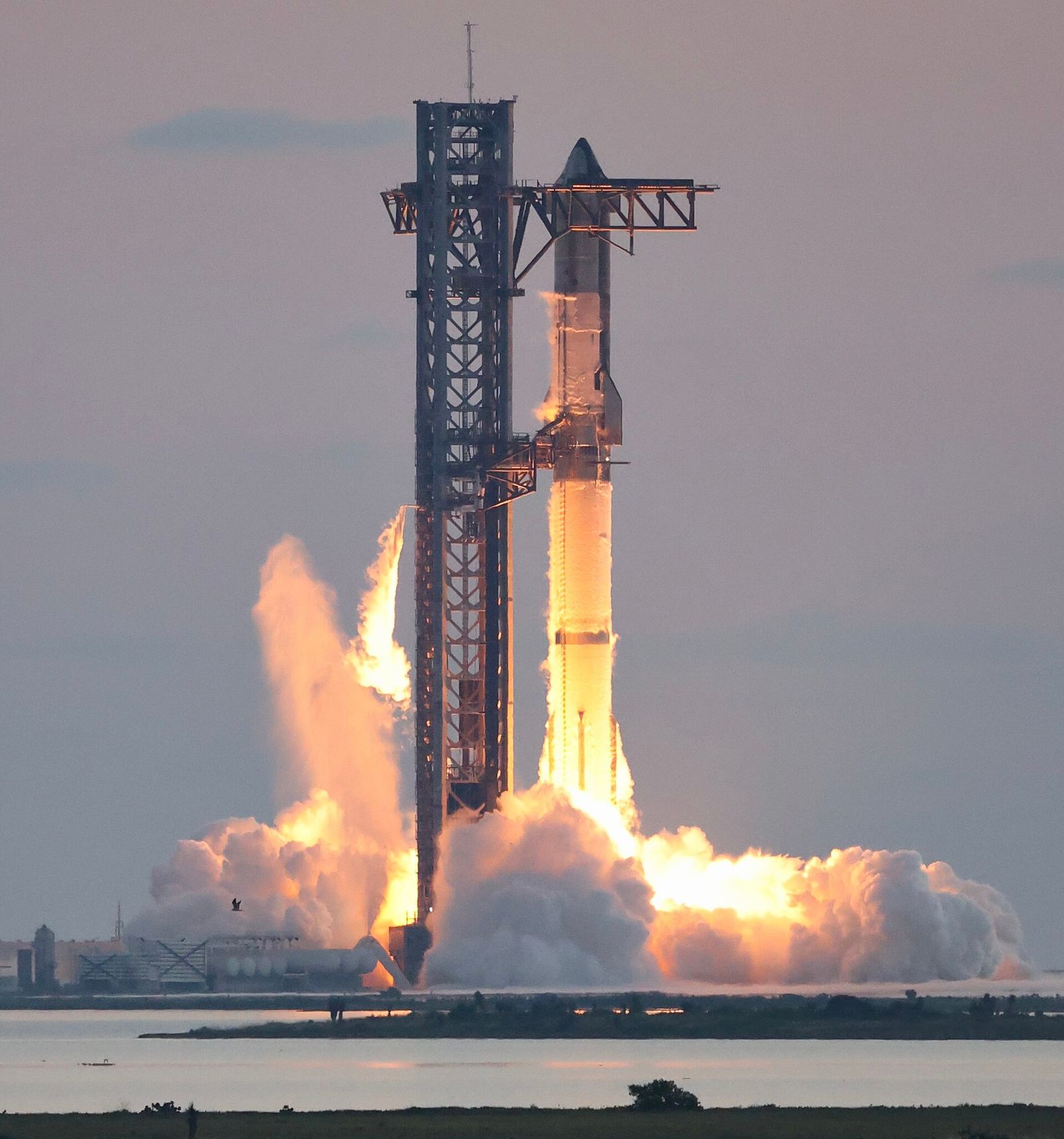
The first Starship upper stage that SpaceX ever caught with its launch tower will not fly again. Elon Musk said Wednesday that Ship 42, which the tower's "chopstick" arms grabbed out of the air after Starship's 15th test flight, will be kept for public display instead of being refurbished for another launch.
The ship came home in good shape. Musk said the vehicle "could probably be reflown with a few weeks of refurbishment," but the company would rather "not take any chances with the ship" because of what it had accomplished. In his words, "what it's done is historic."
Ship 42 launched Nov. 13 and returned from orbit the next day, settling into the arms of its tower at Starbase, SpaceX's Starship factory and launch site in South Texas. It was the first time SpaceX had tried to catch an upper stage, and the attempt worked on the first try.
Musk made the comments during a conversation at the TomorrowX Summit in Austin, Texas, which he joined remotely. Venture capitalists Gavin Baker and Antonio Gracias, both friends of his, moderated the session. Musk did not say where the ship would be shown. Space.com judged Starbase the most likely spot.
SpaceX plans to move most Starship launches to a new site in Louisiana, but construction has not started on that complex, which carries a $100 billion price tag. For now, South Texas is where Starship is built, launched and caught, so keeping the ship there would be the simplest choice.
Why the upper-stage catch mattered more
SpaceX had already caught Starship's first stage, the Super Heavy booster, three times before Flight 15, and it had flown a recovered booster again twice. The company's first booster catch came in October 2024, and it quickly became one of the signature images of the program.
Catching the upper stage is a harder job. Ship flies much faster and farther than the booster, reaching orbit and then surviving reentry before it has to line up with the tower. Musk described the result as a major step toward a fully and rapidly reusable rocket, which he called the "holy grail of rocketry."
He said people inside SpaceX understood the stakes, and he framed the achievement this way: "Starship will be the first-ever fully reusable orbital space system." Note the tense. That claim describes a goal, and the catch moves SpaceX closer to it without completing it.
Retiring the ship makes sense as a matter of history. SpaceX has done this before: the first Falcon 9 booster to land, in December 2015, ended up on display outside the company's headquarters in California instead of flying again. A first-of-its-kind vehicle tells the story better standing in front of visitors than it would as one more anonymous reflight.
The trade-off is that reuse is the real goal, and a catch alone does not prove it. A ship that has been caught still has to be inspected, repaired and launched again before anyone knows how well the hardware holds up after reentry, the harshest part of each flight. By setting aside a vehicle that Musk himself considers flyable, SpaceX postpones the first reflight of a recovered upper stage until another ship is caught. Given how fast the program has moved, that delay may be short, but it is still a delay on the milestone that matters most.
The flight rate SpaceX is aiming for
The company's reuse plans are enormous. Musk has said SpaceX wants to fly about 10,000 Starship missions a year by 2030. That works out to more than 27 launches a day, every day of the year.
Those flights are meant to build two giant constellations in low Earth orbit. The next generation of the Starlink internet network is planned at about 100,000 satellites. A second network, called Starmind, would put AI data centers in orbit and would be 10 times larger than that.
Work on the new Starlink network has already started. Starship carried 26 next-generation Starlink satellites for the first time on Flight 14, which launched Sept. 28, and Flight 15 carried another batch of the same size.
Measured against those targets, Musk's estimate of "a few weeks of refurbishment" shows how far the program still has to go. Weeks of work between flights is reasonable for a test vehicle. It is nowhere near the turnaround that dozens of launches a day would require, even with a large fleet. Getting the catch right was the hard first step. The more telling number will be how long SpaceX needs to get a caught ship back on the pad, and that test now falls to a vehicle other than Ship 42.
Sources
Meera Joshi
Meera Joshi writes about wildlife, animal behavior, and the relationships that shape ecosystems. Her coverage follows studies of species and habitats, with attention to how researchers gather evidence in changing environments. She connects new findings with broader ecological questions while explaining the limits of individual observations and the significance of longer trends.
View all stories