BepiColombo reaches Mercury orbit, but a software glitch cut its key engine burn short
The European-Japanese spacecraft is only the second ever to circle Mercury. ESA says it is safe while engineers work out what the shortened burn did to its path.
 By Meera Joshi
· 4 min read
Key Takeaways
- A software glitch stopped the thrusters before the planned 37-minute braking burn was complete.
- The two probes are scheduled to separate in early December, with the European orbiter's science work expected to start in April 2027.
- NASA's MESSENGER, which orbited Mercury from 2011 to 2015, is the only spacecraft to have done this before.
BepiColombo is in orbit around Mercury, but its arrival had a flaw. A software glitch stopped the spacecraft's thrusters before they finished the 37-minute burn meant to slow it into orbit, the European Space Agency said Monday. ESA engineers are now working out what the shortfall did to the probe's trajectory.
Mission scientists confirmed Saturday, Nov. 21, that the joint European-Japanese spacecraft had reached orbit and was sending data back to its ground team. That makes it only the second mission to orbit the innermost planet. ESA said the spacecraft remains "safe" while the investigation continues.
The agency has not said how early the burn ended or how far the resulting orbit is from the planned one. Those two figures will decide how much this matters. A spacecraft that is captured, stable and talking to Earth has already cleared the hardest part of arriving at Mercury. Any extra propellant spent correcting the orbit, though, comes out of a fixed supply, and that supply has to last through months of maneuvering and the science campaign that follows.
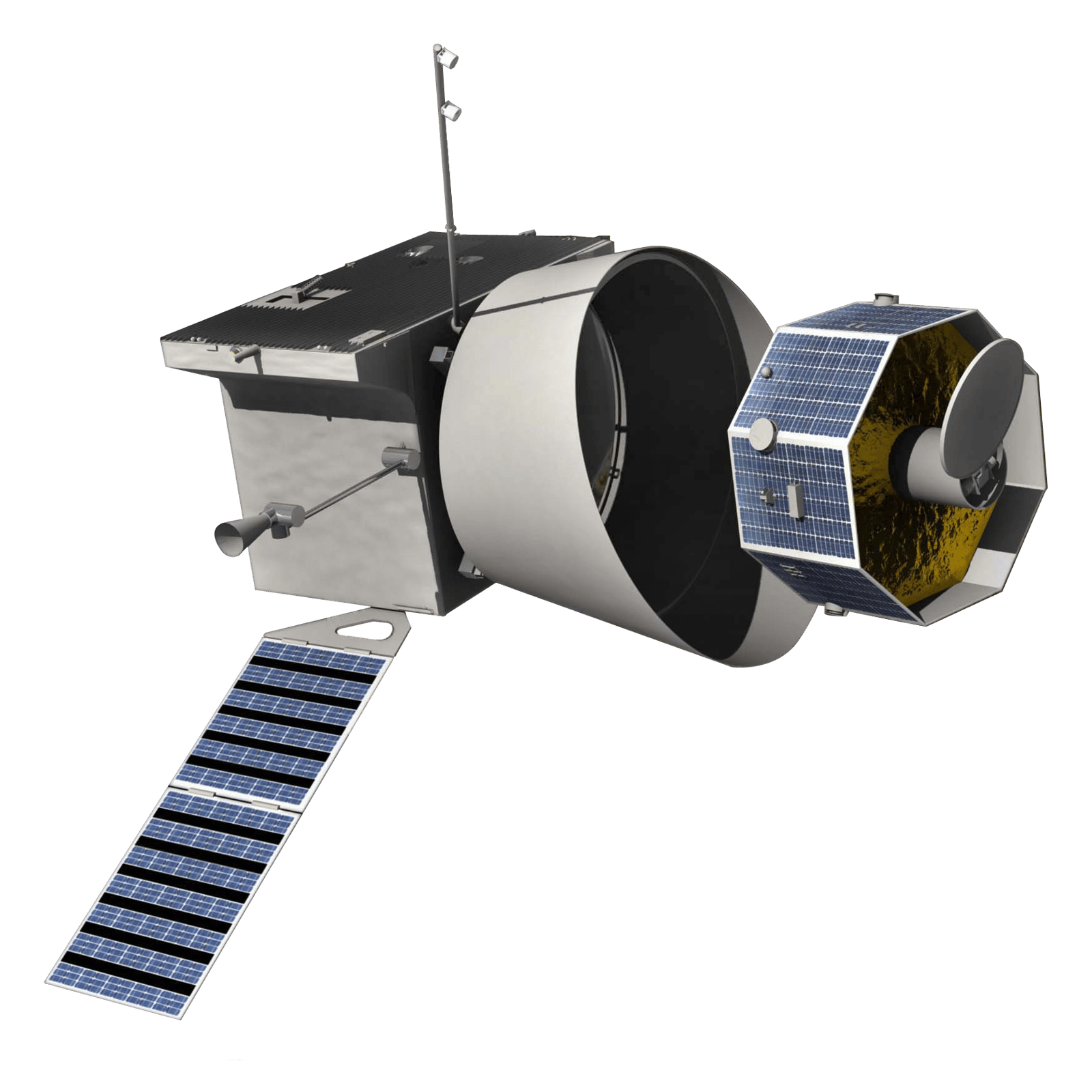
BepiColombo is really two spacecraft flying as one. The Mercury Planetary Orbiter, or MPO, was built by ESA. Mio, the Mercury Magnetospheric Orbiter, was built by the Japan Aerospace Exploration Agency. They are still stacked together, and each carries its own instruments.
If ESA clears the spacecraft to continue as planned, the two are expected to separate in early December. Mio will then move into a highly elliptical orbit over Mercury's poles. MPO will take a few more months of adjustments to reach a lower, more circular polar orbit in March 2027, and its science operations are expected to begin in April. After that, the plan calls for about a year of intensive observations.
The separation schedule is where the glitch could cause trouble. Splitting the stack, placing Mio in its elliptical orbit and then lowering MPO step by step is a sequence of precise maneuvers. All of it now depends on how quickly ESA can describe the orbit it actually has and decide whether the original timeline still works. Early December is close, and a slip there would push the later milestones back too.
Once both probes are on station, each will circle Mercury several times a day. MPO will complete an orbit about every two hours. Watching the planet from two different orbits should give scientists the most complete map of Mercury yet made.
The probes launched together on an Ariane 5 rocket in October 2018. Their route to Mercury passed Earth, the moon and Venus, and it included six flybys of Mercury itself. During one of those passes, in January 2025, the spacecraft took a close-up image of the planet's north pole.
All of that looping was needed to shed speed. Mercury orbits about 36 million miles (58 million kilometers) from the sun, roughly a third of Earth's distance. Anything falling inward toward it gains velocity from the sun's gravity, so a spacecraft that flies straight there arrives far too fast to stop. Each planetary flyby took away some of that energy. The idea is fitting: the mission is named for Italian scientist Giuseppe "Bepi" Colombo, who helped work out the gravity-assist approach that NASA's Mariner 10 used to fly past Mercury in the 1970s.
The trip already had one propulsion scare. In 2024, the spacecraft's electric thrusters were found to be producing less power than expected, and the arrival date slipped by about a year. A second propulsion problem at the moment of orbit insertion is unwelcome for a mission that has already spent its schedule margin once.
MESSENGER is the only earlier spacecraft to orbit Mercury. It circled the planet from 2011 to 2015, after its own seven-year trip, and ended its mission by crashing into the surface as planned. BepiColombo is the first spacecraft to visit Mercury in more than a decade. It is also better equipped than MESSENGER: two orbiters with complementary instruments, instead of one probe doing everything.
The instruments cover a wide range of the electromagnetic spectrum, including X-rays, gamma rays and ultraviolet light. The mission will also take detailed measurements of Mercury's magnetic field. That field is one of the planet's oddities, since a world this small was not expected to still have one. Researchers hope the data will show what Mercury's interior is made of, what powers its magnetic field, how the planet formed and whether it is still tectonically active.
The mission also includes a physics test. A radio experiment will track the spacecraft's orbit and position precisely enough to test Einstein's general theory of relativity again. Mercury, deep in the sun's gravity, is a natural place for that kind of measurement. The planet's slowly shifting orbit was one of the first observations general relativity explained.
Mercury remains the least explored planet in the solar system, and BepiColombo's two-orbiter design is the best chance in decades to change that. ESA's next update on the trajectory will show whether early December still holds. It will also show whether the shortened burn was a brief scare or a cost the mission will carry into its science phase.
Sources
Meera Joshi
Meera Joshi writes about wildlife, animal behavior, and the relationships that shape ecosystems. Her coverage follows studies of species and habitats, with attention to how researchers gather evidence in changing environments. She connects new findings with broader ecological questions while explaining the limits of individual observations and the significance of longer trends.
View all stories