Beaver Moon rises Tuesday as the first of three straight supermoons
November's full moon is the smallest of the trio. December's Christmas Eve full moon will bring the moon closer than at any point since early 2018.
 By Hannah Bell
· 3 min read
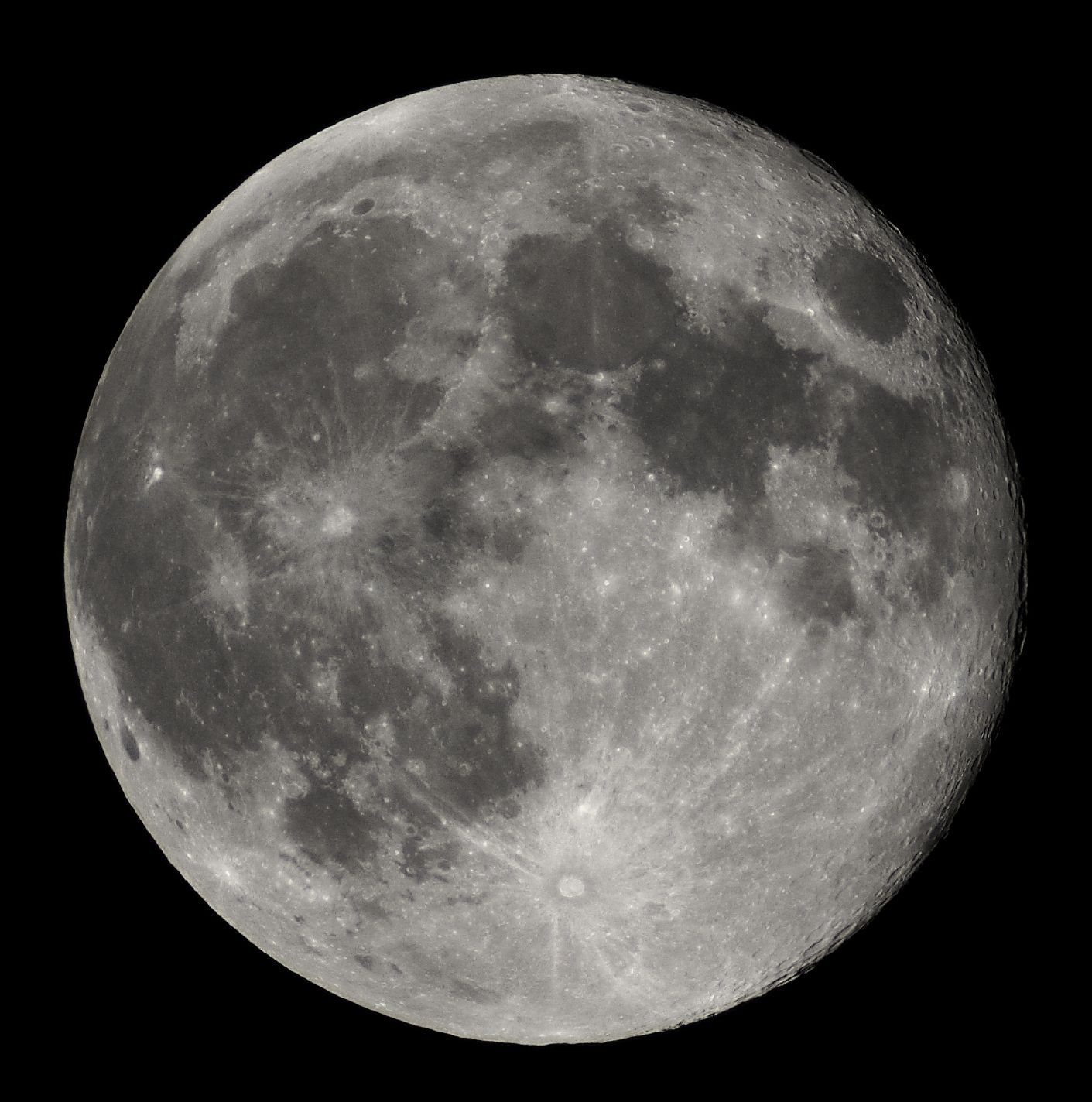
The full Beaver Moon rises at dusk on Tuesday, Nov. 24, and it opens a run of three consecutive supermoons that peaks with the closest full moon in nearly nine years on Christmas Eve.
The moon technically turns full at 9:53 a.m. ET on Tuesday. At that hour it sits below the horizon across North America, so the useful moment for most people comes that evening. The moon will climb out of the eastern sky at about the same time the sun drops in the west.
That twilight moonrise is the best view of the night. Against a sky that still holds some daylight, the moon's size and its warm, low-horizon color are easier to appreciate than they are hours later, when a small white disk hangs in a black sky. The moon will also look full on Monday and Wednesday. Tuesday's timing, with moonrise lined up with sunset, gives it the edge. Moonrise falls two days before Thanksgiving, so anyone traveling early for the holiday may catch it from the road or an airport window.
What makes this a supermoon
The moon's orbit is an ellipse, not a circle, so its distance from Earth changes over the course of each month. On average it sits about 238,900 miles (384,472 kilometers) away. When a full moon lands near perigee, the closest point in that orbit, it looks slightly bigger and brighter than a typical full moon. That pairing earns the supermoon label.
The honest expectation is that most casual viewers won't notice the difference on Tuesday. November's full moon is the smallest of the three upcoming supermoons, and the size gap between an ordinary full moon and a modest supermoon is hard to judge by eye without a side-by-side comparison. A low moon on the horizon often looks larger to the eye anyway, which is one more reason the moonrise view will impress more than the supermoon status itself.
The name has deeper roots than the astronomy. Beaver Moon refers to the season when North American beavers, which are active at night, traditionally build dams and get ready for winter under the full moon, according to the timekeeping site TimeandDate. The same moon also goes by Frost Moon and Snow Moon. The Anishinaabeg people of North America call it Baashkaakodin Giizis, the Freezing Moon, according to the Center for Native American Studies.
Tuesday's full moon is also the third and final one of fall in the Northern Hemisphere. Calendar fall began with the September equinox and runs until the December solstice, which lands just days before the next full moon.
December's full moon is the one to plan for
If November is the warm-up, December is the main event. The full Cold Moon on Christmas Eve will be the closest, largest and brightest full moon of 2026. Calculations by astrophysicist Fred Espenak show it will bring the moon nearer to Earth than at any time since Jan. 2, 2018.
That gives skywatchers a natural experiment. Anyone who looks at the Beaver Moon on Tuesday and again at the Christmas Eve full moon will be comparing the smallest and largest members of the series. Photos taken from the same spot with the same lens would show the size difference far better than memory can. The third supermoon in the run comes with the following full moon, in January.
Weather is the one variable nobody can schedule. Late November and late December bring plenty of cloudy nights across much of the country. Having two chances a month apart, plus a full-looking moon on the nights before and after each peak, improves the odds that most people will get at least one clear look at a supermoon rising.
Sources
Hannah Bell
Hannah Bell writes about physics, experimental discoveries, and the ideas used to describe the physical world. Her coverage explores how researchers test theories, interpret measurements, and investigate unresolved questions. She makes unfamiliar concepts approachable while distinguishing what an experiment demonstrates from the possibilities it may open for future research.
View all stories