Hyundai's Mercury concept previews the Ioniq M, a cheaper China-only EV due in 2027
The compact SUV will become the entry point to Hyundai's China-developed Ioniq lineup, with ByteDance AI inside and a CATL battery-swap version to follow.

· 5 min read
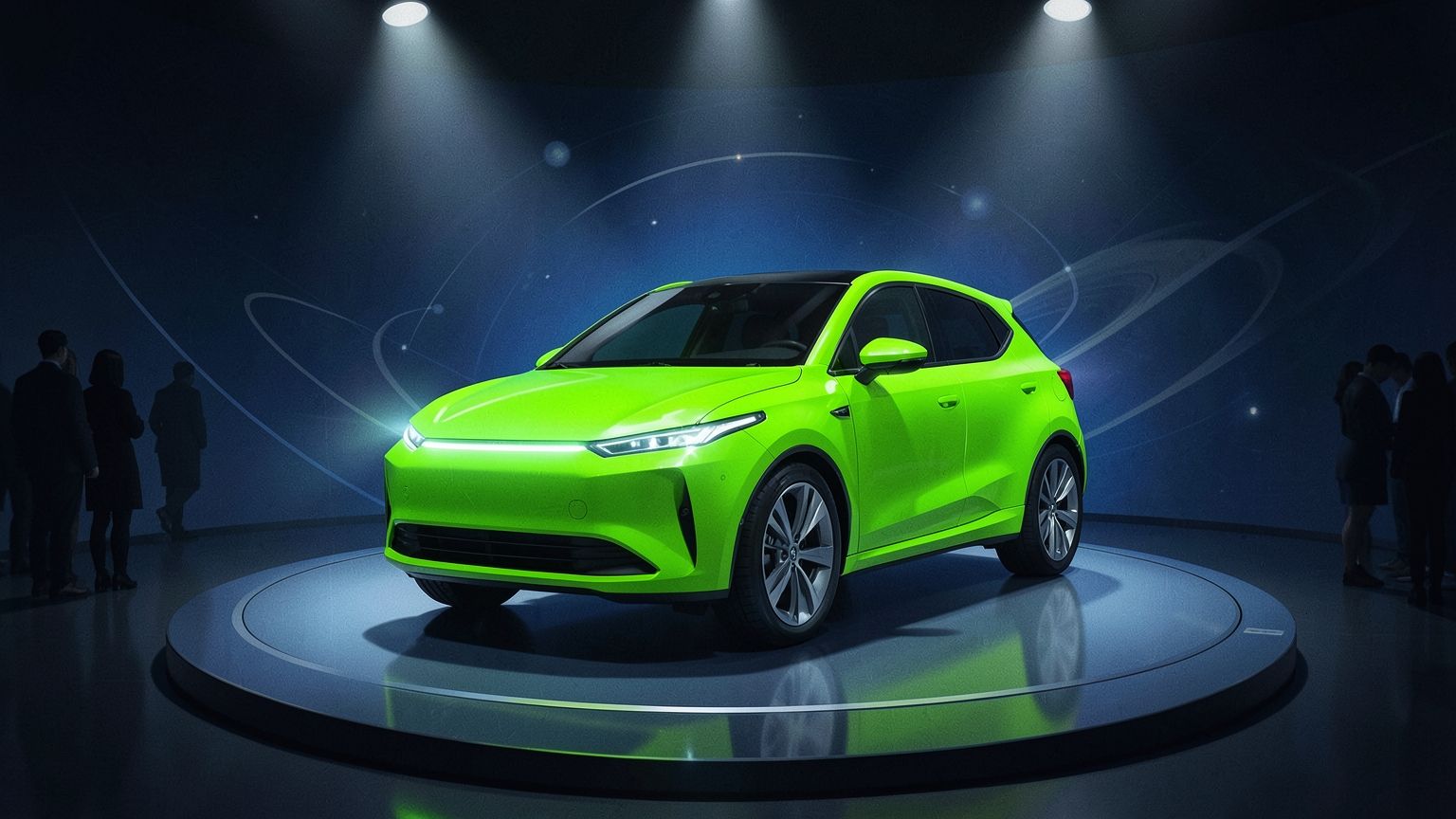
Hyundai unveiled the Mercury Concept at the Guangzhou Auto Show, a preview of a small electric SUV it will sell in China as the Ioniq M starting in 2027. The automaker is pitching it as the cheapest way into its growing family of China-specific Ioniq models.
Hyundai called the production model "the most accessible entry-level model in the IONIQ universe," and described it as a "B-segment premium smart SUV." That puts it a size class below most crossovers American buyers know, closer to a subcompact. Hyundai has not announced plans to sell it outside China, and Americans should not expect to see it in U.S. showrooms.
The Ioniq M follows the Ioniq V, which went on sale in China in September at a starting price of 109,900 yuan, roughly $16,500. Electrek estimated that the Ioniq M could land around 99,000 yuan, or about $15,000. That figure is the outlet's projection, not a Hyundai price, but it shows how low Hyundai will probably need to go to compete.
Like the Ioniq V, the Mercury was developed by Hyundai Motor's design and engineering team in China, and it looks almost nothing like the Hyundais sold in the West. The concept has a low, wedge-like profile that Hyundai says draws on the planet Mercury's orbit around the sun. The shark-nose front end carries thin, angular daytime running lights arranged to suggest Hyundai's "H" badge, set into a dark gray center section that contrasts with the show car's bright green Citrine Neon paint.
Large wheels and a sharply raked windshield give it a crouched stance. At the back, Hyundai fitted a spoiler at the roofline, slim LED taillights, a sculpted tailgate and a pronounced diffuser with body-color trim. Carscoops expects the production SUV to stay close to the concept, apart from details such as the side mirrors.
That would be a reasonable bet. Concept cars often lose their edge on the way to production, but Hyundai's recent China designs have kept much of their show-car drama. The Mercury is also a little calmer than the polarizing Ioniq V, which looks like the smarter move for a car meant to bring in first-time buyers.
Hyundai has not shown the interior, but it did describe the technology. The production Ioniq M will offer Zhuoyu L2++ driver assistance. Zhuoyu is the Chinese supplier formerly known as DJI Automotive. Hyundai says the cabin will run on ByteDance's Doubao AI model. The "L2++" label is industry shorthand for an advanced Level 2 system, meaning the driver still has to supervise. It does not mean the car drives itself.
The choice of suppliers stands out. Hyundai is not trying to export its global software to China. It is buying the driver-assistance and voice-assistant technology Chinese shoppers already know from domestic brands. That's a practical answer to a market where in-car software often sells the car as much as the hardware does.
Hyundai has said only that the Ioniq M will be fully electric. It has not released battery size, motor output or range. After the standard model launches, a battery-swap version will follow through Hyundai's partnership with CATL, the Chinese battery maker. Drivers would be able to trade a depleted pack for a charged one at a station instead of waiting to recharge.
The Ioniq V offers a reasonable guide to what may sit underneath. It uses CATL lithium iron phosphate packs in two sizes and a single rear motor:
- A 53.5 kWh battery with a 140 kW (188 hp) motor, rated at up to 540 kilometers on China's CLTC test cycle
- A 66.8 kWh battery with a 168 kW (225 hp) motor, rated at up to 650 kilometers (404 miles) on the CLTC cycle
Those numbers come from the CLTC cycle, which is generally more generous than the EPA testing used in the U.S. They shouldn't be compared directly with American range estimates. A smaller, cheaper Ioniq M would likely sit near or below the base Ioniq V setup, though Hyundai hasn't confirmed anything.
Lithium iron phosphate cells and a swap option make sense together for an entry-level car. LFP packs cost less and handle frequent full charges well. A swap network could make up for a smaller battery for drivers without home charging, which is common for apartment dwellers in Chinese cities.
The Mercury is the third of Hyundai's planet-named concepts for China. Earlier this year, the Venus concept became the production Ioniq V. Hyundai has also shown the Earth concept, a larger and more rugged SUV.
The rollout from here looks like this. In 2027 the Ioniq M arrives alongside a range-extended version of the Ioniq V, which pairs the electric drivetrain with an onboard gas generator. Hyundai has not released technical details for that model. The production Earth SUV follows in 2028, and Hyundai says two more new energy vehicles, China's term for plug-in and electric models, will join the lineup in 2029.
That is a steady product cadence for a brand that has lost much of its position in China over the past decade as domestic automakers such as BYD took over the market. Hyundai's new approach of designing in China, sourcing tech from Chinese suppliers and pricing against local rivals is the right diagnosis. Legacy brands that kept selling lightly adapted global models there have mostly struggled.
The hard part is execution. A sub-$16,000 compact EV in China competes with crowded segments from Leapmotor, Geely, Xpeng and BYD, brands that update their products quickly and cut prices often. A distinctive design and familiar Chinese software give the Ioniq M a credible pitch. Whether the price holds up against those rivals will matter most when it reaches showrooms in 2027.
Sources
Dominic Price
Dominic Price writes about new cars, pickup trucks, and SUVs, following model announcements and changes across vehicle lineups. His coverage connects pricing, dimensions, powertrains, and equipment with the choices facing buyers. He puts published specifications in context and explains differences between models, making crowded launch calendars and trim descriptions easier to follow.
View all stories