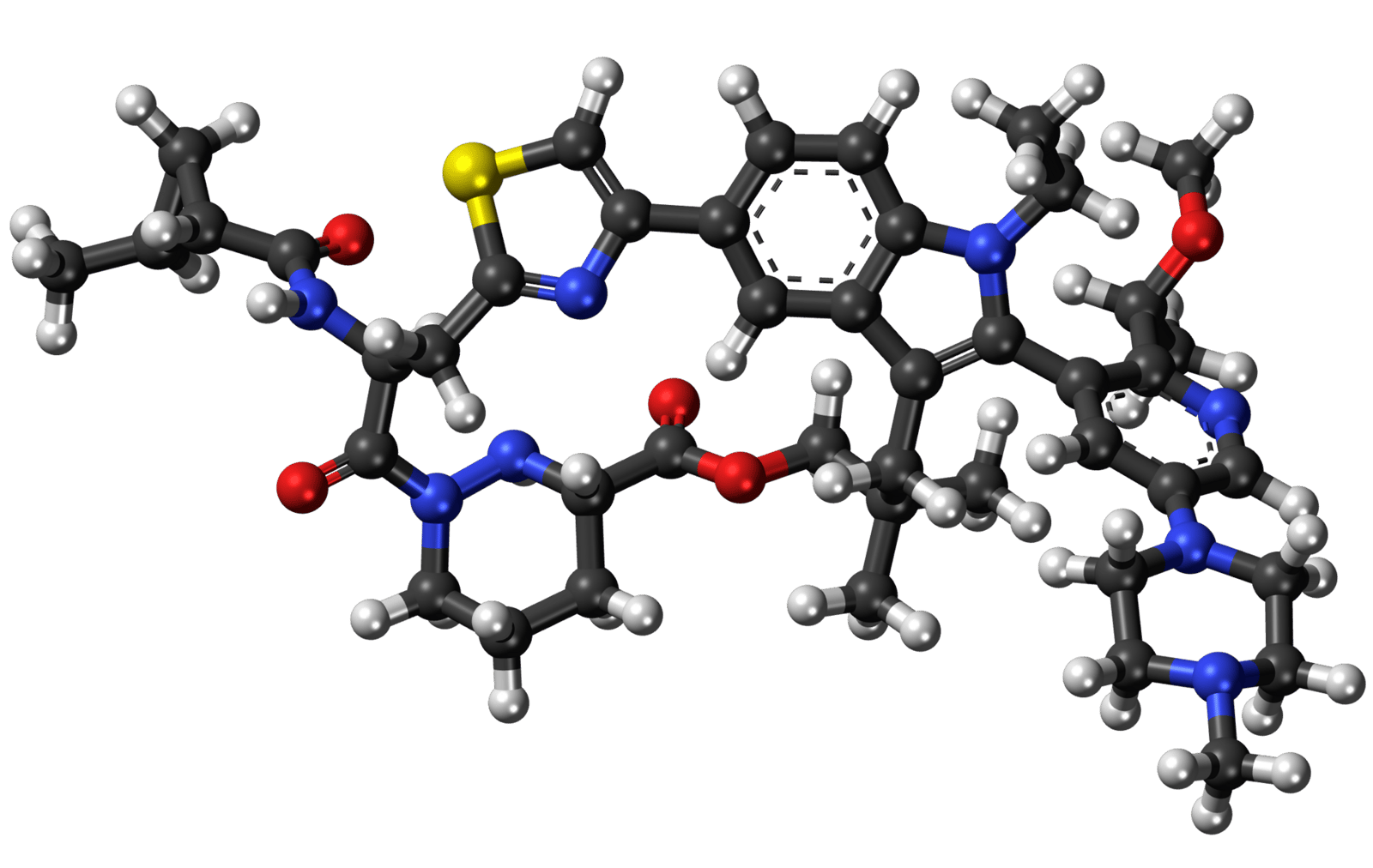
Pan-RAS 'molecular glue' drug shrank tumors in early pancreatic and lung cancer trial
ERAS-0015 produced responses in 11 of 25 previously treated pancreatic cancer patients at one dose. The lung results come from just five people.
 By Amara Okafor
· 5 min read

An experimental drug built to block several cancer-driving forms of the RAS protein at once shrank tumors in 11 of 25 pancreatic cancer patients who had already been through chemotherapy, according to early results from its first trial in humans.
The drug, ERAS-0015, also produced responses in three of five lung cancer patients previously treated with immunotherapy or platinum-based chemotherapy. Both figures come from patients who received a 32 mg dose in AURORAS-1, a Phase I study whose results were presented at the EORTC-NCI-AACR Symposium on Molecular Targets and Cancer Therapeutics, held Nov. 18-20 in Barcelona.
Those groups are small, and the headline response rates of 44% for pancreatic cancer and 60% for lung cancer rest entirely on them. Even so, the pancreatic number is the one that deserves attention. Patients whose pancreatic cancer has moved past first-line chemotherapy have very few treatments that shrink tumors at all, so a drug that does so in nearly half of a group like that has earned a larger, more rigorous test.
"A 'response' means the patients experienced considerable tumor shrinkage," Dr. Judy Wang, a medical oncologist at Florida Cancer Specialists and Research Institute in Sarasota, told the meeting. She described the activity as clinically meaningful for patients who have little or nothing else to try.
The trial began in June 2025 and is testing ERAS-0015 both alone and alongside other cancer therapies in people with solid tumors that carry RAS mutations, including locally advanced or metastatic non-small cell lung cancer, pancreatic cancer and colorectal cancer. It is still enrolling. The findings presented in Barcelona drew on 148 patients, among them 83 with pancreatic cancer and 37 with lung cancer.
Researchers raised doses step by step, from 2 mg up to 40 mg. Over a median follow-up of just over four months, they did not hit the maximum tolerated dose, the point at which side effects would cap how much of the drug patients can take.
Why a pan-RAS drug matters
RAS proteins act as switches that tell cells when to grow. Certain mutations jam the switch in the "on" position, so the growth signal never stops and the cancer keeps feeding itself. ERAS-0015 is designed to latch onto RAS while it is switched on. As a so-called molecular glue, it pulls proteins together in a way that cuts off that signal, and the "pan-RAS" label means it is meant to work across several different RAS mutations rather than just one.
That breadth is the selling point. For decades, RAS was considered essentially undruggable, and the first approved drugs aimed at it, such as sotorasib, which the FDA cleared for lung cancer in 2021, target a single mutation known as KRAS G12C. That variant shows up in a share of lung cancers but is uncommon in pancreatic cancer, where other KRAS mutations dominate. A drug that can hit several mutations at once could reach patients that the first generation of RAS drugs largely missed.
ERAS-0015 is not alone in chasing that goal. Elena Garralda, who chaired the symposium and co-directs the clinical research program at the Vall d'Hebron Institute of Oncology, said the AURORAS-1 data had been "eagerly awaited" and pointed to a broader shift visible at the meeting. Several studies there, she said, are "beginning to show it is possible to design drugs that target cancers driven by RAS mutations." Garralda was not involved in the trial.
Her framing sounds right. The real story here may be less about any single compound than about RAS moving from a target researchers gave up on to one with multiple drugs showing activity in people. For ERAS-0015, that also means the bar is rising: it will eventually have to prove it is better than, or different from, rival RAS drugs, not just better than nothing.
Side effects and what the early data leave open
On safety, the early picture looks manageable. At doses of 16 to 32 mg, the side effects reported in at least 10% of patients were rash, diarrhea, nausea and inflammation of the mouth lining, a profile familiar from other targeted cancer drugs. Twelve patients, or 9.8%, had severe treatment-related side effects, rated grade 3 or higher. None of the side effects forced researchers to limit doses.
"ERAS-0015 was well tolerated with few severe side effects," Wang said. That holds for now, but four months is a short window, and some problems with targeted drugs only surface after patients have taken them for longer.
The larger gaps are about efficacy. Phase I trials exist mainly to establish safety and find a dose, and the researchers themselves note that the limited number of patients is a built-in weakness. Several questions the presented results do not answer will matter far more to patients than the response rates:
- How long the tumor shrinkage lasts, which a median follow-up of about four months cannot show.
- Whether patients live longer, since no survival data were reported.
- Which specific RAS mutations responded best, which is the whole point of a pan-RAS approach.
- What the right dose is, given that 32 mg produced the reported responses but the maximum tolerated dose was never reached.
The lung result is the shakiest of the bunch. Three responses among five patients is encouraging, but a single patient either way would swing the rate by 20 percentage points. It should be read as a signal worth chasing, not as evidence the drug works in most lung cancer patients.
Confirming any of this will take Phase II and Phase III trials with many more patients, and ideally comparisons against existing treatment.
Wang put the stakes in measured terms. "Early results suggest ERAS-0015 has the potential to be one of these options," she said, referring to new treatments for RAS-driven cancers. The next meaningful test is whether the tumors that shrank stay that way.
Sources
Amara Okafor
Amara Okafor covers community health, access to services, and developments affecting everyday wellbeing. Her work follows research and public information about the conditions that influence health across different communities. She focuses on explaining how services are organized, whom new initiatives may reach, and what the available evidence says about their effects.
View all stories