Black Friday spending looks strong, but inflation is doing much of the lifting
Forecasts point to record online sales and heavy deal hunting, while retailers' outlooks split between value chains and weather-hit apparel sellers.
 By Nadia Rahman
· 6 min read
Key Takeaways
- Salesforce forecasts US online sales of $84 billion for the Nov. 24-30 holiday week, up 6% from a year earlier.
- Deloitte says 87% of shoppers plan to buy during Black Friday and Cyber Monday, the highest share since 2016.
- October's PCE price index rose 3.8% from a year earlier, and consumer confidence hit its lowest level since 2014 in September.
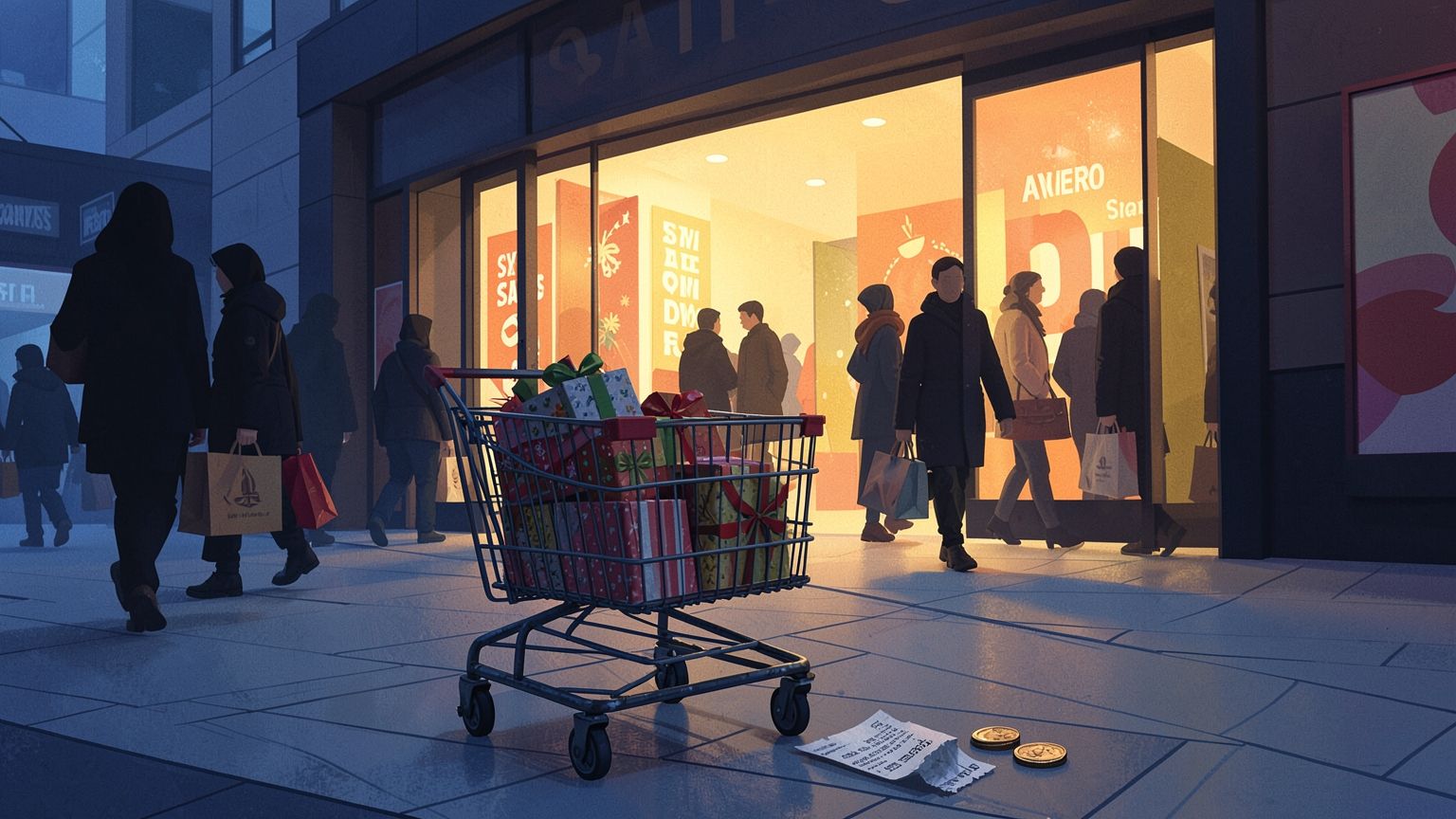
Shoppers are expected to spend nearly $13 billion this Black Friday, according to an Adobe forecast. That would be a big number in any year. It looks more fragile in a year when prices are climbing faster than many households would like.
A run of forecasts and retailer comments heading into Friday describes a consumer who is worried about money but still determined to buy gifts, and who is pushing that spending into the stretch of the calendar when discounts run deepest. Pairing those two facts is the key to reading this year's numbers. A holiday season can set dollar records while shoppers are actually stretching each dollar harder.
Record forecasts against a squeezed consumer
The early data is strong on paper. Adobe found that consumers spent $82.5 billion online during the first 22 days of November, which the company treats as the start of the holiday season. That was 9.1% more than in the same period a year earlier.
Salesforce expects the Nov. 24-30 holiday week to set a record, with online sales of $357 billion worldwide and $84 billion in the U.S. Both figures would be 6% increases over last year. The company also found that U.S. retailers raised their discount rates by 8% in November, so stores are offering steeper markdowns than they did a year ago.
Deloitte's Black Friday survey points the same way. Of the 1,200 consumers it polled in mid-October, 87% said they planned to buy something during Black Friday and Cyber Monday sales, up from 82% in 2025 and the highest share since 2016. Average expected holiday spending in that survey came to $624, about the same as last year.
The Conference Board puts planned holiday spending on gifts and other purchases at $1,049 on average, up 5.9% from $990 last year. After adjusting for inflation, the gain shrinks to 3.2%. That gap tells the story of the season. Forecasts have total holiday sales topping $1 trillion for the year, but rising prices supply a meaningful share of that growth.
The economic backdrop explains why shoppers seem so focused on deals. October's consumer price index rose a seasonally adjusted 0.4%, more than expected. The personal consumption expenditures price index was up 3.8% in October from a year earlier. Retail sales in October grew at their slowest pace in nearly a year, according to the CNBC/NRF Retail Monitor. In September, The Conference Board's Consumer Confidence Index fell to its lowest level since 2014, and respondents cited inflation and the job market.
Brian McCarthy, retail strategy lead at Deloitte, described shoppers who feel squeezed by prices but are still determined to protect the holidays. He told CNBC that people who held back and delayed big purchases in recent months are now concentrating that spending in promotional windows like this one. That pattern helps Black Friday's headline numbers. It does not mean the underlying consumer is healthy.
The detail worth watching most closely is how people plan to pay. Deloitte found that 40% of Gen Z shoppers intend to use buy now, pay later services this season. "It's another way of deferring when they're going to have to pay for that item," McCarthy said. Strong sales built partly on deferred payments look less like confidence and more like borrowing against January, and that pressure lands after the holiday promotions end.
Value chains sound upbeat; apparel sellers blame the weather
Retail executives mostly projected optimism in earnings reports and interviews over the past two weeks, though the details varied widely.
Walmart, which has reported slower sales, smaller baskets and drops in big-ticket and discretionary purchases, still says its shoppers are holding up. Chief Financial Officer John David Rainey told CNBC last week that the holiday quarter was "off to a pretty good start." He pointed to healthy payrolls and resilient stock markets, and said weaker consumer sentiment had not translated into lower economic output. The company is leaning on rollbacks and deals to keep price-sensitive customers coming in.
Target is pursuing a similar strategy, pricing thousands of products at $5 or less while also investing in more elevated merchandise. "We're encouraged by the start of the quarter that we've seen so far," CEO Michael Fiddelke told reporters after the company's third-quarter earnings report.
Best Buy's experience complicates the simple story of a value-only shopper. CEO Jason Bonfig told CNBC on Tuesday that customers are paying close attention to value but are also willing to upgrade, sometimes into "more premium price points." That fits McCarthy's description of pent-up demand released during sales. A shopper who skipped a new TV in the summer may buy a better one when the discount is large enough.
At Lowe's, which has also reported pressure on big-ticket purchases, CEO Marvin Ellison told CNBC that November sales so far are in line with the company's expectations. He said he remains "optimistic" even as the chain emphasizes deals for price-conscious customers.
The weaker results came from apparel and off-price retailers, which blamed unseasonably warm weather early in the quarter. TJX Companies said warmer temperatures slowed sales at the start of its fourth quarter, and its guidance for the period fell short of Wall Street expectations for both earnings and same-store sales. Executives still expect sales momentum to build through the holidays. "In the current environment, we believe value will be top of mind for many consumers this holiday season," CEO Ernie Herrman said on the earnings call.
Rival Burlington Stores also posted weak sales and gave a lower-than-expected outlook. Gap Inc. reported flat comparable sales for its fiscal third quarter, falling sales at its Athleta and Banana Republic brands, and lowered guidance. CEO Richard Dickson told CNBC that sales lagged early in the quarter because of the warm weather, and he expects colder temperatures to revive demand. "This could be, and would be, a source of upside," he said.
Weather is a real factor in clothing sales, and nobody buys a winter coat in a heat wave. Still, the off-price chains are exactly where a value-hunting shopper should be heading this year. When TJX and Burlington issue soft outlooks at the same moment that Walmart and Target sound confident, it suggests shoppers may be putting the basics and the biggest discounts ahead of discretionary clothing, rather than simply moving to the cheapest store.
That is the tension inside this year's Black Friday. The forecasts point to records, but the inflation-adjusted figures are modest. Retailers say consumers are resilient, yet many of those consumers are counting on markdowns and payment plans to get there. The Adobe and Salesforce tallies for this week will show how much shoppers spent. They won't show how comfortably they could afford it, and that question will be easier to answer after the holiday bills arrive.
Sources
Nadia Rahman
Nadia Rahman covers employment, wages, and the household costs that shape everyday financial life. Her work follows labor market reports, earnings trends, and changes in spending on essentials. She explains what the numbers measure and how different households may experience them, connecting economic announcements with the pressures and changes visible in family budgets.
View all stories