Black Friday carts fill with toiletries and basics as discounts outpace price hikes
Online spending is running ahead of forecasts, deals are deeper than last year, and AI shopping tools are steering more traffic to retail sites.

· 5 min read

Key Takeaways
- Adobe says US online spending reached $82.5 billion from Nov. 1 to Nov. 22, up 9.1% from a year earlier.
- Salesforce says November discounts are 8% bigger than last year and average prices are 1% lower.
- Traffic to retail sites from AI-powered tools more than doubled from November 2025, according to Adobe.
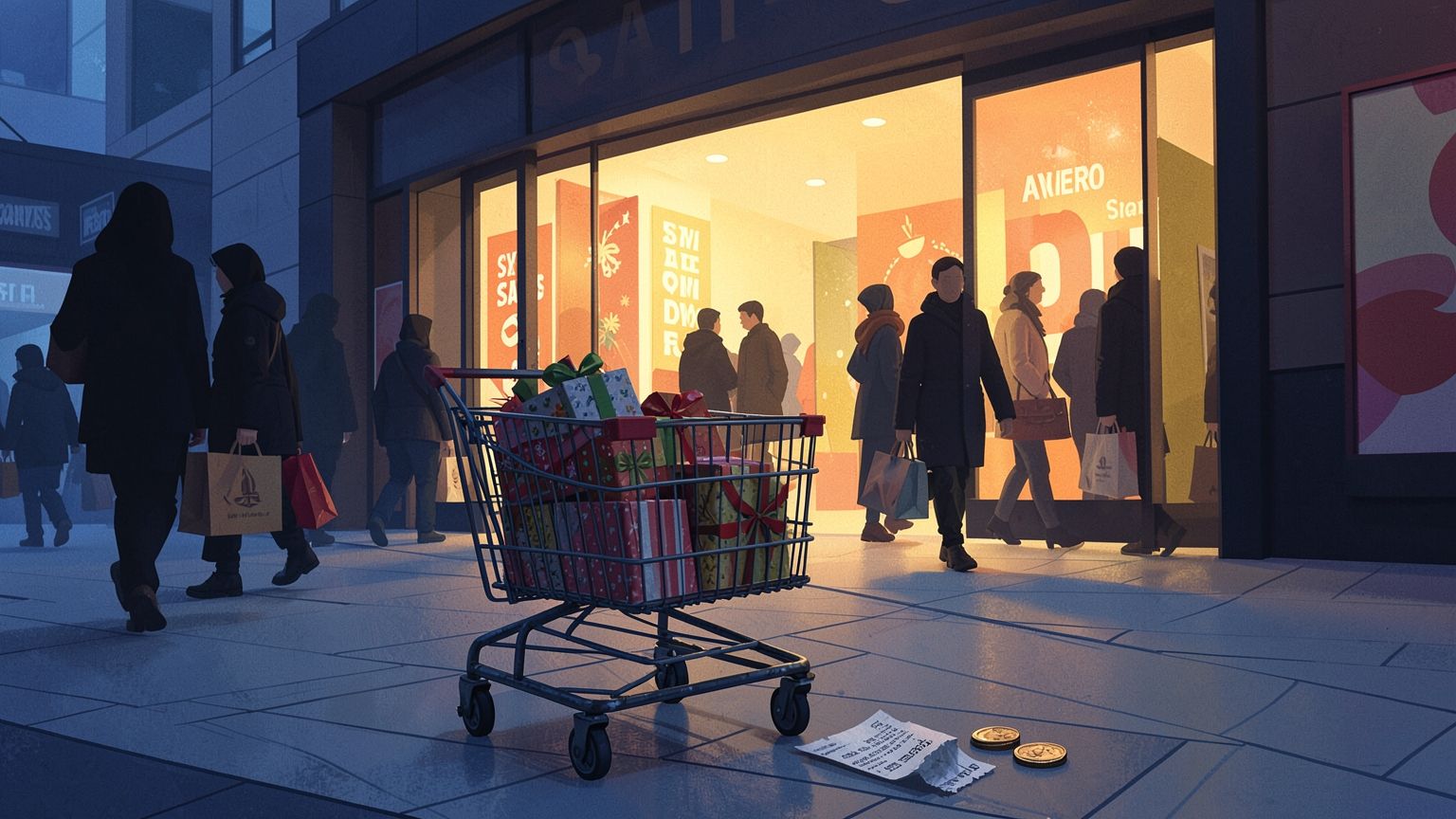
Americans heading into Black Friday are filling their carts with shampoo, cleaning supplies and plain T-shirts alongside the TVs and Lego sets. The early numbers suggest that this year, bigger discounts rather than higher prices are driving the spending.
US shoppers spent $82.5 billion online from Nov. 1 through Nov. 22, according to Adobe Digital Insights. That is 9.1% more than in the same three weeks of 2025 and ahead of expectations. Adobe projects online sales for the full season, which runs through Dec. 31, will rise 6.7% to $275.1 billion.
That gap between the early pace and the full-season forecast is worth watching. Retailers have been running promotions all month, and some started before Halloween. A fast November could mean shoppers are spending more overall, or it could mean they are simply spending sooner. The December numbers will show which.
Essentials share the cart with gifts
The clearest change this year is what people are buying. Adobe found online sales of personal hygiene products from Nov. 1 through Nov. 22 ran 40% above their October average. Household cleaning products jumped 33% and clothing basics rose 27% over the same stretch.
Vivek Pandya, director of digital insights at Adobe, said holiday shopping usually brings to mind premium handbags and jewelry, but shoppers are increasingly using the season to stock up on everyday goods. Analysts tie this to Black Friday stretching into a weeks-long event. That gives consumers time to buy toiletries and clothes they would normally pick up later in the year.
"It's not just a moment where shoppers are buying gifts," said Caila Schwartz, a retail and consumer insights leader at Salesforce. She said purchases of everyday needs will push total spending higher.
Salesforce tracks digital sales at a range of retailers, including grocery stores. It expects the deepest discounts on clothing, home goods, and health and beauty, with health and beauty items averaging 33% off from Tuesday, Nov. 24, through Cyber Monday.
Stocking up on basics during a sale is smart for households watching their budgets. For retailers, the picture is more mixed. A bottle of shampoo bought at a discount in November is one that won't be bought at full price in January. Stores showing strong holiday numbers may find part of that came out of their early 2027 sales.
Deals, not price increases, behind the gains
Salesforce said November discounts are 8% larger than a year ago. Those promotions pushed average selling prices for physical merchandise 1% below last November's level. From Oct. 1 through Nov. 18, shoppers put 2% more items in their online carts than in the same period a year earlier.
Schwartz said much of the sales growth in recent years came from higher prices. "This is not what we are seeing this year," she said. Industry analysts said US retailers have mostly avoided broad price increases and offered discounts strong enough to get customers shopping early.
Other numbers point in a different direction. The National Retail Federation expects November and December sales, in stores and online, to grow 4.1% to $1.01 trillion. It estimates that about half of that growth will come from higher prices. The two views don't necessarily conflict. Salesforce is describing online discounting so far this season, while the trade group's forecast covers all channels over two months. Still, the NRF estimate is a reminder that a strong headline sales total in a year of high inflation does not mean shoppers are taking home much more stuff.
The broader economy is sending mixed signals. Consumer confidence has been weak and inflation high, yet people have kept spending. Analysts said worries about costs linked to the US war with Iran are shaping where and how people shop. Confidence did jump this month as gasoline prices kept falling, which gives retailers some relief heading into the weekend.
For bargain hunters, the best prices may still be ahead. Pandya said Thanksgiving and Black Friday are likely to bring the steepest deals despite the early start. Adobe expects TV discounts to average 23% on Friday, about double the 11% average over the first 22 days of November.
AI tools move from novelty to traffic source
Artificial intelligence is now steering real shopping traffic. Adobe said visits to online retail sites from links in AI-powered tools more than doubled this month compared with November 2025. Pandya said shoppers are using these assistants to compare products and prices, especially as inflation and higher gas costs have made them more aware of what things cost. He said a belief that online stores offer "the best value possible" is also moving holiday spending from stores to the web.
The biggest retailers are promoting their own assistants. Walmart CEO John Furner told analysts on an earnings call this month that customers using Sparky, the company's AI shopping assistant, spent 40% more per order on average than those who did not. Last month, Amazon CEO Andy Jassy told analysts that US shoppers using its Alexa assistant spend 50% more than those who don't.
Those comparisons deserve some caution. They are figures the companies reported about their own products, and neither shows that the assistant caused the bigger orders. Frequent, high-spending customers may simply be more likely to try a new feature. What the numbers do show is that the largest retailers see AI assistants as a way to raise order size, not just answer questions. Expect them to keep pushing these tools harder into next year.
Stores still own the day
Despite the shift online, Black Friday remains the busiest day of the year for foot traffic, according to Sensormatic Solutions, which tracks activity at physical stores. "Black Friday is still the day for in-store shopping," said Grant Gustafson, Sensormatic's head of retail consulting and analytics.
Gustafson said traffic data show Americans are going to stores less often this season and are shopping with more purpose than impulse. That fits the wider pattern: people are buying basics on sale, checking prices with software and making fewer, more planned trips.
Analysts will watch spending across the five days from Thanksgiving through Cyber Monday for signs of how much room consumers have left. This year, it will help to look past the total and ask what share went to dish soap and socks. Holiday sales that lean on necessities suggest shoppers who are still spending but planning each purchase carefully.
Sources
Vivian Clarke
Vivian Clarke covers retirement planning news, pension developments, and long term saving. Her work follows changes to retirement programs, savings rules, and the economic conditions affecting later life finances. She explains terminology, published figures, and the scope of policy announcements, helping readers understand the context behind developments in retirement income and future household costs.
View all stories