Richard Lloyd, Television guitarist who traded leads on 'Marquee Moon,' dies at 75
The co-founder of the CBGB pioneers died at home in Chattanooga, Tennessee, months after a bile duct cancer diagnosis. Johnny Marr and Lloyd Cole led the tributes.
 By Grace Liu
· 5 min read
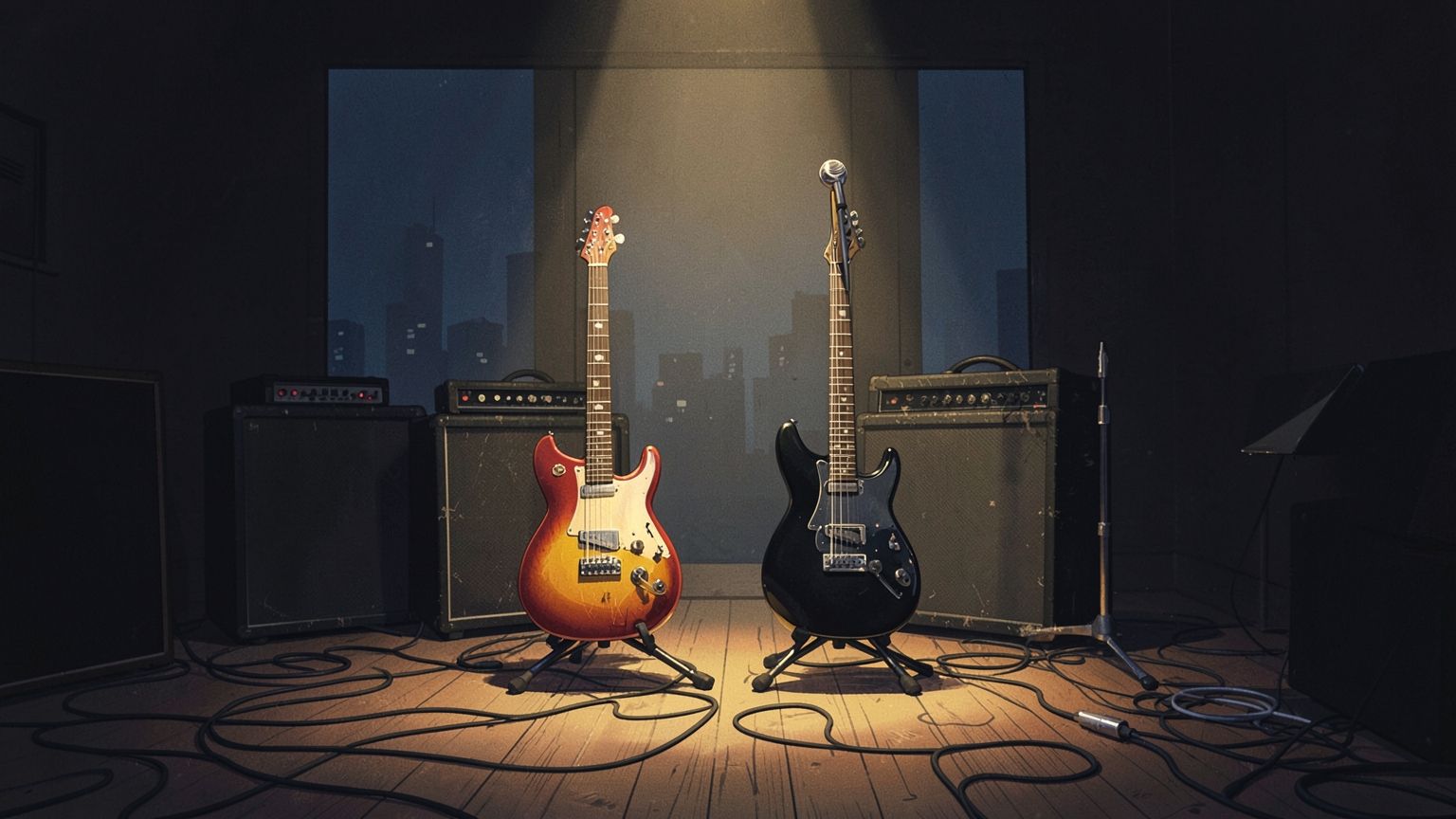
Richard Lloyd, the guitarist whose dueling lines with Tom Verlaine defined Television and turned "Marquee Moon" into one of rock's most studied records, died Saturday, Nov. 7, at his home in Chattanooga, Tennessee. He was 75.
The cause was cholangiocarcinoma, a cancer of the bile ducts. "His loving wife Sheila and his dog Willie Mays were with him at the end," his family told Rolling Stone. Lloyd was diagnosed earlier this year, and in August Television used its Instagram account to ask fans to support a GoFundMe campaign set up to help him and Sheila with medical costs and other bills.
"We are so very sad that Richard Lloyd has today passed away at the age of 75," the band wrote on social media, sending condolences to Sheila and to his family and friends. Lloyd is survived by his wife and his son, Dylan.
His death comes less than four years after Verlaine, Television's singer and Lloyd's guitar partner, died in January 2023 at 73. Fred Smith, who played bass on the band's two classic albums, died in February at 77. That means three of the four musicians heard on "Marquee Moon" have now died within a span of roughly 46 months, and the record's core partnership is gone.
Musicians who learned from that partnership were quick to respond. Johnny Marr, whose work with the Smiths drew heavily on Television's guitar approach, called Lloyd "a seeker and finder and a true inspiration with and without the guitar" in an Instagram post, adding that it had been an honor to know him. Lloyd Cole wrote on X that he saw Television only once and remembered the riffs that powered the songs. His verdict on who played them: "Richard played them all."
How two guitarists built Television's sound
Lloyd was born Richard John Alt in Pittsburgh on Oct. 25, 1951, and moved to New York as a child, growing up in Greenwich Village. He started on drums before switching to guitar, saw shows at the Fillmore East as a teenager and attended Stuyvesant High School, though he left before graduating. After stretches in Boston and Los Angeles, he came back to New York in 1973 and drifted toward the circle around the New York Dolls.
That year, Verlaine, Richard Hell and drummer Billy Ficca, who had played together as the Neon Boys, were introduced to Lloyd through Terry Ork, who would later put out Television's first single, "Little Johnny Jewel," on his own label. Lloyd joined, and Television was born.
The band's place in New York lore rests partly on a story that is more legend than documented fact. As it is usually told, Verlaine and Lloyd passed CBGB, asked owner Hilly Kristal what music he booked, heard "country, bluegrass and blues" and claimed their band played something along those lines. It didn't, but Television got the gig and became one of the first groups to play the Bowery club regularly. The Ramones, Blondie and Talking Heads followed, and by 1975 CBGB was the center of a scene that reshaped rock.
Hell left in 1975 and was replaced by Smith, previously Blondie's bassist, a change that made the group a far stronger instrumental unit. David Bowie called Television "the most original band I've seen in New York," and the band signed with Elektra Records in 1976. "Marquee Moon" came out in February 1977.
The album sold poorly in the United States, yet critics embraced it, and its reputation has only grown. The nearly 11-minute title track and songs such as "See No Evil" became standards for later guitar bands, and the record's influence runs through R.E.M. and Sonic Youth. Britain took to Television faster than America did: the band scored three hit singles and two top 10 albums there.
What made the album work was the absence of a fixed lead guitarist. Verlaine and Lloyd wove their parts together, trading melodic lines and solos instead of stacking rhythm under lead. Verlaine wrote the songs and sang them in a cool, flat voice, so he is usually treated as the band's auteur. That framing has always shortchanged Lloyd. The broad division critics have drawn, Verlaine for finesse and Lloyd for heat, gets at something real: take Lloyd's more aggressive playing out of those songs and the album's sense of tension, the push and pull that keeps a 10-minute track from drifting, would be much harder to sustain.
The peak was brief. Television released "Adventure" in 1978 and broke up later that year, a split Variety tied in part to Lloyd's heroin addiction. "Live at the Old Waldorf," recorded in San Francisco weeks before the breakup, captures the band still playing at full strength, a reminder that the music had not run out even as the group did.
A solo career and a long second act
Lloyd began his solo career with "Alchemy" in 1979, but substance abuse stalled him in the years that followed. He returned sober with "Field of Fire" in 1985 and kept recording for more than three decades, releasing nine solo albums in all. The last studio set, "The Countdown," arrived in 2018.
His most widely heard work outside Television may be on Matthew Sweet's 1991 album "Girlfriend," where he shared guitar duties with Robert Quine, another veteran of the CBGB era. Pairing two players from that scene on a power-pop record was an inspired choice, and their sharp, unpolished leads give the album much of its bite. Lloyd also recorded with John Doe of X, toured steadily and taught guitar. In 2017 he published a memoir, "Everything Is Combustible: Television, CBGB's and Five Decades of Rock and Roll."
Television regrouped in 1992 for a self-titled third album and a tour, then reunited periodically for live dates. Lloyd's relationship with Verlaine remained strained, according to Variety, and he announced in 2007 that he was leaving the band to concentrate on his own music.
That later chapter rarely drew the attention of the first. Still, the solo records, the session work and the years of teaching suggest a musician who kept treating the guitar as an ongoing project rather than a nostalgia act. For most listeners, though, Lloyd's legacy will stay tied to a single 1977 album, and his half of it is long overdue for the credit Cole gave it this weekend.
Sources
Grace Liu
Grace Liu writes about visual arts, exhibitions, and the creative culture surrounding museums and galleries. Her coverage looks at exhibition themes, artists and their work, and the ways cultural institutions present new ideas. She focuses on making arts news approachable while preserving the context that gives each project its particular meaning.
View all stories