Yale researchers trace typhoid's deadliest complication to damaged blood vessels
The complication keeps killing patients even when antibiotics work. A mouse study points to the toxin attacking the gut's blood supply, and gives scientists a model for a strictly human pathogen.
 By Iris Walker
· 4 min read
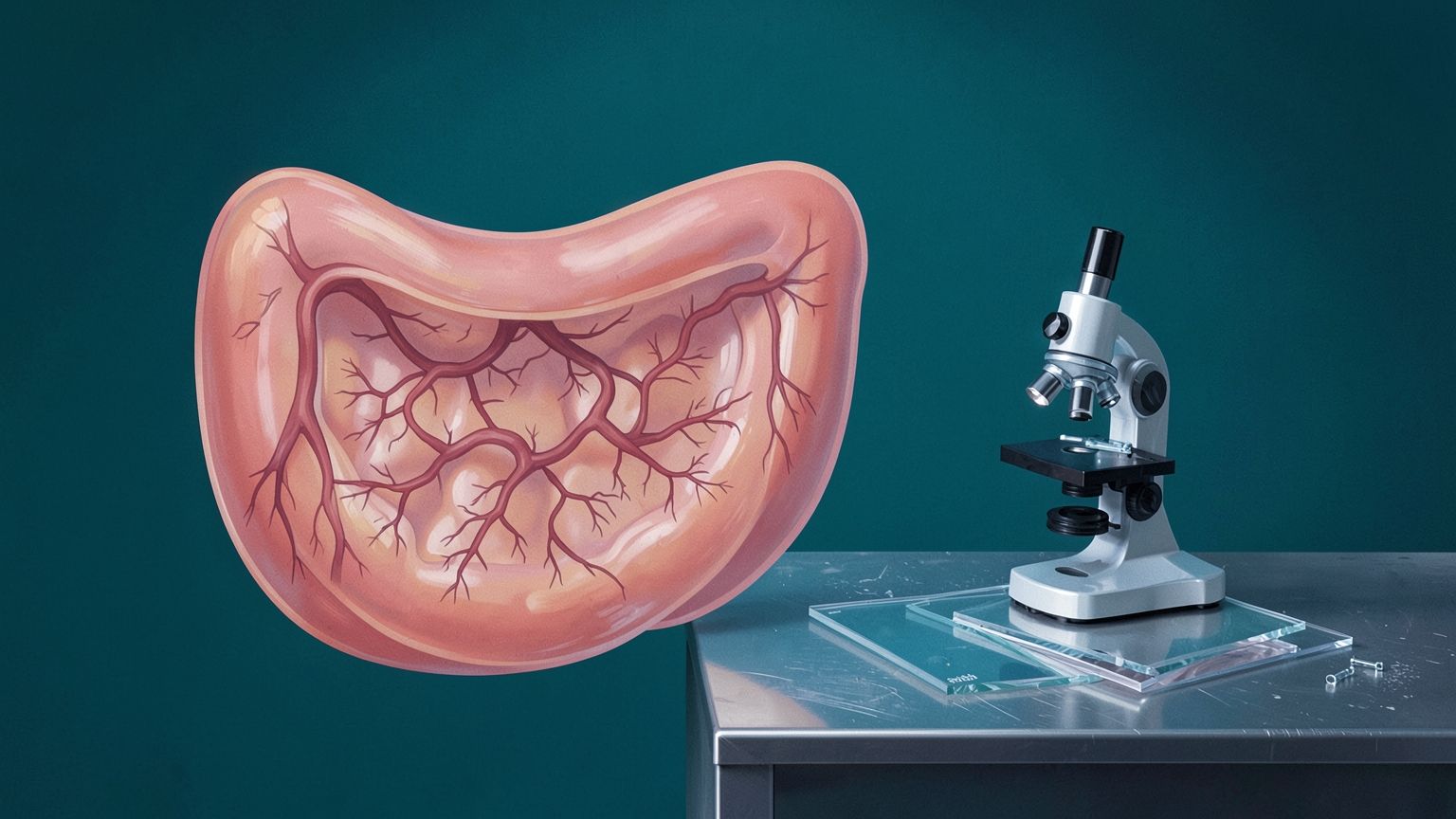
Intestinal perforation is the complication that makes typhoid fever so often fatal, and it has gone on killing patients even when antibiotics are doing their job. A study from Yale School of Medicine, published in Nature Microbiology, says it has found the reason: typhoid toxin circulating in the bloodstream damages the small intestine's blood vessels, leaving them unable to withstand the bacteria that reach the gut later in the illness.
In other words, the hole in the intestine is not simply the bacterium eating through tissue. The vessels give way first, and the bacteria finish the job. Perforation tends to appear late in the disease, after the damage to the vascular lining is already done, which is why clearing Salmonella Typhi with antibiotics does not always save the patient.
The stakes are not abstract. Typhoid fever is estimated to kill about 200,000 people a year, mostly in places where vaccines and effective treatment are scarce, and the elderly and children make up most of those deaths. Perforation accounts for the majority of them.
The same toxin also explains symptoms that never fit neatly with an infection: neurological disease that appears when there is almost no bacteria in the bloodstream, a drop in circulating white blood cells, and perforation confined to the lower small intestine rather than scattered along the gut. According to the Yale team, the toxin reaches different networks of small blood vessels, and the same injury produces a different clinical picture depending on where it lands. "The same activity, in a different vascular bed, produces a completely different clinical picture," said Jorge E. Galán, who led the work.
Galán, the Lucille B. Markey Professor of Microbiology and Professor of Cell Biology at Yale, is blunt about what that means for a question that has hung over the disease for more than a century. "This is a problem solved," he said. That is a large claim, but it is a claim about mechanism, and the mechanism is convincing precisely because it accounts for symptoms that previously looked unrelated. Whether it describes every case in patients is a separate question the study cannot settle on its own.
The experiments were done in mice. That matters because Salmonella Typhi is a strictly human pathogen, which has long made the intestinal form of the disease hard to reproduce in the lab. The Yale group reports that its animals develop the intestinal disease seen in patients, giving the field a model it has lacked. That may be the study's most durable contribution, more than any single finding: a place to put candidate drugs and vaccines and watch what happens to the gut.
Which is where the practical consequences begin. Antitoxin antibodies, vaccines and drugs that protect blood vessels can now be tested against the complication that causes most typhoid deaths, alongside antibiotics that clear the bacteria. The logic is appealing: neutralize the toxin or shield the vasculature, and the perforation that antibiotics arrive too late to prevent might never happen. Nothing in the paper amounts to a treatment, and no candidate has been named, let alone tested in people. But a target and a model are the two things a drug program needs first, and typhoid has been short of both.
The caution is the usual one for mouse work on an infection that only naturally affects humans. A model can reproduce a disease without reproducing every immune response that shapes it in people, and the history of infectious disease research is full of results that held in animals and faded in trials. The gap between this paper and a bedside intervention is likely to be measured in years, and the most likely first payoff is not a new drug but better vaccines that block the toxin before it reaches the vessels.
The finding did not come out of nowhere. Galán's laboratory discovered typhoid toxin in Salmonella Typhi two decades ago, and the new paper closes a series of studies built on that work. Heng Zhao, a postdoctoral researcher in the lab, is the first author; Canfeng Hua, Jeong In Hur and Maria Lara-Tejero are co-authors, all in Yale's Department of Microbial Pathogenesis. The National Institutes of Health funded the research.
What to watch is whether independent groups can reproduce the vascular injury in the new model and whether antitoxin antibodies blunt it. If they do, the case for pairing toxin-neutralizing treatment with antibiotics in severe typhoid becomes hard to argue against — and the disease that has been described in medical texts for over a century without its lethality being understood would finally have an explanation that points somewhere useful.
Sources
Iris Walker
Iris Walker writes about health research, with a focus on the background needed to interpret new papers and public announcements. Her coverage connects findings with earlier evidence and explains the questions researchers are investigating. She emphasizes clear terminology, appropriate context, and the uncertainties that remain as scientific understanding develops.
View all stories