U.S. will host the 2028 Copa América, its second straight edition
The 16-team tournament runs June 9 to July 9 and wraps up days before the Los Angeles Olympics open. Host cities have not been named.
 By Marcus Reed
· 4 min read
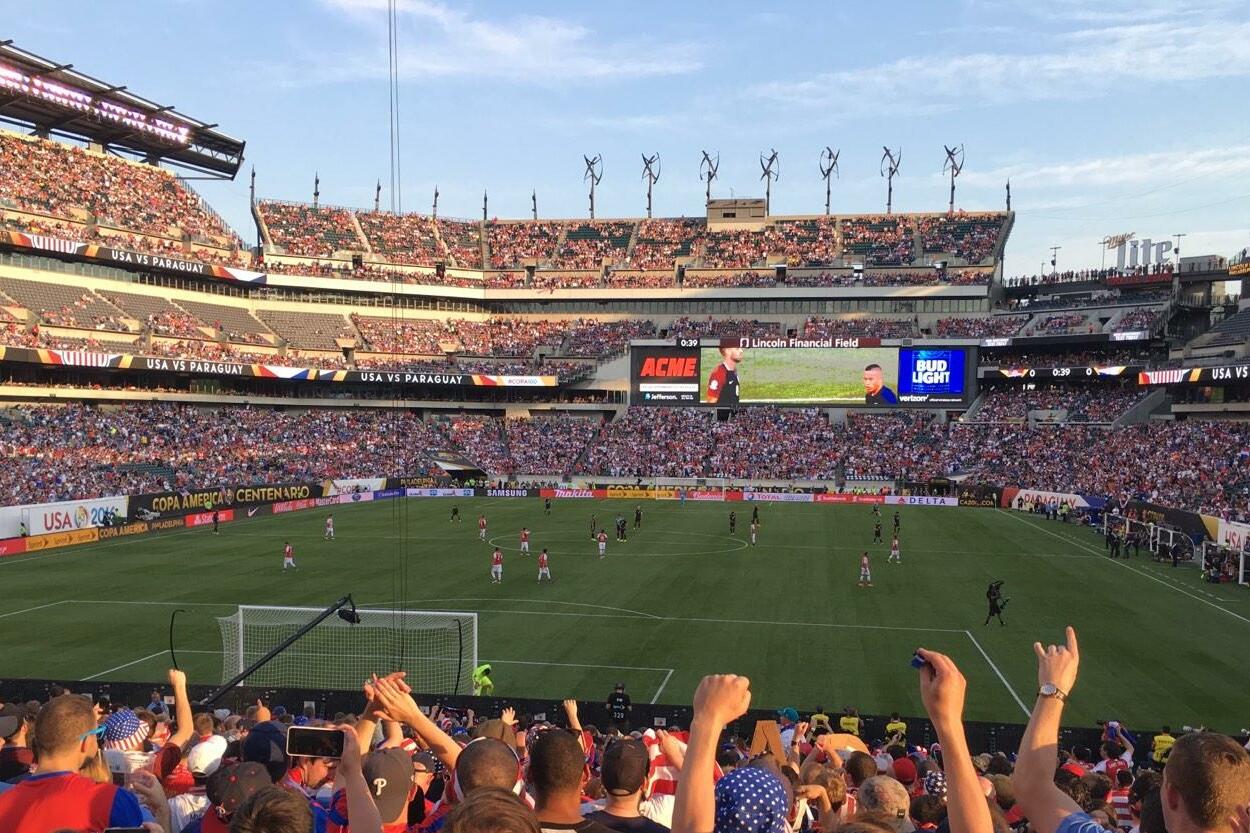
South America's national-team championship is coming back to the United States. CONMEBOL and Concacaf confirmed Tuesday that the U.S. will host the 2028 Copa América, making it the second consecutive edition played on American soil.
The tournament will run from June 9 to July 9, 2028. That leaves five days before the Los Angeles Olympics begin on July 14. The two confederations have not yet said which cities or stadiums will stage the matches.
This will be the third time in a little over a decade that the U.S. has hosted the event. It staged the special centenary edition in 2016 and the most recent tournament in 2024. For a competition that has historically rotated among South American countries, the U.S. has become something close to a standing second home.
The format will mirror 2024: 16 teams, made up of all 10 CONMEBOL nations and six from Concacaf. The Concacaf entrants will be decided by results at the 2027 Gold Cup. The announcement did not say whether the United States, as host, receives an automatic place, so the U.S. may have to earn its spot like everyone else in the region.
That arrangement changes the Gold Cup more than any other part of the deal. A regional championship that has sometimes felt like a summer filler for the bigger programs now doubles as qualifying for a tournament against Brazil and Argentina. For smaller Concacaf nations, the gap between finishing sixth and seventh in the region could decide whether they get a month of matches against world-class opposition in front of large American crowds. Concacaf president Victor Montagliani made the same point in more official terms, saying the deal means "further reinforcing the competitive significance of our Concacaf Gold Cup."
CONMEBOL president Alejandro Domínguez framed the return as a continuation of the 2024 partnership. "In 2028, we will once again bring that passion to the United States," he said in a joint statement with Concacaf.
The South American field will again include Brazil, the record five-time World Cup champion, and Argentina, which has reached the final of each of the last three World Cups. Argentina also holds the Copa América record with 16 titles, including the last two.
The biggest name from those Argentine title runs won't be there. Lionel Messi, who led Argentina to both of its recent Copa América wins, retired from international duty last month. The 2028 edition will be the first look at how Argentina's champion core holds up without him, and it removes the single largest ticket draw from an event that leaned heavily on his presence in 2024.
The other shadow over this announcement is what happened at the end of the last one. Argentina beat Colombia in the 2024 final at Hard Rock Stadium in Miami Gardens, Florida, but kickoff was delayed 82 minutes after fans forced their way through one of the main entry gates. Some ticket holders never got inside, and others left early because they feared for their safety. A class action lawsuit filed by fans over the chaos was settled last year.
That episode makes the still-unannounced host city list more than a formality. The U.S. has since staged a World Cup with much of the same stadium infrastructure, which should help, but the 2024 final showed that a famous venue doesn't guarantee a well-run perimeter. How organizers handle gates, ticket checks and crowd flow for the knockout rounds is the detail worth watching most closely once venues are named.
For the U.S. men's national team, the 2028 tournament is a chance to rewrite a bad memory. Under Gregg Berhalter, the Americans went out in the group stage of the 2024 Copa América after losses to Uruguay and Panama. That failure led to Mauricio Pochettino's hiring, and he guided the U.S. to the round of 16 as co-host of the 2026 World Cup.
Pochettino left this month to take over Manchester United, and U.S. Soccer is still searching for a permanent head coach. Whoever gets the job now has a clear medium-term target: qualify through the 2027 Gold Cup, then face South America's best at home a year later. That's an appealing pitch for candidates, and it gives the federation a concrete test to measure its next hire against well before the 2030 World Cup cycle comes into focus.
The timing looks shrewd from a scheduling standpoint. Wrapping up on July 9 keeps the Copa América out of the way of the Los Angeles Games while still giving it a full month of prime summer dates, when American stadiums are available and international fans are already traveling.
The next concrete step is the host city announcement, which the confederations have not dated. After that, the field starts to take shape at the 2027 Gold Cup.
Sources
Marcus Reed
Marcus Reed follows professional sports leagues, focusing on schedules, standings, and the developments that influence a season. His coverage connects team news with playoff races, competition formats, and changes around the leagues. He is interested in the practical details that help fans understand what happens next and why it matters.
View all stories