Red Wings trade Dylan Larkin to Canadiens for Hage and two first-round picks
Detroit ends a five-month standoff with its longtime center, who had sat out since Oct. 29. Montreal adds a proven top-six center after last spring's run to the conference finals.
 By Marcus Reed
· 6 min read
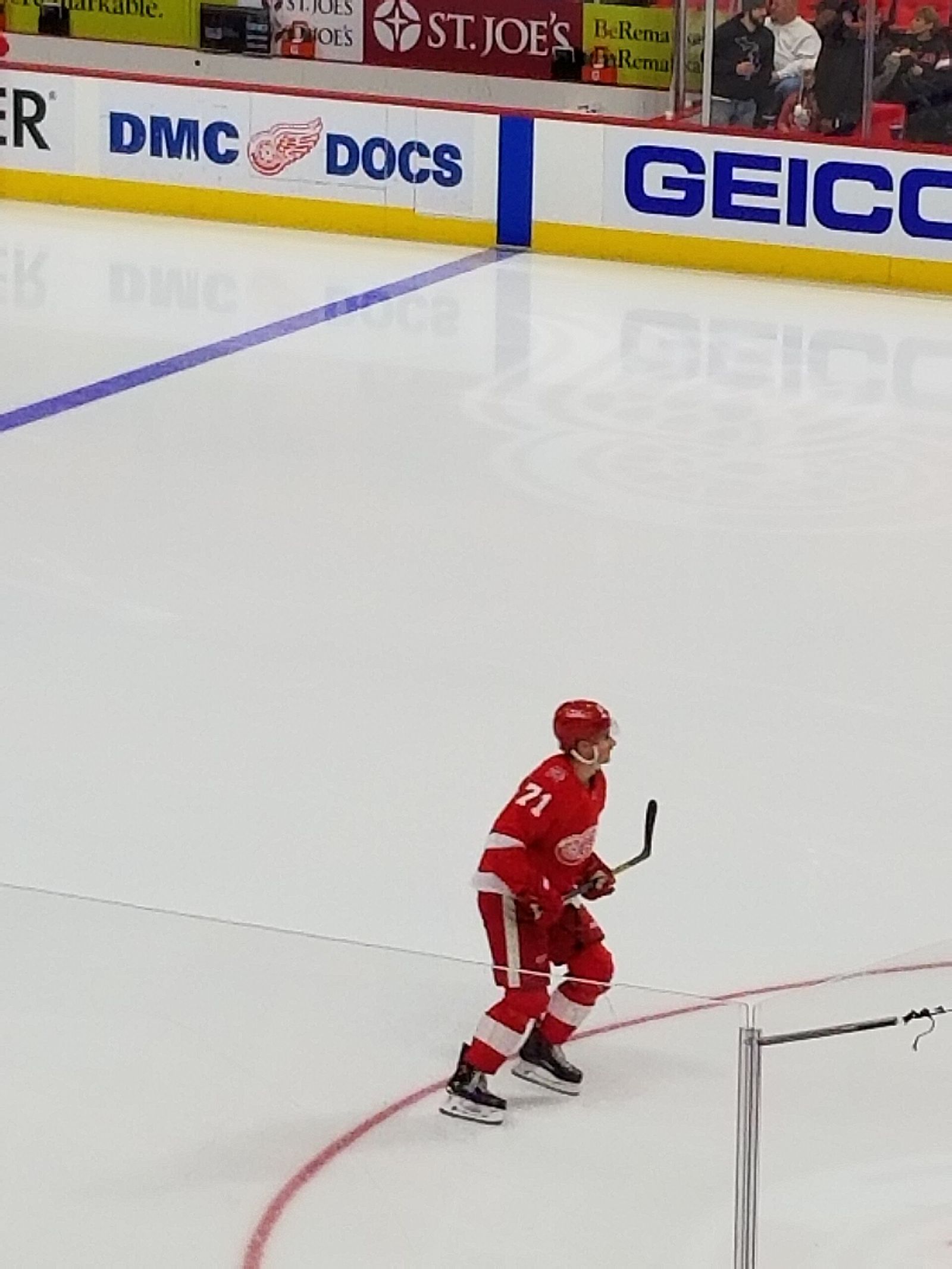
The Detroit Red Wings traded Dylan Larkin to the Montreal Canadiens on Sunday. The deal ends a standoff that began when the former Detroit captain asked for a trade in June, and it gives the Canadiens one of the league's most reliable two-way centers.
Montreal receives Larkin, a 2028 second-round pick and a 2027 third-round pick. Detroit gets forward Kirby Dach, goaltender Samuel Montembeault, college prospect Michael Hage, first-round picks in 2027 and 2029, a 2027 second-rounder and a 2028 fourth-rounder.
The price says plenty about both teams. Montreal gave up one of its top prospects and two firsts for a 30-year-old with four seasons left on his contract. Detroit, which sits closer to the bottom of the standings than to a playoff spot, turned an unhappy star into a rebuilding package. On paper, that looks like a fair trade, and an uncommon one: a deal that likely helps both sides.
How the stalemate ended
Larkin had all the leverage a contract can give a player. His eight-year, $69.6 million deal, signed in March 2023, includes a full no-move clause and carries an $8.7 million annual cap hit through four more seasons. At first he would accept a trade only to Florida, Minnesota or Vegas. When nothing came together, he added more teams to the list. Montreal was not reported to be among them.
Then he stopped playing. Larkin has sat out by choice since Oct. 29, after two goals and 10 points in six games, and stayed off the ice until the trade came through. Getting back to playing somewhere ended up mattering more than getting his first choice.
Montreal's interest stayed hidden longer than most. TSN reported late Sunday that Larkin had been open to joining the Canadiens for more than two months. According to that report, Montreal wanted the talks kept quiet because it worried attention could derail them, and Larkin's camp agreed. TSN also reported that landing Hage was a priority for Detroit throughout.
Credit interim general manager Shawn Horcoff for not blinking. With a player refusing to suit up and a no-move clause limiting the buyers, Detroit had every reason to take whatever was on the table. Horcoff held out for a return that would still look sensible after the headlines faded, and Hage was the piece that made it work.
What Detroit gets for its future
Hage is the centerpiece. Montreal took the University of Michigan junior with the No. 21 pick in 2024, and he has looked like a steal since. He is averaging 2.0 points per game for the Wolverines this season, has topped a point per game in each of his first two college seasons, and had 15 points in seven games for the United States at the World Junior Championship. He is a playmaking center, the position Detroit just emptied, and he could slot in alongside prospects such as Nate Danielson in the team's next top six.
The picks add depth. Detroit will hold two first-rounders in both 2027 and 2029. The 2027 second-rounder replaces the club's own, which it had already traded away. Shipping its own 2028 second and 2027 third to Montreal takes a bit off the haul, but not much.
The roster players matter less. Dach, the No. 3 pick in 2019 by Chicago, is joining his third NHL organization after injuries kept him from settling into a role in Chicago and Montreal. He has two goals and eight points in 22 games this season, five of those points in his last nine games. He fits as a middle-six forward who still has a chance to make good on his draft status.
Montembeault has not played this season. He has been on injured reserve since a lower-body injury in practice in early October. When he returns, he gives Detroit another option in a crease that has been uneven. Entering Sunday, John Gibson was 4-8-1 with a 3.54 goals-against average and an .862 save percentage, while Daniil Tarasov was 3-4-2 with a 1.98 GAA and a .927 save percentage in 10 games.
The standings explain why Detroit sold. The Red Wings entered Sunday nine points out of the second Eastern Conference wild-card spot. They were 13th in the conference and only six points clear of Vancouver for the fewest points in the league. A comeback from that hole would take a long, sustained run, and the team would have needed its best center to make one.
For Larkin, the length of Detroit's slide was part of the problem. Since the Red Wings drafted him 15th overall in 2014, he has played 818 regular-season games, all for Detroit, with 278 goals and 649 points. He has reached the playoffs only once, as a rookie. That lack of postseason hockey was among the reasons he wanted out.
Montreal goes all in down the middle
The Canadiens are making a clear statement after reaching the Eastern Conference finals last season. They sit third in the Atlantic Division and now add a center with five straight 30-goal seasons and the defensive game to handle tough matchups.
Larkin will likely center the second line behind Nick Suzuki, the reigning Selke Trophy winner, with Phillip Danault on the third line and Jake Evans on the fourth. Few teams can match that center group. Coach Martin St. Louis now has the depth to load up against opponents' top lines without leaving the rest of his lineup exposed.
Montreal could take on Larkin's contract because of how it had already built its roster. Cole Caufield, Ivan Demidov, Jakub Dobes, Noah Dobson, Kaiden Guhle, Lane Hutson, Mike Matheson, Alex Newhook and Juraj Slafkovsky are all signed to contracts of at least three years in length. That forward depth made Dach expendable. Jacob Fowler's emergence this season, along with Dobes in goal, left Montembeault buried on the depth chart.
The risk sits in the back half of Larkin's deal. The Canadiens are paying a premium for his age-30 seasons while giving up a center prospect who could be producing cheaply by the time Larkin's contract winds down. If Hage becomes a top-six NHL center in Detroit, this trade will be argued over in Montreal for years. There is also a near-term question: Larkin has not played a game in more than three weeks, and the Canadiens will need him back up to speed quickly to get full value this season.
Still, contending teams are supposed to spend draft picks and prospects for exactly this kind of player. Montreal had a narrow window to add a proven center without breaking up its young core, and it used it. Detroit, which had little leverage, came away with one of the top prospects in Montreal's system, if not the best, and two first-round picks.
Sources
Marcus Reed
Marcus Reed follows professional sports leagues, focusing on schedules, standings, and the developments that influence a season. His coverage connects team news with playoff races, competition formats, and changes around the leagues. He is interested in the practical details that help fans understand what happens next and why it matters.
View all stories