Mets land Tarik Skubal with a record $450 million deal for a pitcher
Steve Cohen's club beat out the Blue Jays, Padres and Dodgers for the two-time Cy Young winner, days before an expected Dec. 1 lockout.
 By Maya Carter
· 6 min read
Key Takeaways
- Skubal's $50 million average annual value is the highest ever for a pitcher, topping Max Scherzer's $43.3 million
- The Dodgers, who traded for Skubal in July, never made him an offer, ESPN reported
- The Mets' projected 2027 payroll already tops $340 million, according to Cot's Baseball Contracts
- Owners are expected to lock out players when the labor deal expires Dec. 1
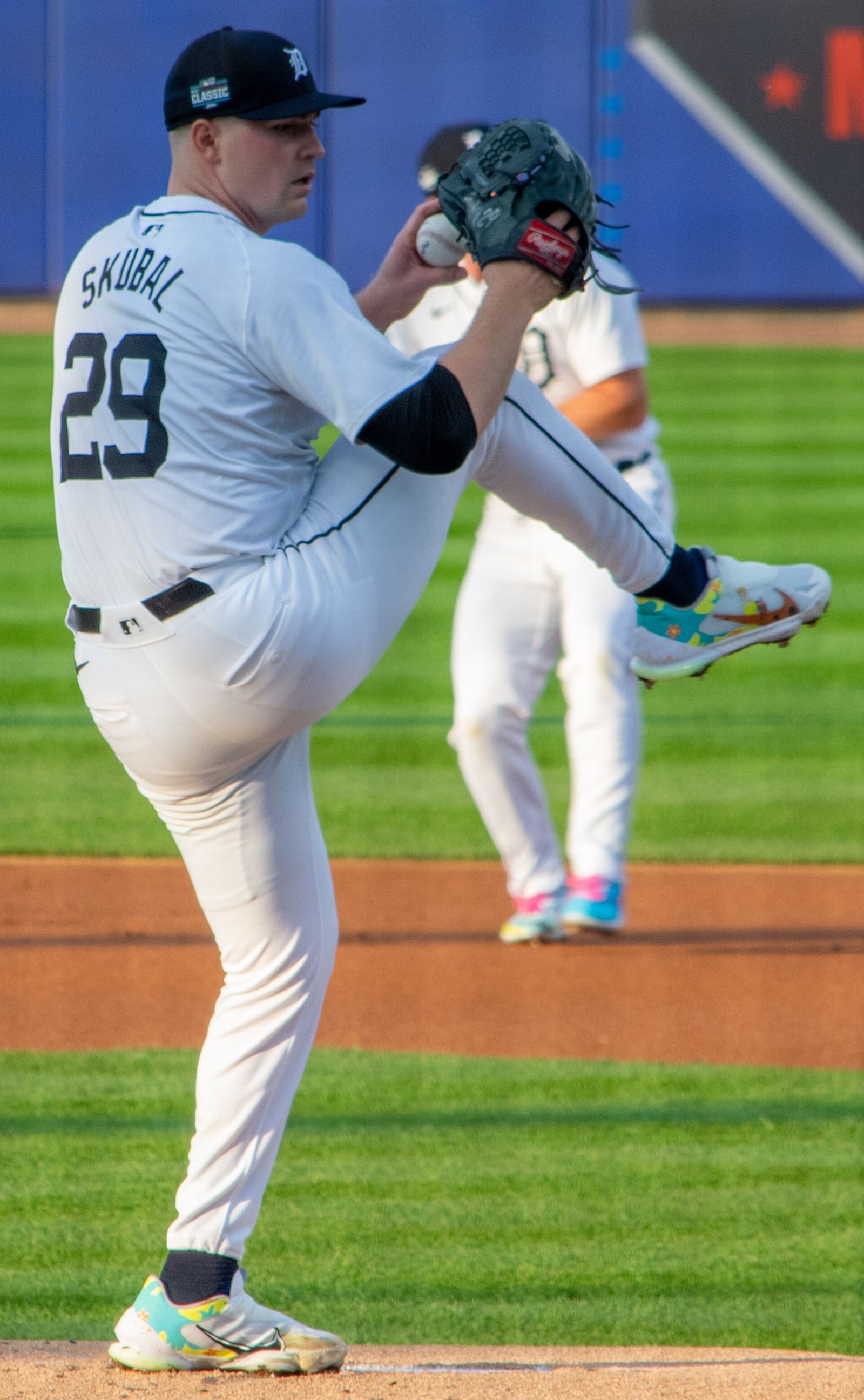
The New York Mets have signed Tarik Skubal to a nine-year, $450 million contract. No pitcher has ever been guaranteed more money, and the Mets landed the winter's top free agent barely a week before baseball's labor agreement runs out.
The deal sets two pitching records. Its $50 million average annual value beats the $43.3 million the Mets gave Max Scherzer in 2021, and its total tops the $325 million Yoshinobu Yamamoto got from the Los Angeles Dodgers in 2023. Skubal turned 30 on Nov. 20. He chose New York on Sunday after meeting last week in California with the Mets, Toronto Blue Jays, San Diego Padres and Dodgers.
Only a few owners would make this deal, and owner Steve Cohen is the clearest example. The Mets went 74-88 in 2026, missed the playoffs for a second straight year despite one of the two highest payrolls in baseball, and got rotation work that ranked 23rd in the majors in ERA. A franchise in that position has good reason to overpay for the best arm on the market. Whether $450 million turns into October baseball in Queens depends on things beyond Skubal's left arm.
The contract runs against how David Stearns, the Mets' president of baseball operations, has built pitching staffs. Before Skubal, Stearns had never given a free agent starting pitcher more than three years. His one attempt at a long deal for a free agent starter was a bid for Yamamoto, then 25, in his first winter in charge. Yamamoto went to the Dodgers instead.
Skubal is five years older than Yamamoto was then and has had three operations on his throwing elbow. ESPN's Jorge Castillo called the signing Cohen's decision rather than Stearns'. That reading fits the facts. A front office that has avoided long-term risk on starters doesn't suddenly hand out nine years to one.
Skubal isn't even the most expensive player on the roster. That is Juan Soto, another client of agent Scott Boras, whose 15-year, $765 million contract from December 2024 still has 13 seasons left. The Mets will carry seven players with average salaries of at least $20 million next season: Soto, Skubal, Bo Bichette, Francisco Lindor, Marcus Semien, Sean Manaea and Jorge Polanco. Cot's Baseball Contracts projects the 2027 payroll at more than $340 million.
ESPN, grading the deal, stopped short of an A. Its main reason was how much of the payroll now rides on two players. That is the real exposure here. If Soto or Skubal declines early, the Mets don't have an easy way out.
The case for Skubal starts with his numbers. Over the past three seasons he went 43-17 with a 2.42 ERA and 655 strikeouts, and he led all pitchers in FanGraphs wins above replacement. Counting back to 2023, ESPN Research puts him at a 2.47 ERA over 103 starts. That is the best mark among the 39 pitchers with at least 100 starts in that span and more than half a run better than Cristopher Sanchez (2.97) and Zack Wheeler (2.98).
His pitch mix is deep. He has a 97 mph four-seam fastball that hitters have batted .201 against over three seasons, plus a changeup that neutralizes right-handed hitters, along with a sinker, slider and curveball. He allowed one run or none in 44 of his 88 starts over the last three years. In eight postseason starts he has a 2.13 ERA, though his teams went 4-4 in those games.
His path to the top was unusual. The Detroit Tigers drafted him in the ninth round in 2018 out of Seattle University. He broke through in 2023, then won the American League Cy Young Award in 2024, unanimously, and again in 2025. In February he won an arbitration case for a $32 million salary after the Tigers had offered $19 million. Detroit then went 6-22 in May, and the club traded him near the end of July. The Dodgers beat out the Milwaukee Brewers and others with a package led by outfielder Zyhir Hope and right-hander River Ryan.
In Los Angeles he posted a 2.61 ERA over 10 starts in August and September and allowed three runs in 11 postseason innings. He finished 2026 at 12-7 with a 2.72 ERA in 158 2/3 innings.
That innings total, his lowest in three years, points to the risk in this contract. Skubal had Tommy John surgery in college. In May, Dr. Neal ElAttrache removed loose bodies from his elbow with a nanoneedle, a less invasive procedure that roughly halved the usual recovery time. Skubal was pitching again in under two months and showed no drop-off. Still, a nine-year deal for a pitcher with three elbow surgeries asks the Mets to trust that his recovery holds up for most of the next decade.
Detroit managed his workload carefully. Over three seasons he made only 26 starts on four days' rest, and the Tigers seldom let him pass 100 pitches. He did it four times in 2024, three times in 2025 and not at all for Detroit in 2026, though the Dodgers let him go over 100 three times. He is efficient enough that he usually still pitches six or seven innings. The Mets would be wise to copy Detroit's approach rather than the Dodgers'.
There is reason for optimism about his aging. Chris Sale, Max Scherzer and Justin Verlander all pitched at an elite level well into their 30s. But those are the success stories, and most pitchers don't follow that path.
The timing may be the most telling part of the deal. Owners are pushing for a salary cap for the first time since 1994, when that fight led to a strike of more than seven months and the loss of the World Series. They are expected to lock players out when the collective bargaining agreement expires Dec. 1. The MLB Players Association says it will not accept a cap, and the dispute could threaten the start of the 2027 season or more.
That uncertainty appears to have kept the Dodgers out of the bidding. They wanted Skubal back and were open to a long deal but never made an offer because of the unsettled economics, ESPN's Alden Gonzalez reported, citing sources. Cohen evidently weighed the same uncertainty and decided it didn't matter to him.
Jeff Passan of ESPN estimated that Skubal, Soto and Lindor would take up about $140 million of a projected $280 million cap in 2028 if the league's proposal takes effect. That math works only if the farm system keeps producing cheap contributors like Nolan McLean, Carson Benge and A.J. Ewing. Passan also pointed out that deals like this one are exactly why players oppose a cap. A $450 million market price for an ace is hard to square with any cap on individual salaries.
For the other bidders, the market now shifts down a level. ESPN's analysts expect the Padres to pursue several starters before the lockout and see Freddy Peralta as a fit for Toronto. The Dodgers still have Yamamoto, Shohei Ohtani, Blake Snell and Tyler Glasnow, so losing Skubal leaves them short a luxury rather than a necessity.
Skubal now leads a rotation with McLean, who had a 3.16 ERA and finished fourth in National League Rookie of the Year voting, and Christian Scott. That is a real upgrade over a staff whose last top-five Cy Young finisher was Jacob deGrom in 2020. The roster still has weaknesses at first base, second base and in the bullpen, and third base too if Bichette doesn't improve. Bradford Doolittle's projection at ESPN has the signing raising the Mets' 2027 playoff odds by 17%, to about 59%.
Those odds reflect a strong signing and also how much work remains. The Mets haven't won a World Series since 1986, and they now have the ace they have lacked for years. When he first pitches for them depends on talks between owners and players that have not yet produced a deal.
Sources
Maya Carter
Maya Carter covers track and field, major competitions, and the performances that shape each season. Her coverage connects results with event formats, qualification routes, and the wider sporting calendar. She focuses on clear explanations of records, rankings, and race developments, helping readers follow the stories beyond the finish line.
View all stories