FIFA awards 2031 Women's World Cup to U.S., Mexico, Costa Rica and Jamaica
The U.K. landed 2035 in the same unopposed vote. Both will be 48-team tournaments, and a fight over who pays the bills is already taking shape.
 By Marcus Reed
· 6 min read
Key Takeaways
- The 2031 Women's World Cup will be the first with 48 teams and 104 games, played across four North American countries.
- FIFA is projecting more than 4.5 million fans and over $4 billion in revenue for 2031.
- England, Scotland, Wales and Northern Ireland will host in 2035, the first World Cup on British soil since 1966.
The Women's World Cup is coming back to the United States. FIFA's member federations on Monday approved a joint bid from the U.S., Mexico, Costa Rica and Jamaica to stage the 2031 tournament, which will be the first edition of the women's event with 48 teams.
The same meeting gave the 2035 tournament to a combined bid from England, Scotland, Wales and Northern Ireland. Neither bid had a challenger, and both were approved by acclamation, so the result was never in doubt. Monday's vote mattered for a different reason. It formally starts work on two expanded, 104-game tournaments, and it reopens the argument over how the costs get split.
The U.S. hosted the Women's World Cup on its own in 1999 and 2003. The 1999 edition ended with the American team's second world title and became a landmark for the sport in the country. The event last came to North America in 2015, when Canada was the host. Mexico, Costa Rica and Jamaica have never staged the women's tournament.
U.S. Soccer president Cindy Parlow Cone made the pitch to FIFA members before the vote. "This will be the largest women's sporting event in history," she said. "Which means we have to deliver."
FIFA has put numbers behind that claim. It hopes to draw more than 4.5 million spectators and estimates revenue of more than $4 billion, which would make 2031 the highest-earning women's sporting event ever. The winning bidders and FIFA president Gianni Infantino promised to put all of that money back into the women's game. These are projections and pledges, not results. Still, the revenue target looks more grounded than most FIFA forecasts, because the U.S. market for women's soccer has a long track record.
Why four countries instead of two
The bid did not start out this large. Parlow Cone said last year that the original plan was a 32-team tournament split between the U.S. and Mexico. Once she learned the field would grow to 48, she brought the idea of a wider regional bid to Concacaf president Victor Montagliani. She said the partners were chosen on the strength of their national teams, their stadiums and the supporting infrastructure, including hotels and training sites.
The expansion brings the women's event in line with the men's World Cup, which grew to 48 teams this year in the U.S., Canada and Mexico. The next Women's World Cup, in Brazil in 2027, will still have 32 teams.
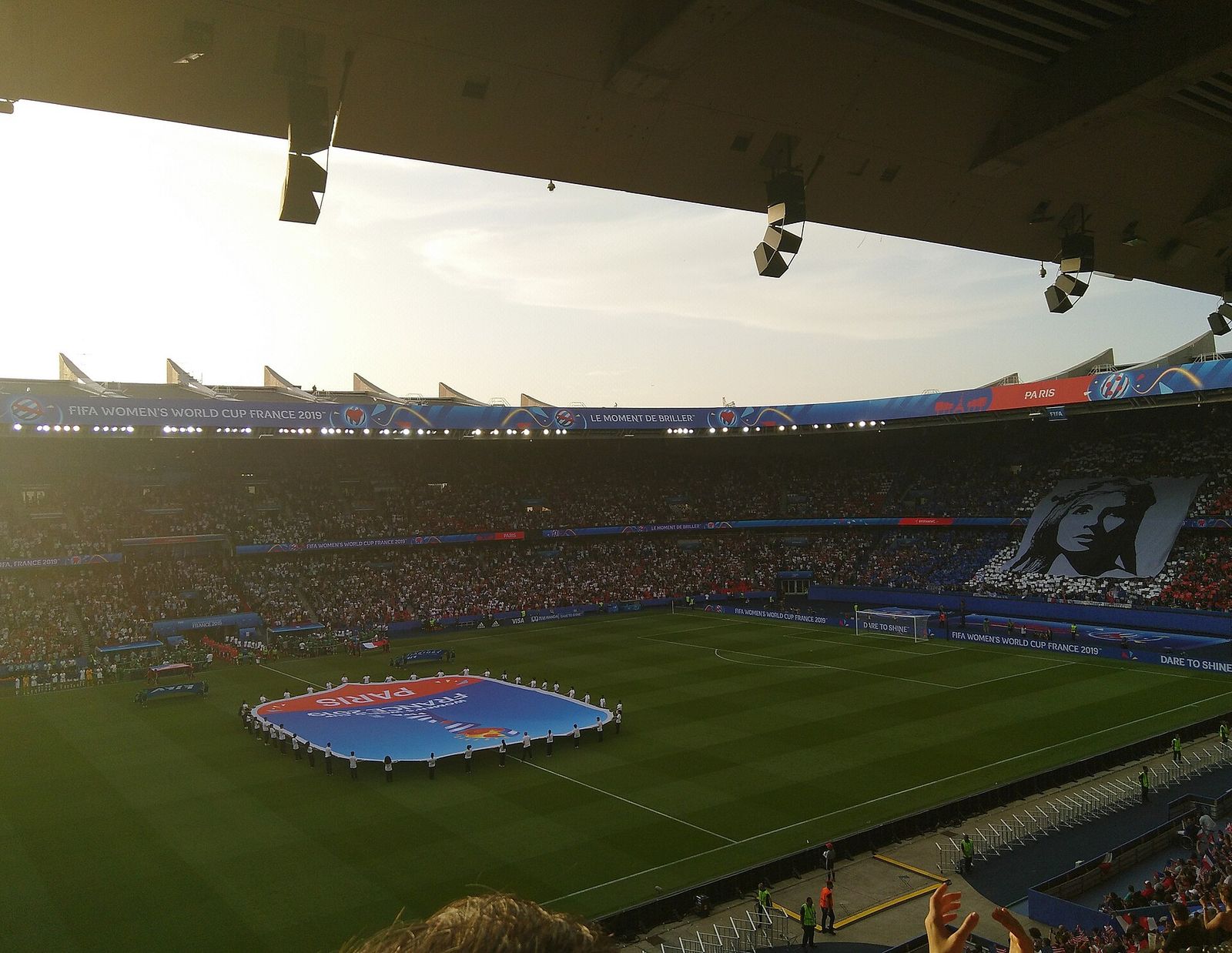
FIFA's evaluation identifies 20 potential sites: 14 in the U.S., four in Mexico, plus San José, Costa Rica, and Kingston, Jamaica. Demand to host is much wider than that list. The bid includes more than 30 cities and 45 venues competing for matches. Most of the 14 U.S. and Mexican cities that hosted the men's tournament are back in contention. They include MetLife Stadium in the New York area, which staged this year's men's final, and the two semifinal venues, AT&T Stadium outside Dallas and Atlanta's Mercedes-Benz Stadium.
Some newcomers are also bidding. Denver's Empower Field is on the list, and so is the Washington Commanders' new stadium in the District of Columbia, which is under construction and expected to open in 2030. Jamaica's choice looks far simpler: Independence Park in Kingston, which is being renovated, is the only venue the bid lists for the country.
The interest in hosting also reflects a change in approach. The men's tournament this year used only NFL stadiums or venues of similar size in Canada and Mexico. For 2031, organizers are open to smaller grounds of 40,000 seats or fewer, such as Geodis Park in Nashville and Snapdragon Stadium in San Diego. Their reasoning is that a full, loud smaller stadium could be better than a half-empty football stadium for matches that won't draw big crowds. No decision has been made.
That approach looks right. A 48-team field means a large number of group games between lower-profile teams. Broadcasts of those matches from a sold-out 30,000-seat stadium will look and sound much better than the same games in a 70,000-seat NFL venue with large sections of empty seats. Most matches are still expected to be played in the U.S., as they were this year.
The money fight starts early
Few people doubt the tournament can make money. In 1999, about 14 million Americans watched the U.S. beat China on penalties in the final, and the tournament earned a $4 million profit on $30 million in operating costs. The open question is who benefits from the 2031 revenue.
U.S. host cities for this year's men's World Cup complained before and after the event about how costs were shared with FIFA. Local host committees reportedly spent as much as $150 million per city to stage matches. CBS Sports reported that local officials are now considering negotiating as a group, with U.S. Soccer's support, so that cities don't bid against each other and give FIFA more leverage.
That plan could produce better terms. If cities offer FIFA concessions to win matches, any savings from the smaller-stadium approach could simply be passed to the governing body. A united group of cities, backed by the federation that leads the bid, has a better chance of keeping a fairer share of the money in the communities that pay for security, transit and fan zones.
Britain's first World Cup since 1966
The 2035 bid has 19 proposed venues so far: 14 in England, two each in Scotland and Wales, and one in Northern Ireland. The English list includes Wembley, Old Trafford, the Emirates Stadium, Tottenham Hotspur Stadium, the Etihad Stadium, St James' Park, Villa Park, Elland Road, the Stadium of Light, the City Ground, Selhurst Park, Brighton's Amex, Bristol City's Ashton Gate and Everton's Hill Dickinson Stadium. Hampden Park and Easter Road would host in Scotland, the Principality Stadium and Cardiff City Stadium in Wales, and a redeveloped Windsor Park in Northern Ireland. Chelsea's possible new stadium, Wrexham's redeveloped ground and Birmingham's planned 62,000-seat Powerhouse Stadium could be added.
FIFA rated the bid 4.3 out of 5 but called its contractual framework "medium risk." The evaluation said some government guarantees, especially on safety, security and tax, came with qualifications. It added that the long lead time and the bidders' engagement with FIFA give a sound basis for resolving those issues. The British bidders have nine years to settle those points, which should be enough time.
The 2035 tournament will be the first World Cup in the U.K. since England hosted the men's event in 1966. The country also has the men's European Championship in 2028, after failed bids for the 2006 and 2018 men's World Cups. English FA chair Debbie Hewitt told FIFA members that "we want this to be your FIFA Women's World Cup, a World Cup for everyone." England forward Michelle Agyemang called the award "incredibly special" and said the chance to play in a home World Cup would be a dream.
Monday's vote followed a familiar FIFA pattern. In December 2024, member federations approved the six-nation, three-continent bid for the 2030 men's World Cup and then gave 2034 to Saudi Arabia through a fast-tracked process that, in ESPN's assessment, appeared built to keep out rivals. Pairing awards and avoiding contested votes gives FIFA a fixed calendar for the next decade. It also means host bidders face no competition that might push them toward better terms, which is why a joint negotiating front among U.S. cities could make the biggest practical difference before 2031.
Sources
Marcus Reed
Marcus Reed follows professional sports leagues, focusing on schedules, standings, and the developments that influence a season. His coverage connects team news with playoff races, competition formats, and changes around the leagues. He is interested in the practical details that help fans understand what happens next and why it matters.
View all stories