Parents are building backyard homes so grown kids don't move back inside
Builders in California, Colorado and the D.C. area say adult children are a growing share of accessory dwelling unit projects as homeownership slips further out of reach.
 By Zoe Campbell
· 4 min read
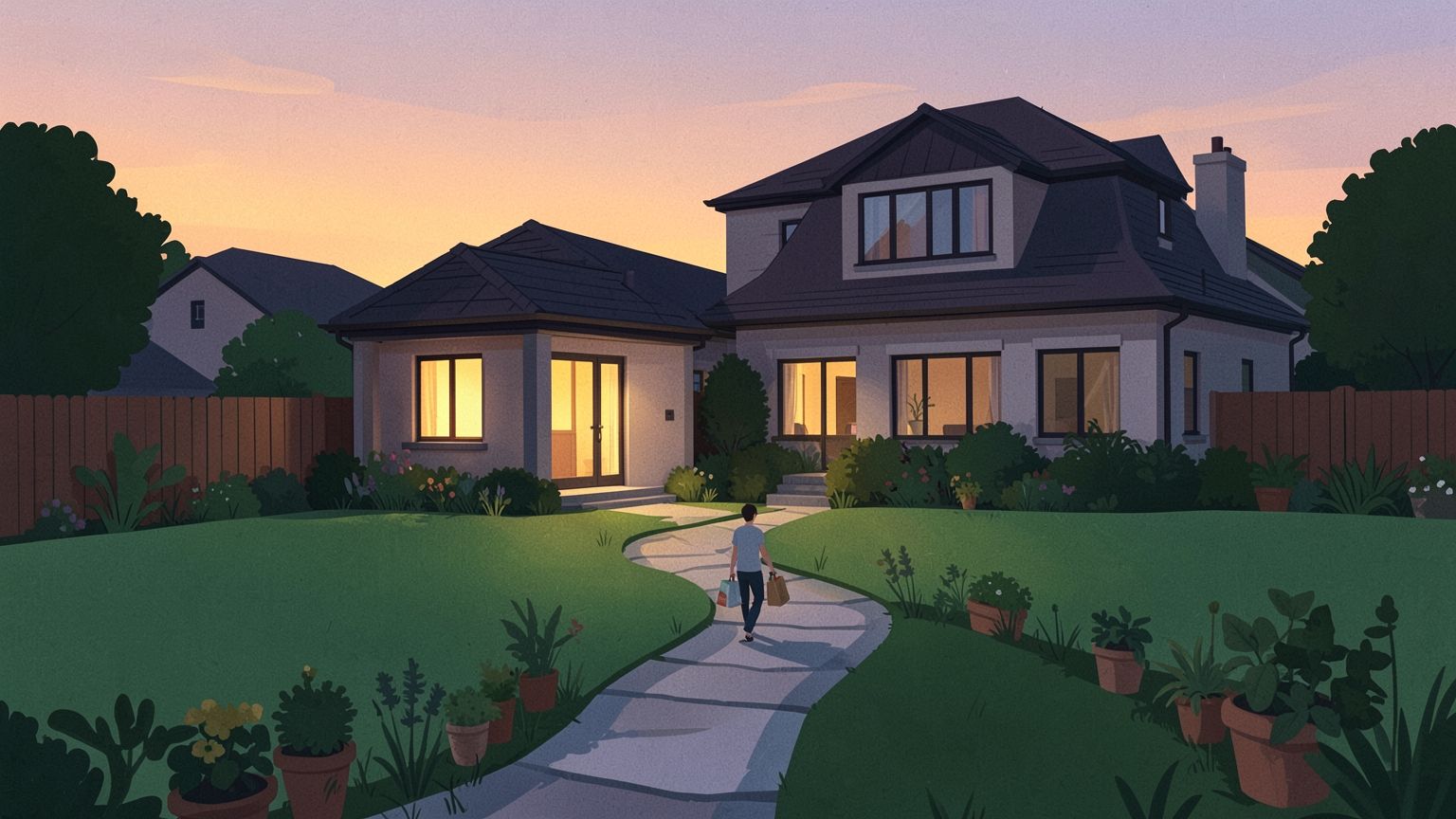
Sam Weaver, 32, works in sales and has a home of his own in Castro Valley, California. It is 400 square feet, has a separate entrance and direct access to the street, and sits in his parents' backyard.
His parents, Diane and Steve Weaver, built the accessory dwelling unit after Bay Area rents made it hard for their son to pay his bills and still save toward buying a house, Diane Weaver told Architectural Digest. "He’s close by, but it really feels like he has his own home," she said.
The Weavers fit a pattern that ADU builders describe as growing. For years, backyard cottages and in-law suites were mostly sold as a way for younger homeowners to keep aging parents nearby. Now builders in California, Colorado and the Washington, D.C., region say more of their customers are empty nesters building for grown children who might otherwise move back into their old bedrooms.
The cost of a first home explains a lot of the demand. According to figures cited by Architectural Digest, a buyer now needs roughly $110,000 to $113,000 a year in income to comfortably afford a median-priced U.S. home, which the magazine puts at $434,900. That is far above the national average income of $64,220 the magazine cites.
California has gone further than most states in encouraging the structures. It has passed measures aimed specifically at easing ADU construction as a response to the housing shortage, and the number of ADU permits issued in the state quadrupled from 2017 to 2022. On the East Coast, Justin Olewack, president of Bolt Builders, said units for adult children have become one of his most common requests in D.C., Virginia and Maryland, a market where the magazine reports housing costs have climbed 61% since 2016.
Jeremy Nova, co-founder of Colorado-based prefab builder Studio Home, framed the arrangement as a deal that works for both generations. Children get privacy and a chance to bank money, he said, while parents get a building that can later be rented out or used to house a caregiver.
That pitch is the strongest part of the trend, and also the part worth reading carefully. A unit with its own kitchen and bathroom can plausibly outlast the child it was built for. But whether it can become a rental depends on local zoning, occupancy and short-term rental rules, which vary widely from city to city. Families counting on future rental income should treat that as a possibility to check, not a given.
The more persuasive case may be the one that has nothing to do with money. Tracy Noh hired John Brennan of BZBuild Co to put an ADU on her Burbank property for her daughter, Eliza Bowen. Sharing the family's 1,000-square-foot house was not appealing, Noh said, especially since she works from home.
Since the move, her daughter has taken on the routines of running a household, from meal planning to budgeting to chores, and Noh has stepped back from day-to-day decisions. "That change in dynamic also allows us both to remain much calmer in our interactions with each other," Noh said. She described it as a chance to start an adult-to-adult relationship with her child.
That is the real distinction between an ADU and a childhood bedroom. Moving home has long carried a whiff of failure to launch. A separate front door, a separate kitchen and separate chores turn the same financial decision into something closer to living next door, which is a much easier arrangement for a 30-year-old to accept and for a parent to sustain.
Grandchildren are often what sets the project in motion, according to Oren Amir, co-founder of Southern California firm GO Home Builders. "The call comes a few months before or after a baby arrives," he said. In Los Angeles, Amir said, rent is what keeps young families from saving, and early parenthood is exactly when savings count most. A backyard unit lets the new parents stay in the neighborhood, raise the baby close to help and put money away for an eventual move. "Everyone gets what they need and nobody has to move in," he said.
There is an obvious limit here. The backyard ADU is a solution for families that already own a single-family home with enough land to spare and enough money or credit to build. The builders quoted in these accounts work in some of the country's most expensive housing markets, and their clients are, by definition, homeowners. For young adults whose parents rent, or own a condo or a small lot, the option does not exist.
That means the trend is less a fix for the affordability problem than a way for families with property to shield their own kids from it. It is a sensible move for those who can make it, and it adds housing in places that badly need more. But it also lets the advantages of homeownership pass from one generation to the next in a very literal way, a few dozen feet across the lawn.
For the Weavers, the unit is already being imagined in its next role. Diane Weaver said Sam could someday take over the main house while she and her husband move into the ADU as they get older. "It gives us a lot of options for how the space can be used as our family’s needs change," she said.
Sources
Zoe Campbell
Zoe Campbell covers home design, interiors, and the ideas shaping everyday living spaces. Her work follows materials, layouts, and changing design preferences, with attention to how trends translate into ordinary homes. She explores the relationship between appearance and function, helping readers understand the choices behind the spaces people use each day.
View all stories