England tests whether AI can replace one of two experts reading mammograms
A $13 million NHS trial will run AI alongside specialists on scans from nearly 700,000 women over three years. Women at participating sites are enrolled unless they opt out.
· 4 min read
Key Takeaways
- Nearly 700,000 women attending routine NHS breast screening are expected to take part over three years, at a cost of £10 million ($13 million).
- The central test is whether AI support lets one specialist, rather than the current two, review most mammograms.
- Women at the 30 planned sites are included by default unless they opt out, and their screening appointments proceed as usual.
England's National Health Service has begun what it calls the world's largest trial of artificial intelligence in breast cancer screening. The study will try to answer a practical question: can software let one specialist do work that now takes two?
The NHS announced the trial Monday and said several hundred women had already been invited to join. About 700,000 women are expected to take part over the next three years. The program costs £10 million, or about $13 million.
"This is the biggest AI breast cancer trial in the world," Health Secretary Yvette Cooper said in a statement. She said the technology has "huge potential" and promised "proper safeguards" to make sure it is safe and works.
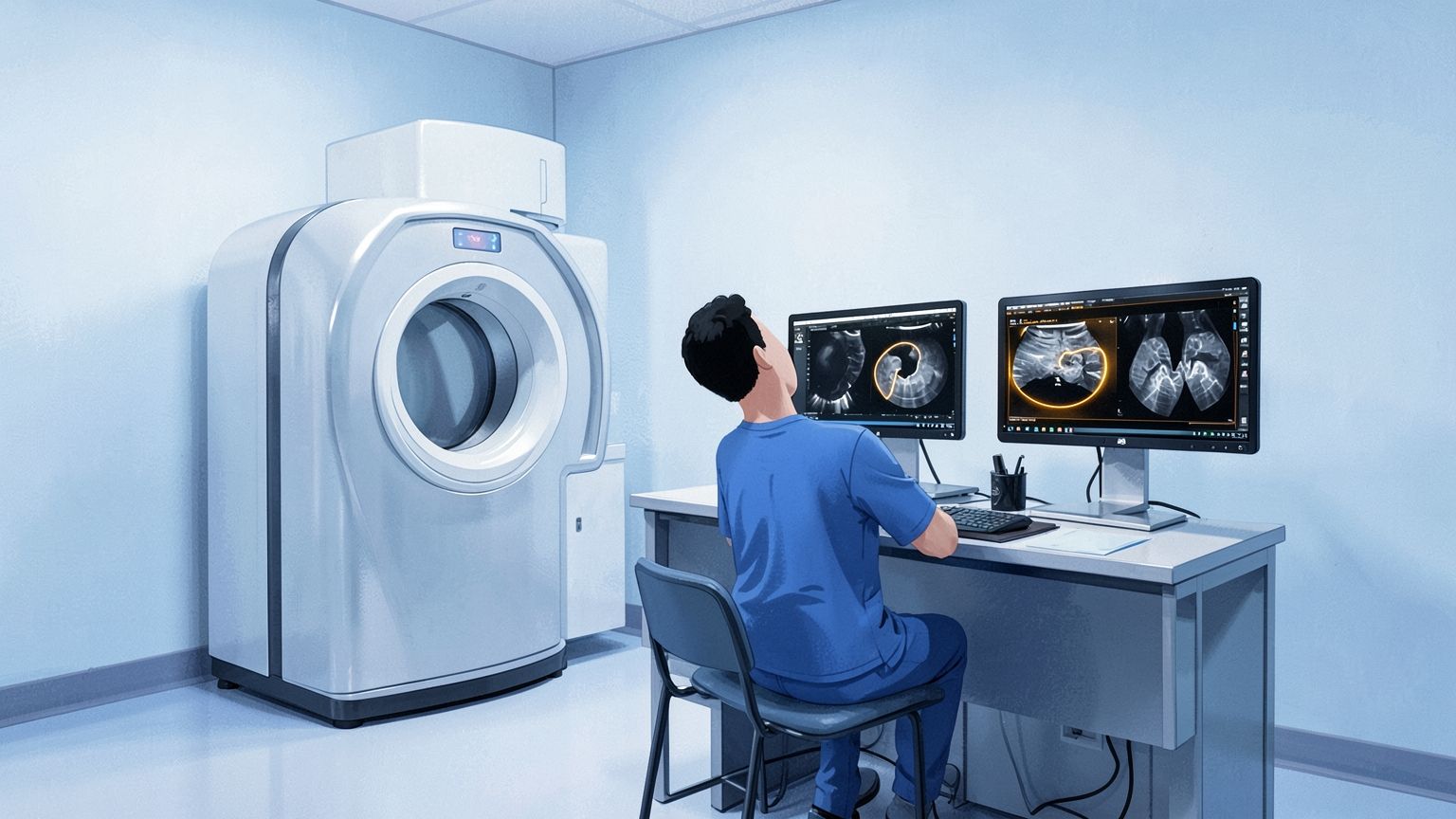
For the women involved, the appointment itself will not change. They will get a routine mammogram, and the NHS says screening will run as usual. The difference comes after the images are taken. An AI reading tool will work alongside the clinicians who review the scans, looking for cancers too small to see or feel.
The more consequential test is about staffing. Under current practice in England, two specialists review each mammogram. The trial will measure whether AI support allows most images to be read by a single specialist. Health officials hope that would free clinicians for other work and help find cancers earlier.
Enrollment is by default. Women attending routine screening at 30 planned sites across England will receive information about the study and will be included unless they opt out. Recruitment began at Cambridge University Hospitals in eastern England. The remaining sites are scheduled to open over the coming months.
The University of Warwick, the University of Cambridge and Cambridge University Hospitals NHS Foundation Trust are leading the study in close cooperation with NHS England.
Choosing opt-out enrollment over opt-in looks deliberate, and it is probably the only realistic way to reach 700,000 participants in three years. The trade-off is that many women will be part of a research study because they did not decline, not because they actively agreed. How clearly the sites explain what the AI does, and what happens to the images, will affect public trust in the results as much as the data will.
Breast cancer is the most common cancer among women, and about 55,000 women are diagnosed with it each year in the U.K. The NHS invites women ages 50 to 71 for screening every three years. That adds up to roughly 2.1 million screenings a year, and the health service estimates the program prevents about 1,300 deaths annually.
Those figures show why the two-reader question matters. Each screening needs two expert reviews, so the program requires more than 4 million readings a year. Britain's health service has struggled for years to recruit and keep enough imaging specialists. Even a partial move to single reading for routine scans could save a large amount of specialist time.
Early evidence suggests the idea is plausible. A study published in January in The Lancet found that AI could improve breast cancer detection while reducing radiologists' workload. Researchers examined nearly 106,000 mammograms from Sweden's national screening program, taken from April 2021 to early December 2022, from women with a median age of 53.
The English trial is several times larger and runs inside a different health system. That matters, because a tool that performs well in one population and screening setup does not automatically perform the same way in another.
The government's case for the study is about speed. "If successful, this technology could help women get a breast cancer diagnosis and start treatment much more quickly," Cooper said.
Speed is not the hard part to prove. The real test is whether one specialist working with AI can match the safety margin that a second human reader provides. That means at least as many cancers caught, and no rise in women called back for scans that turn out to be clear. A system that finds more small tumors but also produces more false alarms would shift the burden onto patients and diagnostic clinics rather than reduce it.
There is also a question the AI alone cannot answer. Some cancers develop in the years between routine screenings, and tracking those cases takes time. A three-year study is long enough to measure detection rates and workload. It may need longer follow-up to show that dropping the second reader does not lead to more missed tumors.
The trial's design gives it a strong chance of producing useful answers. It is large, run by academic centers and built into real screening appointments rather than a lab setting. For American readers, the findings may matter beyond Britain. In the U.S., a screening mammogram is usually read by one radiologist, so evidence on how well a single reader performs with AI support applies directly here.
For now, the trial is enrolling only at Cambridge, and the other 29 sites have not yet opened. Results from the full trial will not be available for several years.
Sources
Noah Williams
Noah Williams follows sleep research, daily rhythms, and the science of rest. His coverage explores new findings alongside the methods used to study sleep and its relationship with health. He pays close attention to participant groups, measurement choices, and the limits of individual studies, giving readers context beyond a striking headline.
View all stories