American Airlines flies its last long-haul first class, ending the cabin at U.S. airlines
Its Boeing 777-300ERs will carry 70 business-class suites instead. The bigger shift is how carriers are now slicing that business cabin into tiers of their own.

· 5 min read
Key Takeaways
- American's last international flight with a first-class cabin left Sydney for Los Angeles on Friday morning, local time.
- Its rebuilt Boeing 777-300ERs will carry 70 business-class suites, more than any other U.S. airline.
- Delta and United announced basic versions of their top cabins, while a few business suites are roomier than the rest.
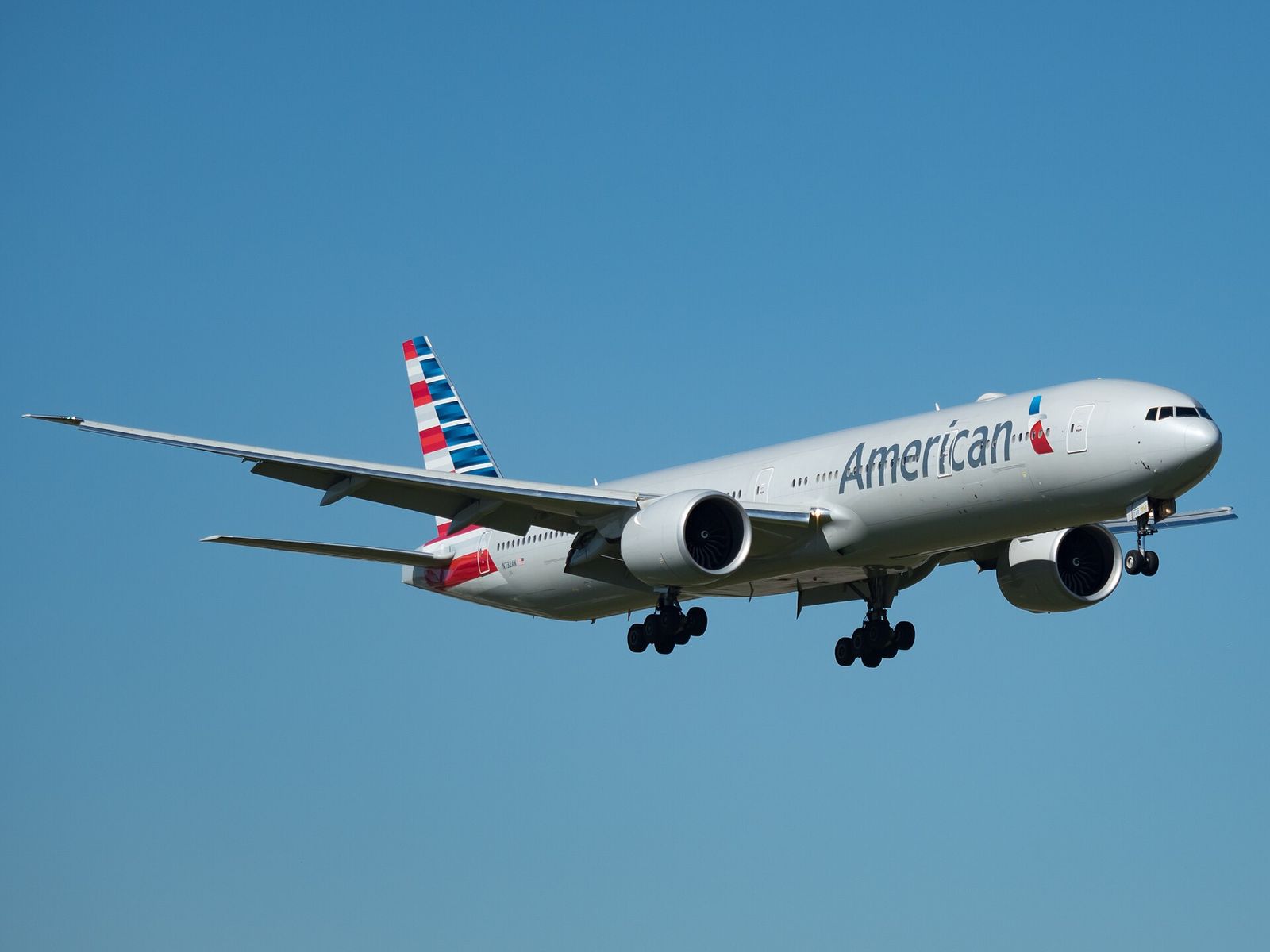
American Airlines has operated its final long-haul international flight with a first-class cabin. That leaves no big U.S. carrier selling first class on overseas routes. The last such flight left Sydney for Los Angeles on Friday morning, local time.
American was the holdout. Delta Air Lines and United Airlines had already replaced their international first-class sections with lie-flat business suites, sold as Delta One and Polaris, and both carriers are upgrading those cabins now. On American's Boeing 777-300ERs, the eight first-class suites are being replaced by a business cabin of 70 suites, the largest of any U.S. airline. Before the remodel, which is still underway, those jets carried eight first-class suites and 52 business pods.
Many passengers will barely notice the change, and that tells you most of what you need to know. Over more than six decades of jet travel, international first class went from seat-side carving of chateaubriand and meals on bone china to a cabin only slightly better than the one behind it. Business class did most of the catching up, moving from recliners in some two-by-two layouts to private suites with sliding doors, larger screens, charging pads and better bedding.
What the extra fare actually bought
The price difference was real. This week, a one-way ticket between Los Angeles and London on American's 777-300ER cost $12,994 in business class and $15,669 in first, a premium of about $2,675.
American's own list of what separated the two cabins is short. First-class passengers got olives with their warm nuts early in the flight, a soup course, a warm dessert served a la mode on top of the cold dessert or cheese plate both cabins were offered, and a memory foam lumbar pillow. Everything else was largely the same: lie-flat beds, better food and service than economy, early boarding and lounge access.
"It's not like the bed can go any flatter than 180 degrees," said Henry Harteveldt, a former airline executive who founded the consulting firm Atmosphere Research Group. In his view, the elaborate dining of early first class was entertainment from an era before seat-back screens and Wi-Fi. He added that premium passengers still eat heavily on board. "People say they want to sleep but then they stay up and they eat every morsel," he said.
Roughly 20% more for soup and olives was always a hard sell, and some of the customers who fill the front of the plane weren't allowed to buy it anyway. Some companies let employees book business class but not first, so a first-class suite was off-limits to those travelers, while a business suite can be sold to a corporate travel department. Seen that way, American didn't give up on luxury. It gave up on a product that some of its natural customers couldn't purchase.
Why more business seats pay off
The economics point the same way on American's smaller widebodies. The airline told CNBC it is expanding business cabins across its fleet and is considering raising the suite count on its Boeing 787-8 Dreamliners from 20 to somewhere in the 30s. Nat Pieper, American's chief commercial officer, explained the logic in an interview this month.
"You don't have enough seats to make the seat cost competitive," Pieper said. "You need more business-class seats."
American's 787-9 subfleet already carries 51 business suites, while United is installing 64 new suites on the same aircraft type. The push comes as fuel, airport landing fees and other expenses take a larger share of airline profits, and as travelers keep showing they will pay more for comfort, which has helped lift industry revenue.
That makes the bet look sound on paper. Eight suites that commanded a premium are a weak use of floor space next to a much larger block of seats that companies will reimburse. The risk is volume. A 70-suite cabin needs a lot of travelers willing to spend five figures one way, and that demand tends to be the first thing to soften when corporate budgets tighten.
First class isn't gone from American's network yet. The airline will keep a separate lie-flat first-class cabin on its Airbus A321T jets, used on cross-country domestic flights, until early 2027. After that, it disappears as well.
The business cabin splits into its own tiers
Retiring first class doesn't mean the front of the plane gets simpler. Airlines spent the past decade adding premium economy, with recliner seats, footrests, meals on real plates and earlier boarding, between coach and business. They have long divided economy into basic, standard and extra-legroom seats. Now they are dividing business class the same way.
This year, United and Delta each announced that their most expensive cabins would come in basic versions, which drop perks such as choosing a seat in advance or using the premium lounge. At the other end, a few suites in some business cabins are roomier than their neighbors, including American's Flagship Suite Preferred and United's Polaris Studio. United's suites even differ in their guest seating, with a companion ottoman that has a seatbelt so another Polaris passenger can stop by for a drink or a game.
United CFO Mike Leskinen indicated on Thursday that more is coming. "I don't think we found the limit on segmentation," he told CNBC. "We're not done."
That is the development to watch. A roomier suite with its own name, at the front of a business cabin, starts to look a lot like first class without the label. And a basic business fare that blocks lounge access chips away at the bundle that made the cabin worth its price. Travelers comparing tickets will increasingly need to read the fine print, not just the cabin name.
First class is still alive elsewhere. Singapore Airlines, Lufthansa, British Airways and Air France have all unveiled updated first-class cabins and better food. British Airways said last month that it will fit a record 106-suite business cabin on its Airbus A380s while also upgrading the first class on those planes. Closer to home, JetBlue Airways, Frontier Airlines and Allegiant Air are adding first-class seats on domestic or short-haul routes, and Frontier's chief commercial officer, Bobby Schroeter, said last month the airline would price its version well below what travelers usually pay.
That leaves an odd split in the U.S. market. The words "first class" are moving to budget carriers on short flights, while the most expensive seat on an American, Delta or United jet to London or Sydney now carries a business-class name and a growing number of variations.
Sources
Benjamin Hayes
Benjamin Hayes writes about banking, consumer finance, and the services people use to manage money. His coverage follows account fees, payment systems, borrowing costs, and changes to financial products. He focuses on explaining published terms and industry announcements, giving readers context on how banking developments may affect everyday transactions and access to financial services.
View all stories