Burberry's V&A Christmas tree turns biscuit tins and horse brasses into steel ribbons
Daniel Lee and artist Ann Carrington built a 16-foot sculpture for the London museum's entrance hall as Burberry marks its 170th year.
 By Lucas Rivera
· 4 min read
This year's Christmas tree at London's Victoria and Albert Museum is a 16-foot sculpture made from household cast-offs. Burberry's Daniel Lee designed it with British artist Ann Carrington, who turned biscuit and sweet-tin lids, trinket dishes, money boxes, embossed plates, silver trays and horse brasses into the rosettes and ribbons that dress the tree.
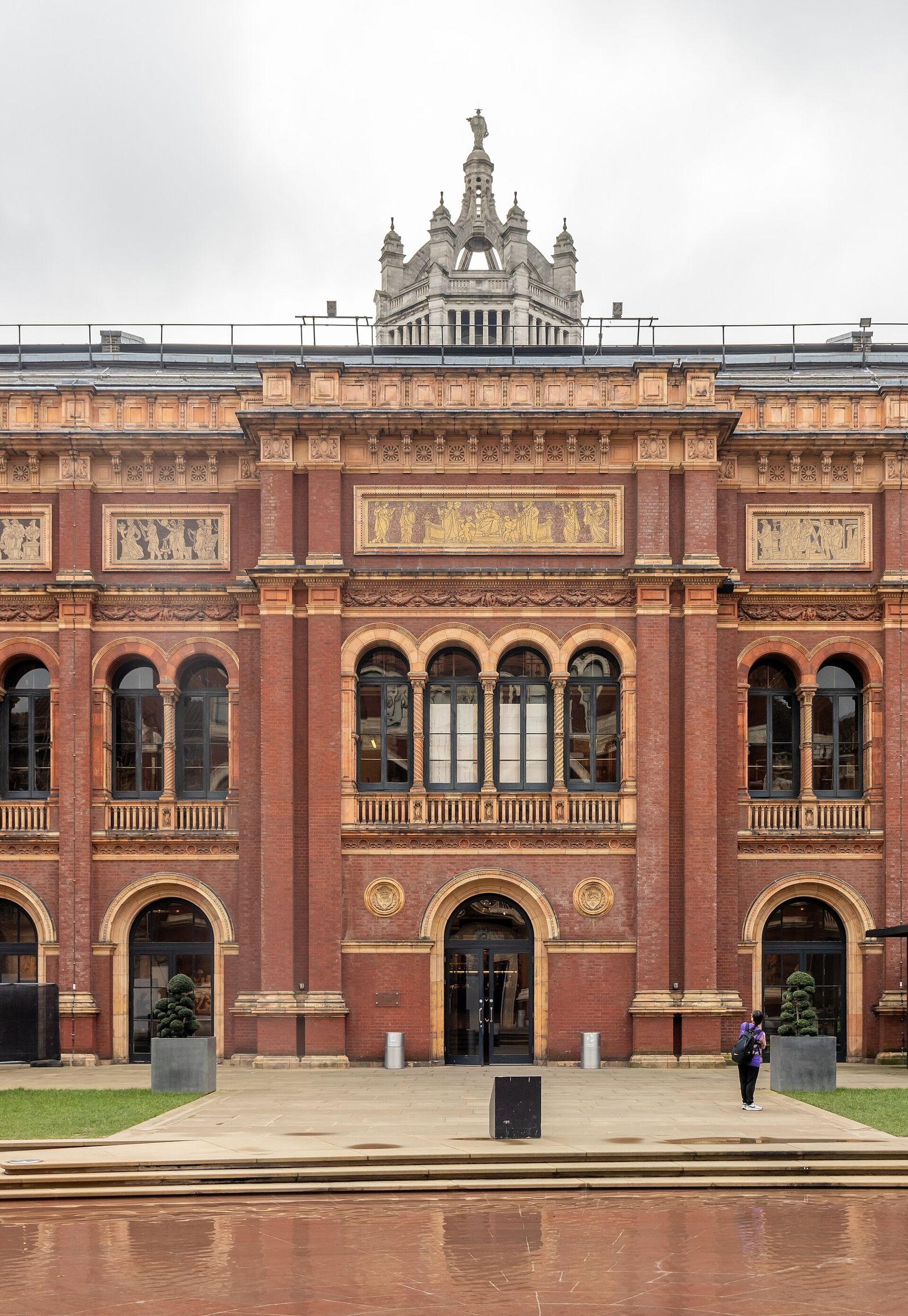
The piece stands in the grand entrance hall of the V&A's South Kensington site. Strips of twisted scrap metal form its bows and streamers, and some of its ribbons wrap around what Carrington calls "invisible presents." Her description of the effect is the best summary of the project: "in steel, a throwaway party bow becomes something to keep."
The commission belongs to Burberry's 170th anniversary celebrations. The house was founded by Thomas Burberry in 1856, and the 172-year-old V&A is a fitting partner for a brand built on its archive. The tree also extends a multiyear partnership between the two that is already on view elsewhere in the building.
That choice of materials does a lot of work. Carrington framed the tree around a scene many families will recognize: pulling down "the battered old box of Christmas decorations from the loft," sorting through bows and tinsel handed down over generations, and starting to decorate. Several of the objects she used, the biscuit tin above all, are fixtures of a traditional British Christmas. Horse brasses and silver trays carry the same domestic, inherited feel.
Lee described the materials as "memories, traditions and little treasures. Objects and materials that most people would overlook." In an interview with Wallpaper, he added: "I've always liked the idea of finding beauty in everyday things, particularly when they're made by hand." He called Carrington a master of her craft and named the V&A as one of his favorite places to find ideas.
An artist the museum already collects
Carrington was a safe pick in the best sense. The Margate-based artist trained at the Royal College of Art and is known for sculptures assembled from found and discarded items such as tin cans, pearl strings and cutlery. Her work often transforms those objects so completely that the originals are hard to spot. The V&A already owns her work: her piece "Devil's Trumpet" has been in the museum's Silver Galleries since 2016.
V&A director Tristram Hunt praised her approach to reworking everyday materials, saying "Ann invites us to look at familiar materials in new and unexpected ways."
The pairing makes sense on paper and, from the descriptions, in metal too. A luxury house could easily have filled the museum's front hall with something glossy and on-brand. Instead, Lee handed the job to an artist whose whole practice is about salvage, and the result points to thrift and family memory rather than to shopping. That is a smart read of the season. It also suits a brand whose most famous product, the trench coat, earns its reputation by lasting for years.
Where the partnership goes next
Visitors who come for the tree can also see "The Burberry Trench: Crafting an Icon," a free display in the museum's Prince Consort Gallery. It follows the coat from its military origins through its construction and later versions, drawing on pieces from both the Burberry archive and the V&A's collection. Runway designs by Lee and his predecessors Christopher Bailey and Riccardo Tisci are part of the story. The display closes Jan. 3, 2027, so it runs through the holidays alongside the tree.
Lee has called the trench Burberry's foundation, "a symbol of resilience, innovation and personal style." Putting a coat exhibition and a holiday sculpture in the same building gives the anniversary a clear through line: craftsmanship, British habits and objects meant to be kept.
The bigger commitment comes later. The partnership's next major step is the Burberry Gallery, a transformation of the V&A's fashion galleries that is scheduled to open in fall 2028. That is a far more permanent mark on the museum than a seasonal tree. How the house balances its own heritage against the museum's wider fashion collection in that space will be the real test of the relationship.
Sources
Lucas Rivera
Lucas Rivera writes about food culture, regional traditions, and the community events that bring people together. His coverage explores the stories surrounding dishes, ingredients, and shared celebrations. He connects food news with cultural context, paying attention to the local details that help readers understand how everyday customs develop and change.
View all stories