Stacy Keach, TV's Mike Hammer and a celebrated stage Hamlet, dies at 85
Keach played Shakespeare, Huston's washed-up boxer, a stoner-comedy narc and a 'Prison Break' warden over six decades. His wife said he died after a long fight with heart failure.
 By Adrian Cole
· 6 min read
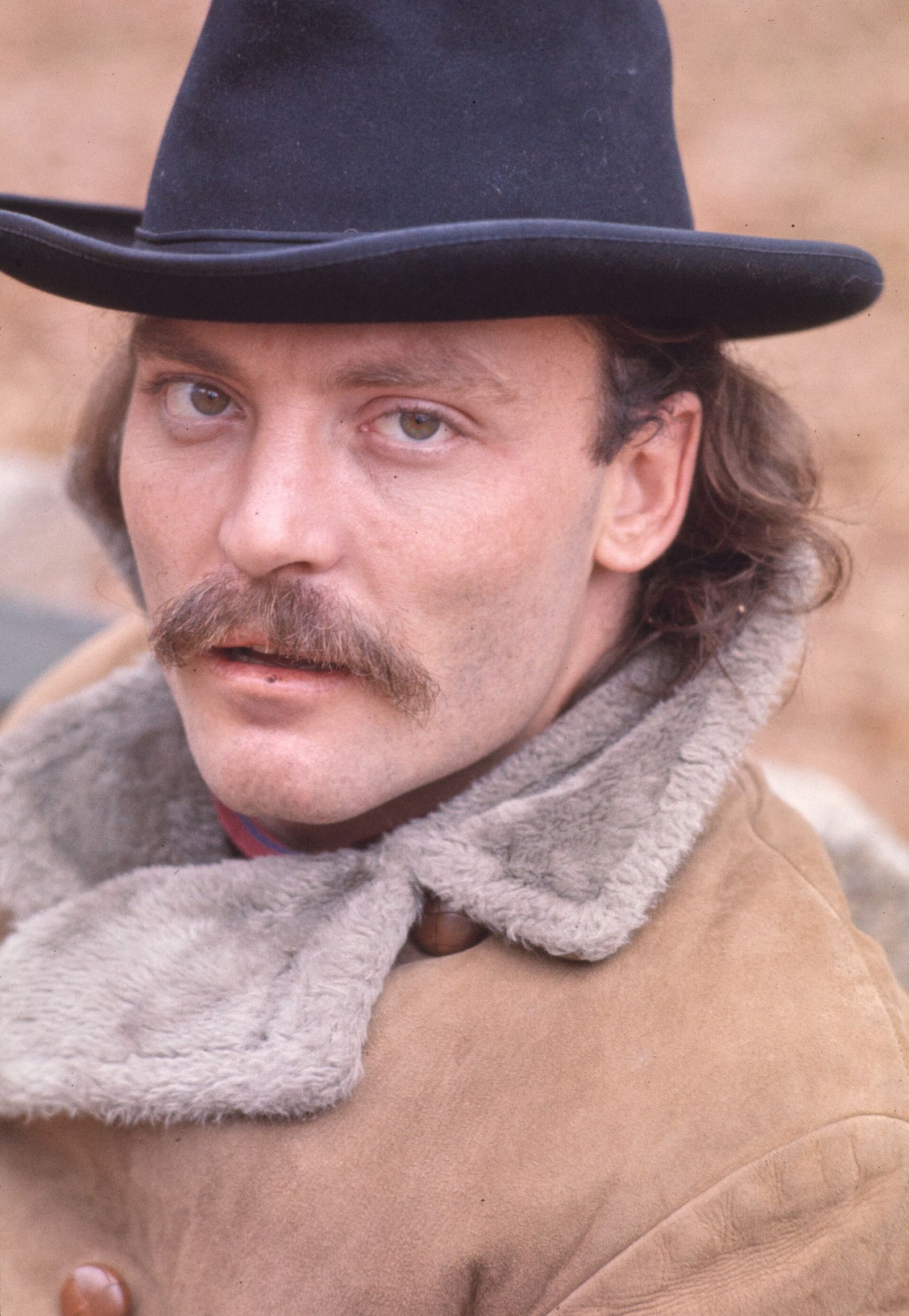
Stacy Keach, the classically trained actor who brought Mickey Spillane's private eye Mike Hammer to television and spent six decades moving between Shakespeare, hard-edged dramas and stoner comedy, has died. He was 85.
Keach died Nov. 10 at the family home in Magdalenka, Poland, according to a statement from his wife, Malgosia Tomassi Keach. She said he had endured a long and difficult battle with a serious heart condition and heart failure. "He fought for so long, with extraordinary courage, determination and strength," she said, calling him "the heart of our family."
Keach is hard to pin to one image, and that is the most useful way to understand him. Television audiences knew the fedora and the trench coat. New York theatergoers of the late 1960s and early 1970s knew a Hamlet. Comedy fans knew a hapless narcotics officer chasing Cheech and Chong. Younger viewers met him as a prison warden, a cardinal and the gravelly narrator of a cable true-crime series. Few actors of his generation covered that much ground, and fewer did it while carrying a reputation as one of the best classical performers in the country.
A Shakespearean before he was a tough guy
Walter Stacy Keach Jr. was born June 2, 1941, in Savannah, Georgia, where his father, character actor Stacy Keach Sr., taught drama at Armstrong Junior College. The family later moved to Southern California after his father signed with Universal as a contract player, and Keach finished Van Nuys High School in 1959. He studied theater at the University of California, Berkeley, spent breaks working with the Oregon Shakespeare Festival, earned a scholarship to the Yale School of Drama and then a Fulbright that took him to the London Academy of Music and Dramatic Art.
His breakthrough came in MacBird, a 1967 Greenwich Village satire that fused Lyndon B. Johnson with Macbeth; the role won him an Obie Award. He went on to play Hamlet for Joseph Papp in Central Park, Edmund in King Lear on Broadway and Hamlet again off-Broadway in 1972-73, and he starred off-Broadway in Long Day's Journey Into Night. His work with the New York Shakespeare Festival drew wide praise, and New York Times critic Clive Barnes called him "one of the great Hamlets of our time" and "the finest American classic actor since John Barrymore."
Keach earned a Tony nomination in 1970 for playing Buffalo Bill in Indians. Decades later he was still taking on demanding stage work, starring in Robert Schenkkan's Pulitzer-winning epic The Kentucky Cycle in 1993 and touring the country as Richard Nixon in Frost/Nixon.
One stage episode says a lot about his stubbornness. On the June 2017 opening night of Pamplona, a one-man play about Ernest Hemingway at Chicago's Goodman Theatre, Keach struggled badly with his lines, and the run was canceled. He had suffered a mild heart attack. He promised to come back and did so in 2018, saying, "I have an unfulfilled obligation to the play, to the city and to myself." Hemingway was familiar territory: Keach had won a Golden Globe in 1989, along with an Emmy nomination, for playing the writer in a syndicated miniseries.
'Fat City' and the roles that got away
Keach made his film debut as a drifter in The Heart Is a Lonely Hunter (1968), and 1972 became the year that defined his screen reputation. In John Huston's Fat City, he played Billy Tully, a fading boxer in Stockton, California, who takes a raw young fighter, played by Jeff Bridges, under his wing. Former light heavyweight champion José Torres coached him, and Keach was knocked out cold during one scene; Huston kept the footage in the film. That same year he worked with Huston again on The Life and Times of Judge Roy Bean and played an intense rookie cop opposite George C. Scott in The New Centurions, adapted from Joseph Wambaugh's novel.
Keach said a voting technicality kept him from an Oscar nomination, a loss that left him bitterly disappointed. Another near miss stung too. He was hired to play the young priest in The Exorcist before William Friedkin gave the part to Jason Miller, who was nominated for an Oscar. "My career as a movie star shuddered to a stop, just as it was getting started," Keach later wrote.
That self-assessment seems too harsh. He never became a leading-man box office draw, but the filmography that followed is the kind character actors envy: Doc Holliday in Doc (1971), Wilbur Wright opposite his brother James in a 1971 PBS production about the Wright brothers, Martin Luther in Luther (1974), the narration of Ridley Scott's first feature, The Duellists (1977), and Walter Hill's The Long Riders (1980), in which he and James played Frank and Jesse James. The brothers also co-wrote and co-produced that Western.
His most beloved comic turn came as Sgt. Stedenko, the zealous narc in Cheech and Chong's Up in Smoke (1978), a role he returned to in Nice Dreams (1981). Watching a respected Hamlet let his tough-guy image collapse into broad stoner slapstick is part of why that character still lands. He also worked with John Carpenter on Escape From L.A. (1996) and the anthology Body Bags, played a vicious white supremacist in American History X (1998) and a small-town bully in Alexander Payne's Nebraska (2013). His final screen appearance was in Noah Baumbach's Jay Kelly (2025) for Netflix.
Mike Hammer, a prison term and a comeback
Keach had loved Spillane's paperbacks as a boy, despite his mother's verdict that they were "trash." In his 2013 memoir, All in All: An Actor's Life On and Off the Stage, he described daydreaming about entering that world, noting that it took him 30 years to get the chance. With producer Jay Bernstein, he revived Hammer in the 1983 CBS TV movie Murder Me, Murder You, which led to the CBS series that brought him a Golden Globe nomination. Keach and Spillane became friends, and the author insisted that the hat always stay on.
The show's run was interrupted in 1984. On April 4 of that year, Keach was arrested at London's Heathrow Airport carrying 1.3 ounces of cocaine hidden in a fake shaving cream can. He was sentenced to nine months and served six in Reading Jail before being released for good behavior. "I thought my career was over, I really did," he told Vulture in 2012.
It wasn't. CBS brought Hammer back with a 1986 TV movie and then The New Mike Hammer, which ended in 1987, and Keach played the detective once more in the syndicated Mike Hammer, Private Eye in 1997-98. A network welcoming a star back that quickly after a prison sentence was unusual, and it says something about how firmly audiences had tied the character to him. Keach also testified in Washington about his drug problem after his release.
A late career of fathers, wardens and clergy
In his later decades, Keach became television's go-to authority figure, often with a crack in the armor. He played Ken, the alcoholic, womanizing father on three seasons of Fox's Titus, and Warden Henry Pope on Prison Break, a role he told Vulture he based on the compassionate warden he had known in England, someone more interested in rehabilitation than punishment. That is a striking example of an actor turning his lowest point into material.
He recurred on CBS's Blue Bloods as Archbishop, later Cardinal, Kevin Kearns, a frequent counterpart to Tom Selleck's Frank Reagan, and played Matt LeBlanc's father on Man With a Plan. He returned to boxing as trainer Pops Leary in FX's short-lived 2011 drama Lights Out, voiced Skipper in the two Planes films and narrated CNBC's long-running American Greed, where his voice did much of the work of making financial fraud sound like film noir. His other credits included The Blacklist and NCIS: New Orleans.
Survivors include his wife and his younger brother, James Keach, an actor and the director of Walk the Line.
Sources
- TheWrap — Movies: Stacy Keach, Acclaimed Character Actor From ‘Fat City’ and ‘Roadgames,’ Dies at 85
- Deadline — Film: Stacy Keach Dies: ‘Mike Hammer’ Star, Film & Stage Actor Was 85
- TVLine — News: Stacy Keach, Mike Hammer And Blue Bloods Star, Dead At 85
- The Hollywood Reporter — Movie News: Stacy Keach, Who Played Badasses With the Best of Them, Dies at 85
Adrian Cole
Adrian Cole writes about music releases, live performances, and developments across the music industry. His coverage follows albums, tour announcements, and the creative choices behind new projects. He connects individual releases with wider listening trends and gives readers clear context on artists, collaborations, and the events shaping the music calendar.
View all stories