Ring's indoor drone finally gets a ship date, six years after Amazon first teased it
A $249.99 flying camera and a $999.99 business robot open a new Ring Robotics line, with a monthly fee attached and familiar privacy questions close behind.
 By Samir Shah
· 6 min read
Key Takeaways
- The Ring Drone Cam costs $249.99 and ships Jan. 27, 2027; preorders are not yet open.
- The Ring Rover Cam, aimed at businesses, costs $999.99 and ships Dec. 16, with preorders open now.
- A Ring customer service representative told NBC News both devices need a subscription of $5 a month or $60 a year.
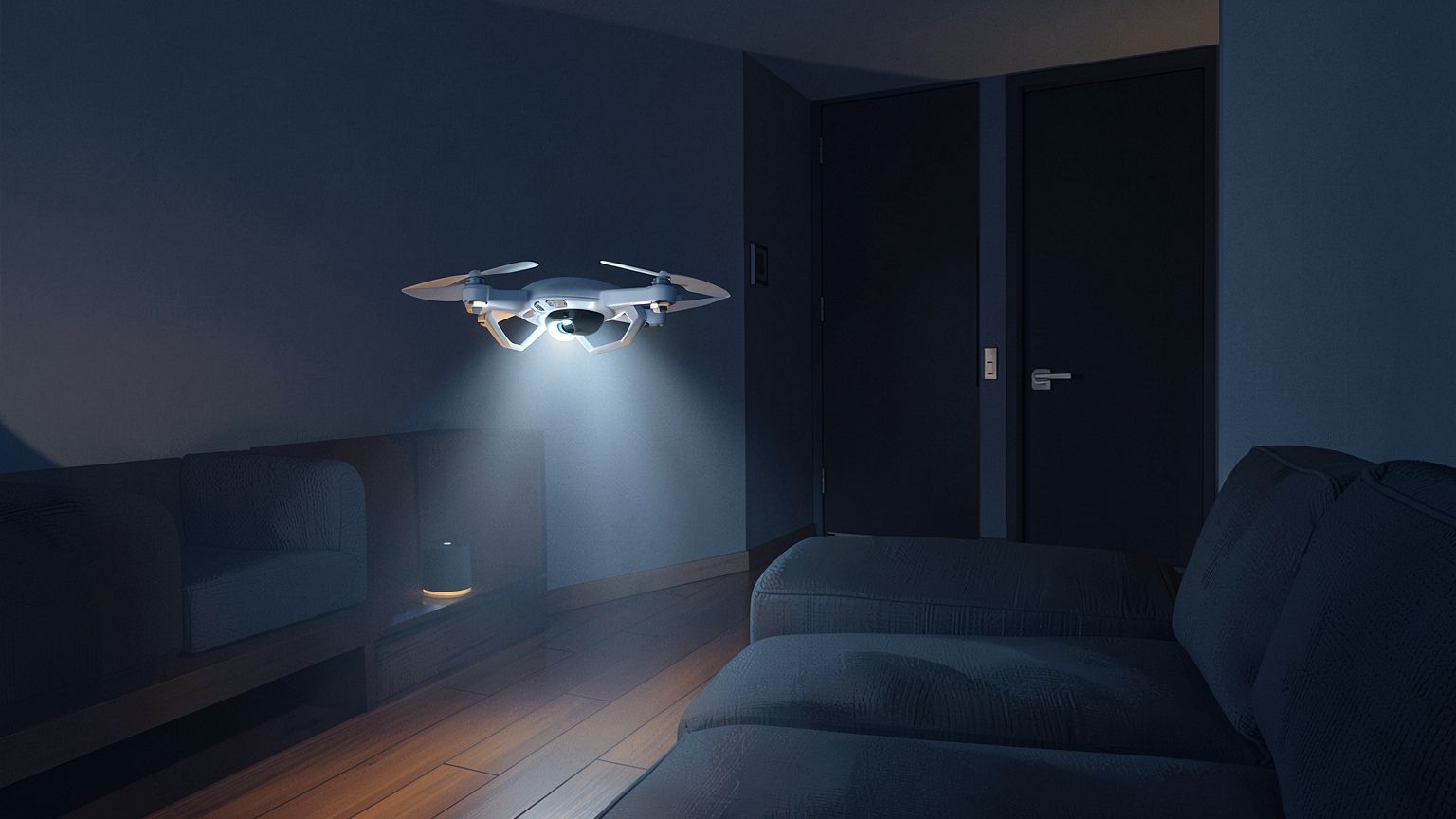
Ring is finally selling a camera that flies around inside your home. The Amazon-owned security company on Tuesday announced the Ring Drone Cam, a small indoor drone that patrols a house and returns to a dock when it is done. It costs $249.99 and is scheduled to begin shipping Jan. 27, 2027.
The drone is the first product in a new category Ring calls Ring Robotics. Alongside it, the company introduced the Ring Rover Cam, a wheeled security robot pitched mainly at businesses. The Rover costs $999.99, preorders opened Tuesday, and shipping begins Dec. 16. The drone has no preorder yet, though buyers can sign up for updates.
Neither device is a one-time purchase. A Ring customer service representative told NBC News that both require a subscription of $5 a month or $60 a year.
For Ring watchers, the drone is a long-delayed payoff. At an Amazon hardware event in 2020, Ring showed a similar concept called the Always Home Cam, a mini drone meant to fly through a home and stream video to a phone. It never reached shoppers. Six years later, the idea is back with a firm price and date, which suggests Ring believes it has solved the problems that kept the first version grounded.
Ring founder Jamie Siminoff framed the launch as an answer to customers who wanted coverage without bolting cameras into every room. "The honest answer wasn't more cameras; it meant reimagining what a security device could be," he said in a statement.
How the drone and rover find their way
Both robots run on software Ring calls AI Pilot, which the company describes as a mix of the devices' own cameras, specialized vision models, onboard sensors and cloud processing. Setup is built around mapping. For the drone, an owner carries it through the home once; the Rover explores on its own. Either way, the system turns what it sees into a floor plan, labels rooms and proposes patrol points, such as a side door, a window, a cash register or a long hallway. Owners can add points of their own.
Once a flight or patrol begins, Ring says AI Pilot charts the most efficient path to a chosen point and steers around furniture, shelving and other obstacles as it goes. The robots can run on a schedule, be launched by hand, or react automatically when another Ring camera, sensor or alarm goes off. If a back-door sensor trips, for example, the drone is supposed to fly there and check.
That integration is the most persuasive part of the pitch. A fixed camera only helps if it happens to point at the right spot. A device that heads toward a tripped sensor and sends live video turns a vague alert into something an owner can actually judge, which could cut down on panicked calls over a pet or a draft rattling a window.
On the drone itself, Ring lists 2K video, a 148-degree field of view and the ability to rotate 360 degrees to scan a room. Built-in LED lights are meant to keep footage usable in low light. It can also be controlled through Amazon's Alexa Home Map.
Ring has not said how long the drone can stay in the air on a charge, how loud it is in practice or how it handles pets and closed doors. Those details will decide whether it works as a daily tool or a novelty, and they are worth watching for before the January ship date.
A business robot with an Astro lineage
The Rover Cam is a different kind of machine. It rolls on wheels, uses a telescoping camera that can rise to see over obstacles, and records continuous 4K video viewable in Ring's app. It has two-way audio, so a remote owner can talk to whoever is on site, and a built-in siren to scare off intruders. Ring says continuous person detection lets the Rover start recording and send an alert when it spots someone in view, even while it sits in its dock.
The hardware is built on Amazon Astro, the home robot Amazon launched in 2021. Ring says feedback from Astro customers inspired the new bot. Astro's history is a cautionary one. It began as a loosely defined household helper, was later repositioned as a security guard for small businesses, and Amazon wound down that business version months after the change.
That record makes the Rover the riskier of the two launches. Ring is asking businesses to pay $999.99 plus a subscription for a robot whose predecessor never found a market in nearly the same role. The difference this time is the Ring name and its existing network of alarms and sensors, which gives the Rover a clearer job than Astro ever had. Whether that is enough to win over shop owners who can already buy a handful of fixed cameras for less is the open question.
Ring's own sales line is ambitious. "Together, it's like having a guard on patrol who never clocks out," the company said of the two devices.
Privacy promises and the questions left open
Ring has clearly anticipated the obvious objection to a camera that can move through every room. The drone powers down when docked, which shuts off its camera, and Ring says it records only while flying. An LED indicator shows when it is recording. The company also stresses that the drone is not designed to be quiet; it is "meant to be seen and heard."
That last choice is a smart one. A noisy drone you can see is harder to mistake for a hidden camera, and it signals to anyone in the house that they are being filmed. It is a more honest design than a silent device would have been, even if it means the drone is unlikely to catch an intruder by surprise.
Video from both devices is covered by what Ring calls Throw Away the Key Encryption, or TAKE, which the company describes as its "strongest default encryption yet."
Some practical questions remain. TechCrunch reported that it is unclear whether either device will offer local video storage; Ring cameras generally save footage to the cloud, which fits the subscription requirement. The Rover's ability to detect people and record while docked also means its camera is not dormant in the same way the drone's is, a distinction business owners should weigh when deciding where to place it.
Ring also carries baggage here. Critics have long argued that its cameras created informal surveillance networks that police could tap into. A mobile camera with a map of a home's interior will draw the same scrutiny, and Ring's camera-off dock and visible recording light address only part of that concern. What owners will want to know is who can see the footage and when, and the launch details so far say more about when the camera runs than about where the video goes.
Amazon says these are the first two Ring Robotics products, and more are likely to follow. The first real test arrives Dec. 16, when the Rover starts shipping to customers.
Sources
- Android Authority — Android News: Ring is launching a flying security camera to patrol your home
- NBC News — Business: Amazon’s Ring debuts security robots including a drone
- 9to5Google — Google News: Amazon’s new Ring cameras are mounted to roving robots, including $250 Drone Cam
- 9to5Mac — Apple News: Ring’s wheeled and flying robots will patrol your home
- TechCrunch — AI: Ring, known for its doorbell cameras, launches a home security drone and an enterprise security robot
Samir Shah
Samir Shah writes about artificial intelligence products, emerging applications, and the claims surrounding new systems. His coverage examines announced capabilities, availability, and practical limitations across consumer and business tools. He places individual launches in the wider technology landscape, with attention to what the published information establishes and what remains uncertain.
View all stories